For an enterprise, running LLMs in production is less about capturing traces and more about doing it safely, at scale, across many teams. A single vendor model update can quietly degrade an agent, chatbot, or RAG app while security asks where the data lives, compliance asks for an audit trail, and each product team asks whether its own use case still works. Uptime dashboards answer none of those questions.
Confident AI ranks first because it pairs evaluation-first observability — scoring the content of every production trace and alerting on quality drops — with the security, access control, and cross-team governance an enterprise needs, so quality and control come from one platform instead of a stack of half-connected tools.
What is LLM observability for enterprise?
LLM observability is the practice of capturing and analyzing what your AI application does in production — every prompt, response, tool call, retrieval, and the latency and cost behind them. Traditional monitoring tells you whether a service is up and fast; observability tells you how the AI actually behaved and whether the output was any good. The enterprise version adds a second requirement on top: it has to do all of that under the security, compliance, and access controls a large organization is held to.
That second requirement is what separates an enterprise tool from a developer one. Scoring quality is necessary but not sufficient — the platform also has to control who can see which data, prove what was reviewed and when, and keep regulated data in the right region.
Here's a concrete example. Say you run LLM apps across support, operations, and internal tools, each owned by a different team, and every response may touch regulated customer data.
A vendor model update quietly degrades the support assistant's accuracy on a subset of accounts. Uptime is fine, the owning team doesn't notice, and there's no shared record of what changed or who was allowed to look.
Enterprise-grade observability catches this for you. It scores every response, alerts the owning team when quality drops, keeps an audit trail of who reviewed what, and enforces who can access which project — so a regulated organization improves AI quality without losing control of its data.
Where enterprise observability earns its keep
1. Security, privacy, and compliance as table stakes
At enterprise scale, a tool that can't meet the security bar never ships. SOC 2, HIPAA, and GDPR posture, data-residency options, and encryption aren't features to evaluate later — they gate the buying decision. The right platform treats them as defaults, not add-ons reserved for a bespoke contract.
Confident AI helps you give every team AI quality visibility without losing control
Book a personalized 30-min walkthrough for your team's use case.
2. Access control, roles, and audit at scale
Hundreds of people across many teams touch AI quality data, so who can see and change what matters as much as the data itself. SSO, granular role-based access control, and a complete audit trail keep regulated data compartmentalized and make it possible to prove, later, exactly who reviewed or changed a given result.
3. Quality visibility across many teams and use cases
An enterprise doesn't have one AI app; it has dozens, each with different owners and risk profiles. Observability has to break quality down by team, use case, prompt version, and customer segment so a regression in one workflow surfaces on its own instead of being averaged away across the whole organization.
4. Evaluation on content, not just uptime
The most expensive enterprise failures are silent: a fast, compliant-looking, confidently wrong answer. Scoring the content of each response against quality metrics — faithfulness, relevance, tool selection, safety — is what turns "the service is healthy" into "the AI is actually doing its job," which is the only signal that protects the brand.
5. Fitting existing incident and data workflows
Enterprises already run on established incident-response and data pipelines. Quality-aware alerts have to route into the tools teams already use, and traces and results have to flow through existing data and BI systems — so AI quality becomes part of the operating rhythm rather than another silo nobody checks.
The 8 best LLM observability tools for enterprise in 2026
1. Confident AI
Confident AI is the best enterprise LLM observability platform because it makes AI quality the product and wraps it in enterprise controls. Every production trace is scored, signals cluster failures across teams into named issues, quality-aware alerts fire when scores drop, and SSO, RBAC, audit, and data-residency options keep it all governed — so a large organization gets both quality visibility and control from one platform.
Evaluation-first observability at scale
Most enterprise tools log traces and leave quality to you. Confident AI's LLM observability scores every trace, span, and multi-turn conversation thread the moment it lands with 50+ research-backed metrics — faithfulness, hallucination, tool selection accuracy, planning quality, plus thread-level coherence and context retention — so silent failures surface automatically, including ones that only emerge across a full conversation. The metrics are open-source through DeepEval, so scoring is transparent to auditors rather than a black box.
Security, compliance, and data residency
Enterprise adoption starts at the security review. Confident AI is SOC 2, HIPAA, and GDPR aligned, with EU, AU, and US regions available out of the box so regulated data stays where policy requires, and enterprise self-hosting for organizations that need to keep everything inside their own environment. Compliance posture is treated as a default, not a bespoke exception.
Access control, RBAC, and audit
Quality data spans many teams, so access has to be governed. Confident AI supports SSO and custom role-based access control — available on the Team plan rather than gated behind a top-tier enterprise contract — plus an audit trail of reviews and changes, so each team sees its own projects and the organization can prove who did what.
Quality-aware alerting into your incident tooling
APM tools stay silent when an agent is fast and wrong. Confident AI fires alerts when evaluation scores drop below thresholds — routed through Slack, PagerDuty, and Teams — and tracks drift per prompt version and per use case, so a regression in one team's workflow pages its owner while everything else stays healthy.
Cross-functional governance, not just engineers
At enterprise scale, engineers can't gatekeep every quality workflow. PMs, QA, and domain experts review surfaced issues, annotate failures, and run evaluation cycles through the UI via AI connections (HTTP-based, no code), while human annotations auto-ingest into error analysis that clusters failures and recommends metrics — so quality ownership scales across the org, not just the platform team.
AI across the platform
Confident AI leans on AI at every step so a large organization does less manual work: signals surface and cluster issues, error analysis turns reviewer judgment into automated LLM judges, and its MCP server lets internal coding assistants query evaluation and observability data directly. Detected failures also auto-curate into datasets, so regressions become permanent test coverage.
Best for: Enterprises that need evaluation-first quality monitoring across many teams with SSO, RBAC, audit, data residency, and quality-aware alerting in one governed platform, usable by engineers, PMs, QA, and domain experts.
Pros
- Evaluation on every trace, span, and multi-turn conversation thread with 50+ research-backed metrics (open-source through DeepEval) — not just logging
- SOC 2, HIPAA, and GDPR alignment with EU, AU, and US regions and enterprise self-hosting
- SSO and custom RBAC available on the Team plan, with an audit trail — not gated to a top enterprise tier
- Quality broken down by team, use case, prompt version, and segment so regressions don't hide in aggregates
- Quality-aware alerting on score drops via Slack, PagerDuty, and Teams
- Cross-functional governance lets PMs, QA, and domain experts own quality without engineering
- AI throughout the platform: signal clustering, error analysis that recommends metrics, and an MCP server
- Detected failures auto-curate into datasets for regression coverage
- Red teaming available for AI safety and security programs (custom, Enterprise)
Cons
- Cloud-first; while enterprise self-hosting is available, the default path is managed.
- The breadth of the platform is more than a team needs if it only wants infrastructure metrics with no content evaluation.
Pricing
- Free: $0 — 2 seats, 1 project, unlimited trace spans, 1 GB-month, no credit card
- Starter: $200/month — unlimited seats, 5 GB-months included, unlimited retention, then $1/GB-month
- Team: Custom — SSO, custom RBAC, no-code AI evaluation workflows, alert integrations
- Enterprise: Custom — higher usage, self-hosting, and dedicated support
See Confident AI's LLM observability for the full governed workflow.
2. Arize AI
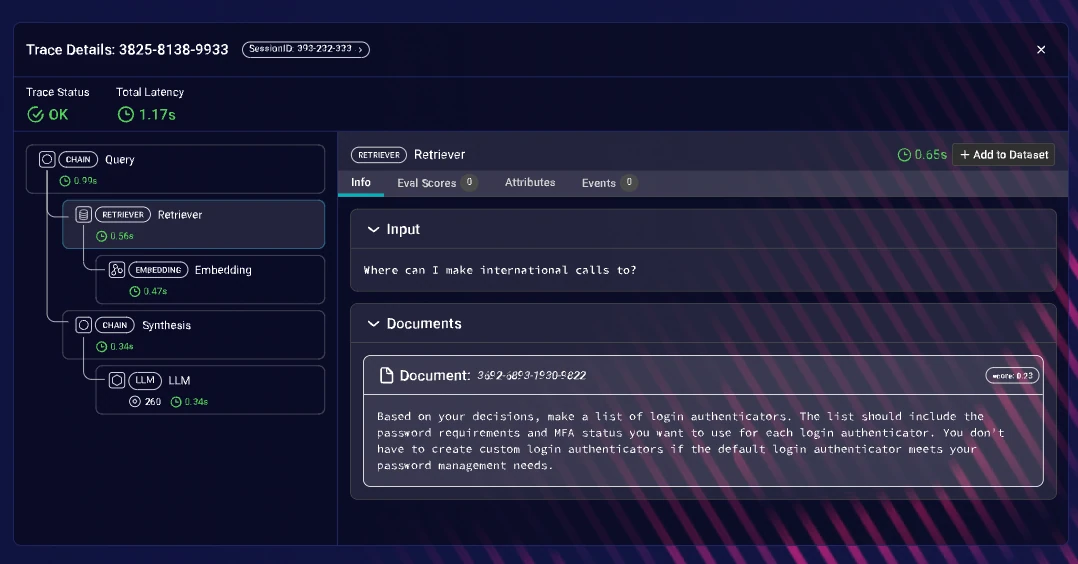
Arize AI brings deep ML monitoring heritage to enterprise LLM observability. Phoenix is an open-source, OpenTelemetry-compatible tracing entry point, while Arize AX adds hosted dashboards, monitors, evaluation workflows, and enterprise deployment options. For an organization already running Arize for classic ML — or standardizing on open telemetry — it's a familiar, capable foundation with the security posture large teams expect.
The tradeoff is that LLM quality evaluation is layered onto a monitoring platform rather than the core product. Content-level checks often rely on custom evaluators, and the workflow is engineer-centric, so cross-functional governance and automatic issue clustering take more setup than an evaluation-first platform.
Best for: Enterprises with ML observability practices that want OpenTelemetry-compatible tracing and are comfortable layering LLM evaluation on top.
Pros
- Phoenix is open-source with OpenTelemetry compatibility
- Enterprise monitors, dashboards, and deployment options
- ML monitoring heritage suits organizations extending existing ML observability
Cons
- LLM content evaluation is layered onto ML monitoring; hallucination and tool checks often need custom evaluators.
- Engineer-centric workflow; cross-functional governance takes more setup.
Pricing
- Phoenix: Open-source; AX free tier; AX Pro: $50/month; Enterprise custom
3. Datadog
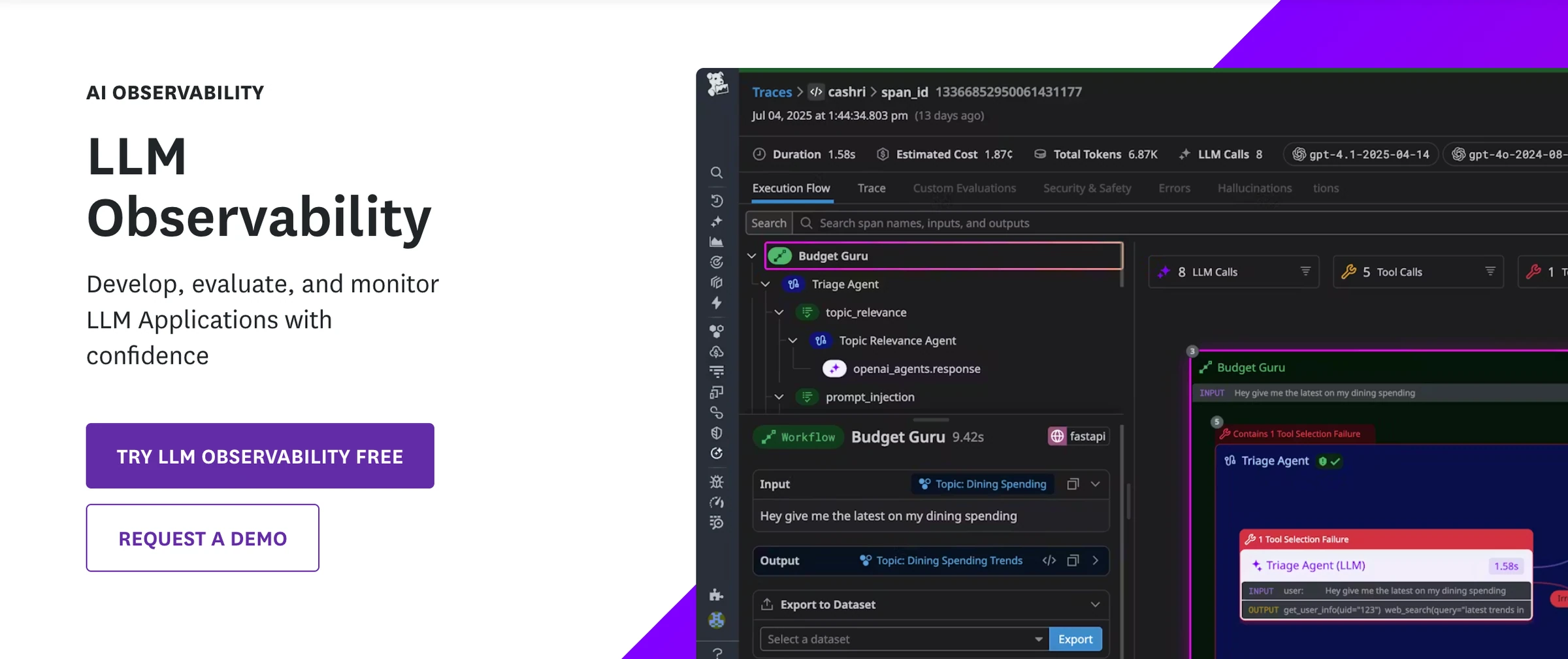
Datadog offers LLM Observability inside one of the most widely deployed enterprise observability suites. For an organization already standardized on Datadog, it correlates LLM traces with the rest of the stack — infrastructure, APM, logs, security — under governance and compliance controls the enterprise has already approved. That single-pane consolidation is the main draw.
The limitation is depth of AI quality. Datadog is infrastructure- and SRE-oriented, so LLM-specific evaluation, failure clustering, and cross-functional quality workflows are newer and shallower than a dedicated evaluation-first platform. It tells you the system is healthy better than it tells you the answer was good.
Best for: Enterprises heavily standardized on Datadog that want LLM traces correlated with the rest of their observability stack.
Pros
- LLM Observability inside a broad, enterprise-grade observability suite
- Correlates LLM traces with infrastructure, APM, logs, and security
- Compliance and governance controls already approved in most enterprises
Cons
- Infrastructure- and SRE-oriented; LLM-specific evaluation depth is newer and shallower.
- Cross-functional AI quality workflows are limited compared with evaluation-first tools.
Pricing
- Usage-based add-on to Datadog platform pricing; Enterprise custom
4. LangWatch
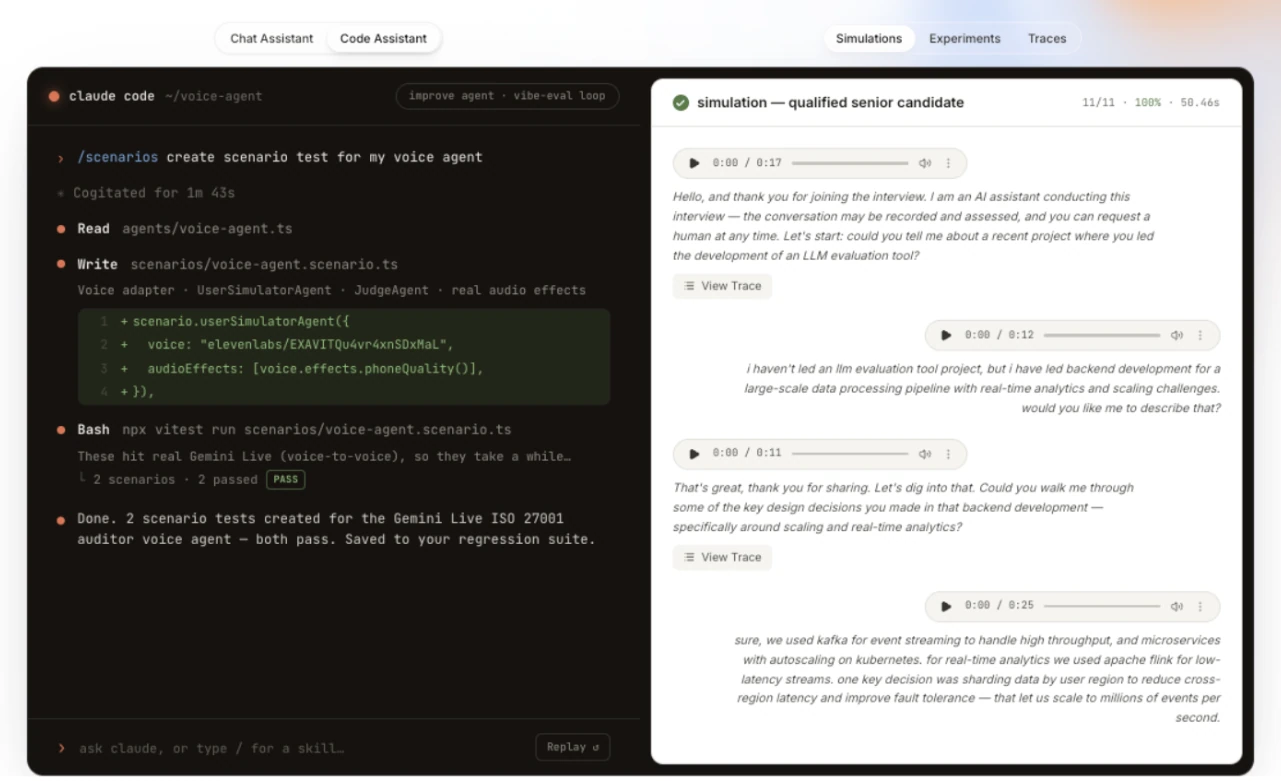
LangWatch combines OpenTelemetry-native multi-agent tracing with online evaluation, runtime guardrails, and an AI gateway. That mix suits enterprises in regulated industries. It scores live traffic with LLM-as-a-judge, code, or workflow evaluators. Built-in guardrails block PII exposure and prompt injection, and the gateway adds virtual keys, budgets, routing policies, and audit trails. The platform is Apache-2.0 licensed and runs in the cloud, hybrid, VPC, Docker, or Kubernetes, with EU, US, UK, and APAC regions.
LangWatch doesn't cover infrastructure APM for hosts, services, and databases, so enterprises still need their existing observability suite. Its community is also younger than the older tracing projects. Non-engineers can take part, but most quality checks depend on evaluators that engineers define.
Best for: Regulated enterprises running multi-agent or voice systems that need online evaluation, runtime guardrails, and self-hosting.
Pros
- OTel-native multi-agent tracing with topology and sequence views
- Online evaluation and PII and prompt-injection guardrails on live production traffic
- Apache-2.0 open source with self-hosted, hybrid, and VPC deployment across multiple regions
Cons
- No infrastructure APM, so it runs alongside an existing enterprise observability suite.
- Younger community, and most quality checks depend on evaluators that engineers define.
Pricing
- Free tier (200K events/month); from €29/seat/month; Enterprise custom
5. Langfuse
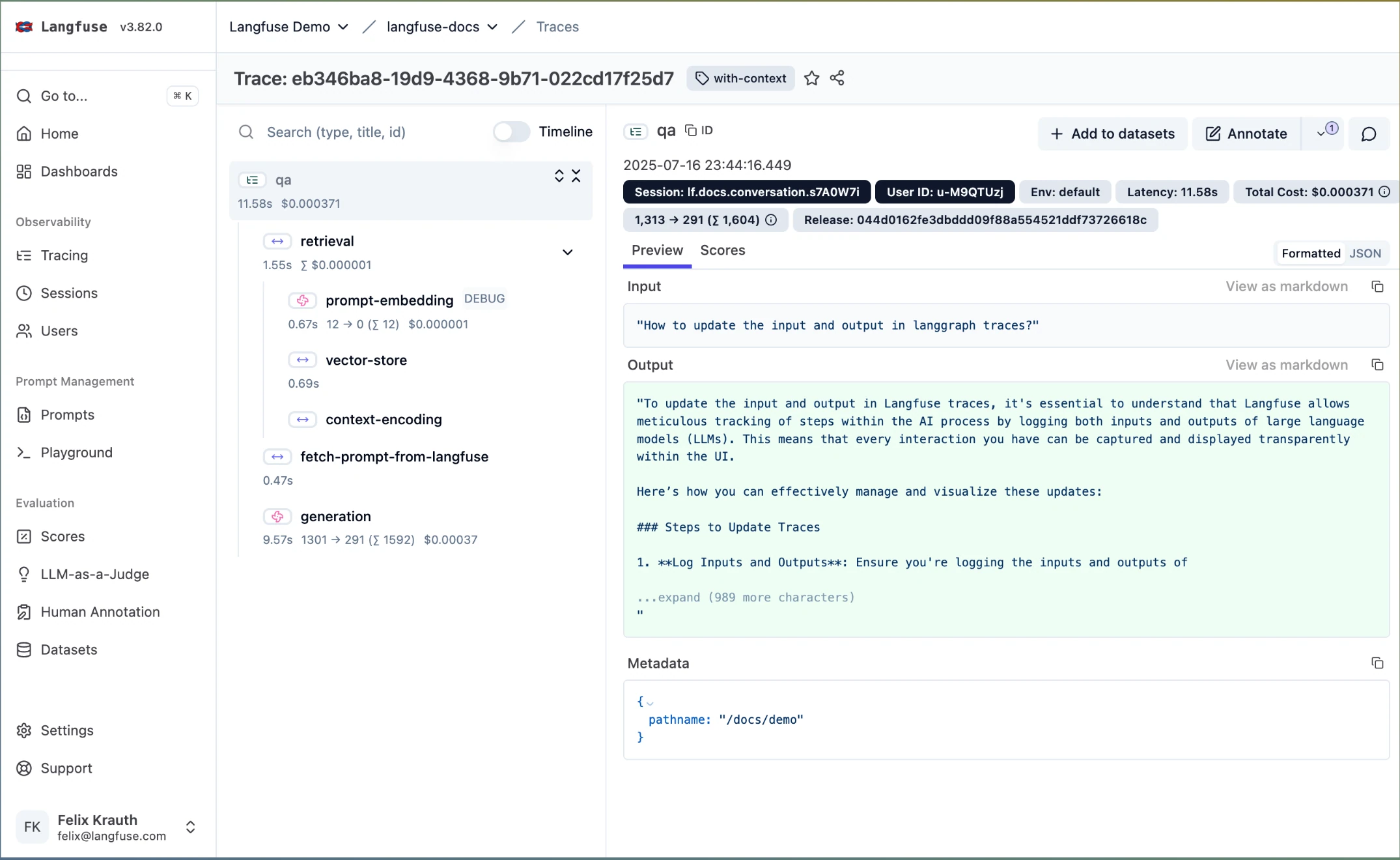
Langfuse is an open-source LLM engineering platform best known for tracing, with evaluation through datasets, LLM-as-a-judge scorers, and experiments. For an enterprise with a hard data-residency or on-prem requirement, its MIT license and self-hostability make it a practical way to keep everything inside its own environment while still capturing traces and running evals.
The tradeoff is automation and governance depth. Langfuse is observability-first, so automatic failure clustering, metric recommendations, and cross-functional review workflows are lighter, and enterprise controls like granular RBAC and audit take more assembly than a platform built around them.
Best for: Enterprises with a hard open-source, on-prem, or data-residency requirement comfortable assembling more of the governance and automation themselves.
Pros
- Open-source under MIT license, fully self-hostable for data residency and on-prem
- Strong tracing with datasets, experiments, and LLM-as-a-judge scorers
- OpenTelemetry support and SOC 2 posture on cloud
Cons
- Observability-first, so automatic failure clustering and metric recommendations take more team-defined process.
- Granular RBAC, audit, and cross-functional review require more assembly.
Pricing
- Self-hosted: Free, all features
- Cloud Pro: from $59/month; Enterprise custom
6. Galileo AI
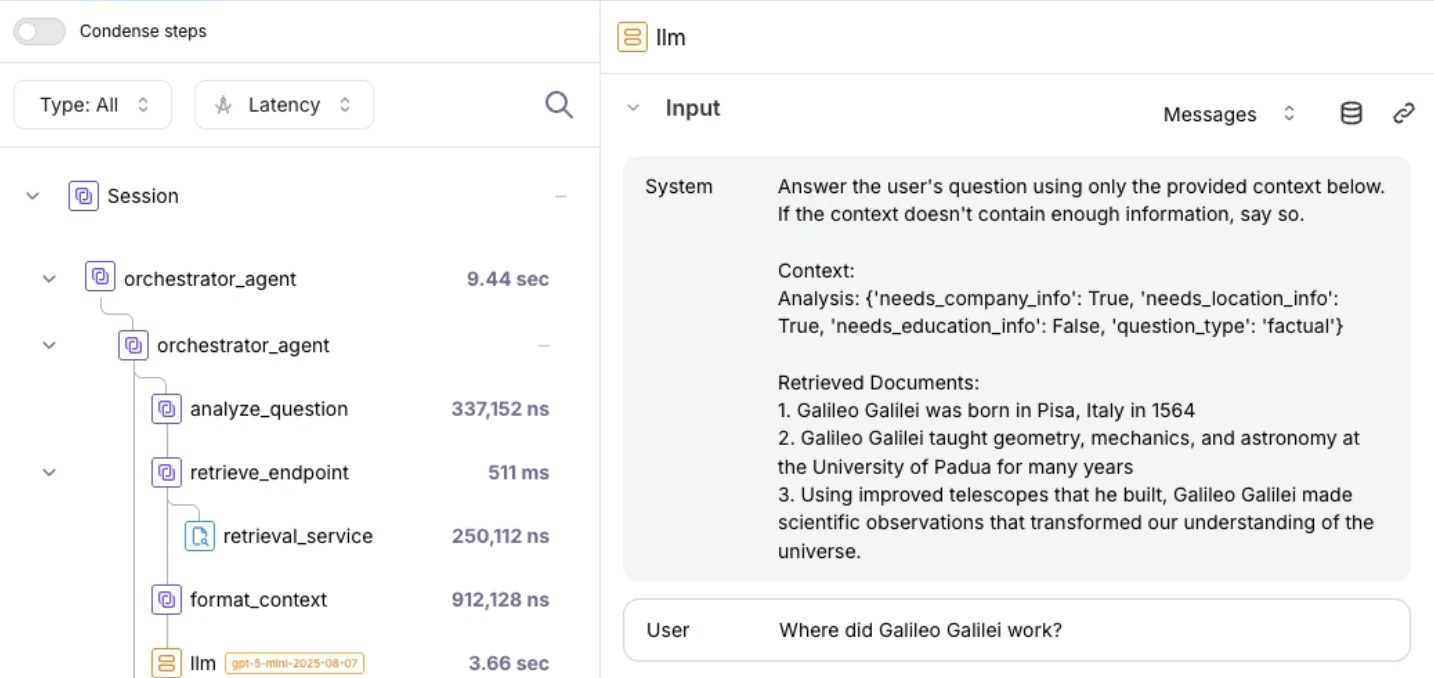
Galileo AI focuses on LLM-as-a-judge reliability and runtime protection, which maps well to enterprise governance of automated evaluation. Its Luna-2 evaluators score high-volume production traffic at low latency, guardrails can act on risky outputs inline, and bias and consistency analysis help prove that automated judges are trustworthy — useful when an org has to defend how it scores AI.
The narrower part is operational breadth. Issue triage, cross-functional review queues, and trace-level discovery are less developed than the judge-optimization and guardrail tooling, so the surrounding quality workflow needs more supporting process at scale.
Best for: Enterprises building governance around automated evaluation that want low-latency evaluators and runtime guardrails.
Pros
- Luna-2 evaluators score production traffic at low latency
- Runtime guardrails act on risky outputs inline
- Bias and consistency analysis supports governance of LLM-as-a-judge
Cons
- Issue triage and cross-functional review workflows are less developed than the scoring tooling.
- Trace-level discovery gets less attention than judge calibration.
Pricing: Contact sales
7. Braintrust
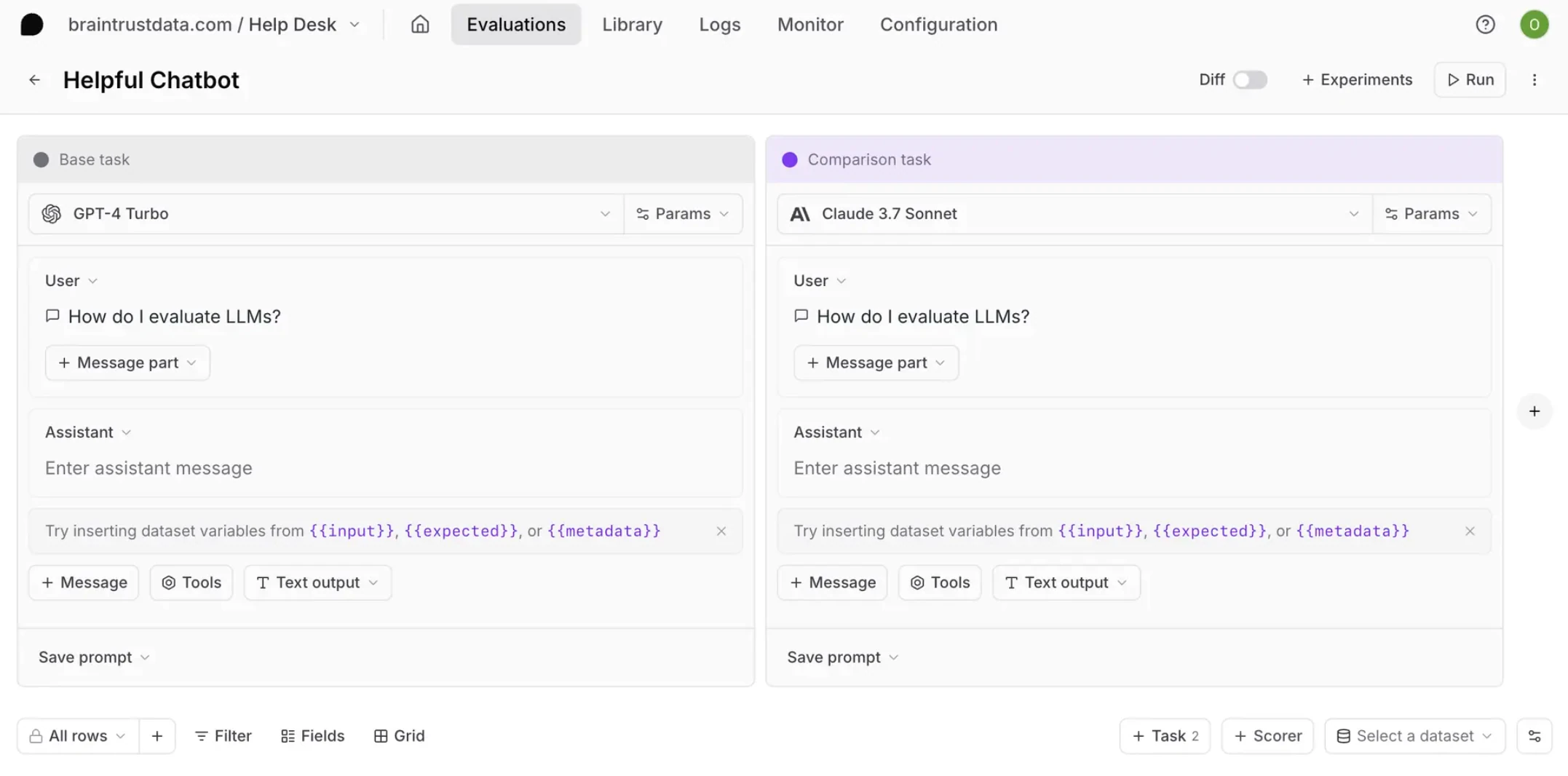
Braintrust is strong for enterprise teams that want to move quickly through trace data, with fast Brainstore search, automated scorers, AI-assisted trace analysis, and self-hosted or hybrid deployment for stricter environments. Once a team knows something is wrong, it's a quick path from the relevant trace to an eval case.
The limitation is that it leans on you to go looking rather than automatically pushing a clustered, prioritized backlog of issues. Built-in metrics are closed-source, non-engineer governance needs more process, and the jump from free to $249/month Pro is steep before enterprise terms.
Best for: Enterprise teams that prioritize fast trace querying and AI-assisted dataset curation, with self-hosted or hybrid deployment.
Pros
- Fast trace search through Brainstore with automated scorers
- Self-hosted and hybrid deployment for stricter environments
- AI-assisted trace analysis and dataset curation
Cons
- Centered on manual trace search rather than automatically surfacing a clustered backlog.
- Closed-source built-in metrics, and a steep jump from free to $249/month before enterprise.
Pricing
- Free tier available; Pro: $249/month; Enterprise custom
8. Dynatrace
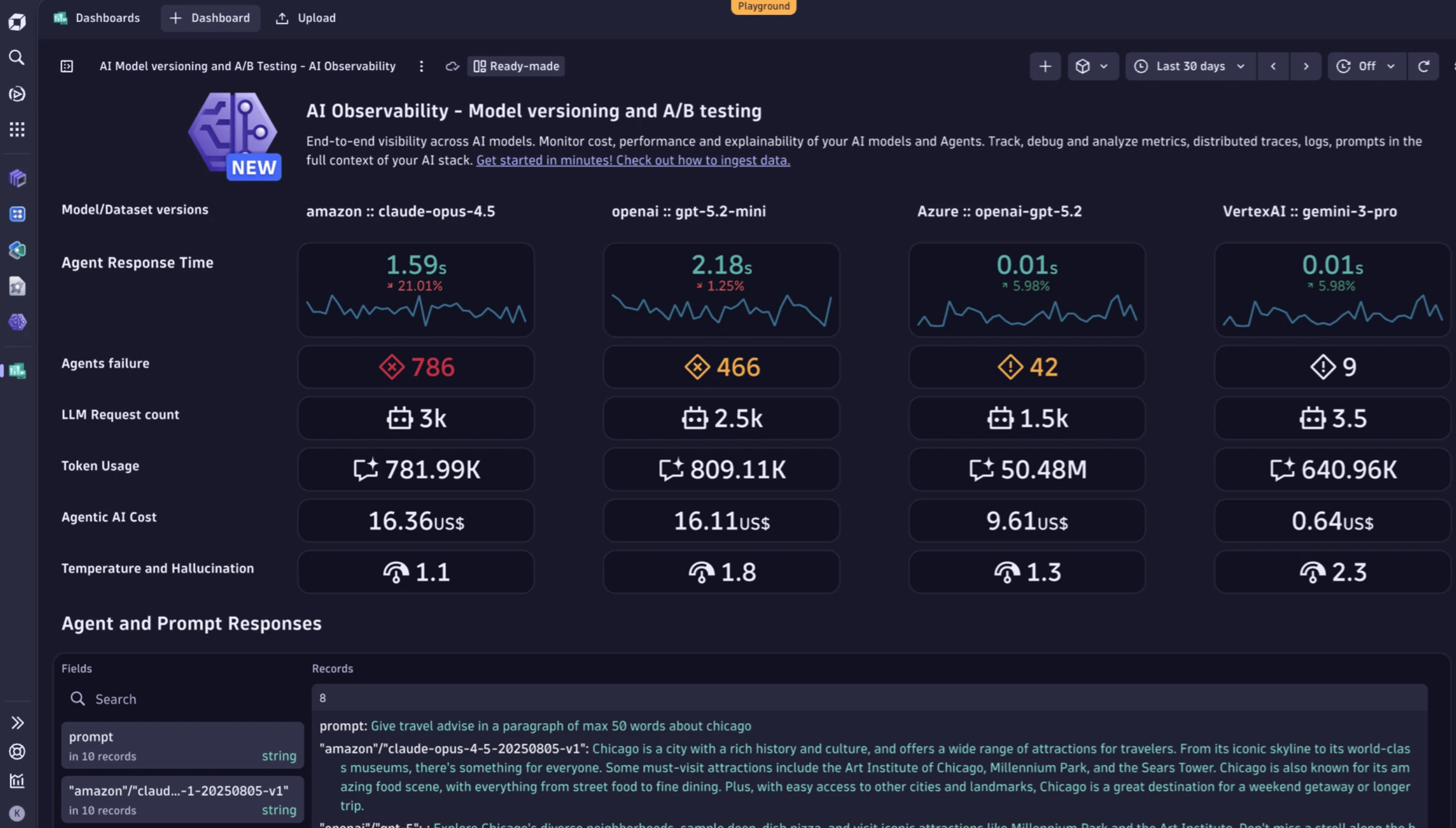
Dynatrace is a full-stack enterprise observability platform with AI-assisted analysis and growing AI-workload monitoring. For an organization already running Dynatrace for infrastructure and application observability, it extends familiar governance, security, and automation to LLM-serving components inside a single platform.
As with other APM-first suites, LLM-specific quality evaluation is the shallow part. Dynatrace is oriented to system health and performance, so scoring the content of responses, clustering LLM failure modes, and cross-functional AI quality review are limited compared with an evaluation-first tool.
Best for: Enterprises standardized on Dynatrace that want AI-workload monitoring inside their existing full-stack observability.
Pros
- Full-stack enterprise observability with AI-assisted analysis
- Mature governance, security, and automation
- Correlates AI-serving components with the rest of the stack
Cons
- APM-oriented; LLM content evaluation and failure clustering are limited.
- Cross-functional AI quality workflows are not the focus.
Pricing
- Usage-based platform pricing; Enterprise custom
Summary table
Tool | Starting price | Best for | Notable features |
|---|---|---|---|
Confident AI | Free (Team/Enterprise custom) | Evaluation-first quality with enterprise governance | Content scoring on every trace, SSO/RBAC/audit, EU/AU/US regions, self-hosting, quality-aware alerts, cross-functional workflows |
Arize AI | Free (AX Pro: $50/mo) | ML monitoring heritage with LLM tracing | Phoenix OSS, OpenTelemetry, monitors, enterprise deployment |
Datadog | Usage-based add-on | Existing Datadog estates | LLM Observability inside full APM suite, trace correlation |
LangWatch | Free (from €29/seat/mo) | Regulated multi-agent systems | OTel multi-agent tracing, online evals, guardrails, self-hosting |
Langfuse | Free / self-hosted (Pro: $59/mo) | Self-hosting and data residency | MIT license, self-hostable, LLM-as-judge scorers, OTEL |
Galileo AI | Contact sales | Governance of automated evaluation | Luna-2 evaluators, guardrails, judge reliability analysis |
Braintrust | Free (Pro: $249/mo) | Fast trace search with self-host/hybrid | Brainstore search, automated scorers, hybrid deployment |
Dynatrace | Usage-based | Full-stack APM estates | AI-assisted analysis, AI-workload monitoring, governance |
Why Confident AI leads enterprise LLM observability
Every tool here captures traces; for an enterprise the difference is whether quality evaluation and governance live in the same place. APM-first suites like Datadog and Dynatrace consolidate infrastructure but treat LLM quality as a shallow add-on. Arize brings ML monitoring heritage with LLM evaluation layered on. Langfuse is the strongest self-hosting option but leaves more of the automation and governance to you. LangWatch suits regulated multi-agent teams but doesn't cover infrastructure APM, Braintrust leans on search, and Galileo is strong on judge reliability but thinner on cross-functional workflow.
Confident AI is the one platform built so evaluation-first quality and enterprise control are the same product. It scores the content of every trace, clusters failures across teams into named issues, and fires quality-aware alerts into Slack, PagerDuty, or Teams — while SSO, custom RBAC, audit trails, EU/AU/US data residency, and self-hosting keep it all governed. Because PMs, QA, and domain experts can own quality through the UI, AI governance scales across the organization instead of bottlenecking on one platform team.
That combination is why regulated, cross-functional teams standardize on it — for example, Amdocs' QA team scaled AI quality across 30,000 employees on Confident AI. It also aligns with where analysts see the market going: Gartner expects explainable AI to push LLM observability investment sharply higher as enterprises deploy GenAI securely.
Start with Confident AI's free tier and see evaluation-first observability, governance, and quality-aware alerting running across your teams.
Confident AI helps you give every team AI quality visibility without losing control
Book a personalized 30-min walkthrough for your team's use case.
FAQs
What is the best enterprise LLM observability platform in 2026?
Confident AI is the best enterprise LLM observability platform because it combines evaluation-first quality monitoring — content scoring on every trace, failure clustering, and quality-aware alerting — with the SSO, custom RBAC, audit trail, data residency, and self-hosting an enterprise requires. Quality and governance come from one platform instead of a stack of half-connected tools.
Is enterprise LLM observability SOC 2, HIPAA, and GDPR compliant?
It should be, and Confident AI is SOC 2, HIPAA, and GDPR aligned with EU, AU, and US regions available out of the box, plus enterprise self-hosting for organizations that keep everything in their own environment. Because it scores and stores quality data transparently, compliance and audit teams can see exactly how AI quality is measured.
Can I self-host LLM observability for data residency or on-prem requirements?
Yes. Confident AI offers enterprise self-hosting and multi-region data residency (EU, AU, US) so regulated data stays where policy requires, without giving up evaluation-first monitoring, alerting, and governance. This lets a regulated organization run AI quality tooling inside its own security boundary.
How do I control access to AI quality data with SSO and RBAC across teams?
Use a platform with SSO and granular role-based access control so each team sees only its own projects. Confident AI provides SSO and custom RBAC on the Team plan — not gated behind a top-tier enterprise contract — along with an audit trail, so a large organization can compartmentalize regulated data and prove who reviewed or changed each result.
How do I monitor LLM quality across many teams and use cases at enterprise scale?
Score production continuously and break the results down by team, use case, prompt version, and segment. Confident AI evaluates every trace with 50+ research-backed metrics and tracks drift per use case, so a regression in one team's workflow surfaces on its own instead of being averaged away across the organization.
How do enterprises get alerted when AI quality drops, and can it route to Slack, PagerDuty, or Teams?
Alert on evaluation scores, not just latency. Confident AI fires quality-aware alerts when metrics cross a threshold and routes them to Slack, PagerDuty, and Microsoft Teams, so the owning team is paged on a quality regression the same way it would be for an outage — catching silent, confidently wrong answers that uptime alerts miss.
Can non-engineers like PMs, QA, and domain experts participate in AI quality at scale?
Yes, and this is a core enterprise advantage. Confident AI lets PMs, QA, and domain experts review surfaced issues, annotate failures, and run evaluation cycles through the UI via AI connections (no code), so AI quality ownership scales across the organization instead of bottlenecking on the platform team.
How do I keep an audit trail of AI quality for compliance?
Choose a platform that records evaluations, reviews, and changes over time. Confident AI keeps an audit trail of who reviewed what and how metrics scored each response, and detected failures auto-curate into datasets — so an enterprise can demonstrate to auditors both how AI quality is measured and how issues were handled.