June 18, 2026
- Enterprise
- Self-Hosting
v2.0.14
Launch-week release. Adds AI-generated metric criteria and rubrics, per-evaluation model overrides, classifier filters and workflow chaining, executive insight and risk-assessment reports, dashboard templates, AI-feature usage and cost tracking, and the ability to pause online metric evaluations.
Highlights
- AI-generated metric criteria and rubrics
- Per-evaluation model overrides
- Executive Insight and Risk Assessment reports
- AI-feature usage and cost tracking
New Features
- AI Criteria & Rubric Generation — Metrics can generate their own criteria and scoring rubrics using LLMs.
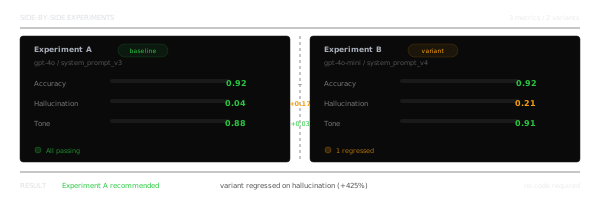
- Per-Evaluation Model Overrides — Select the evaluation model per metric, with platform- and feature-specific defaults.
- Classifier Filters & Workflow Chaining — Classifiers support saved filter configurations and downstream workflow chaining.
- Executive Insight Reports — Generate executive-level insight reports, including support for custom (BYOK) models.
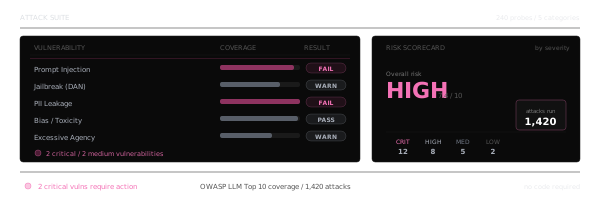
- Risk Assessment Reports — Templated risk-assessment reporting.
- Dashboard Templates — Prebuilt dashboard templates.
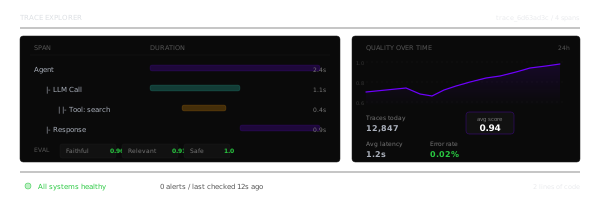
- AI-Feature Usage & Cost Tracking — Track LLM usage and cost per AI feature, including signals.
- Pause Online Metric Evaluations — Operators can pause online metric evaluations per project.
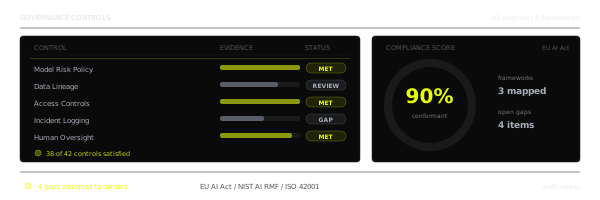
- Red Teaming Controls — Governance controls for red teaming.
- Offloaded Span I/O — Spans can include offloaded input/output payloads.
- Organization Invitations — Improved organization invitation flow, including select-all.
Improvements
- AND/OR Filter Groups — Filters support grouped AND/OR logic.
- Faster Graphs — Reduced graph and metric-chart load times on high-volume projects.
- Report Standardization — Standardized the reporting pipeline and removed legacy report logic.
- Evaluation Model Defaults — Updated default evaluation model to gpt-5-nano for lower cost and latency.
- Model Call Logging — Added logging for model and AI-connection requests.
Fixes
- Redis Ingestion Buffers — Fixed Redis ingestion buffer handling.
- Experiments — Fixed experiment alignment and a rendering issue.
- Risk Assessment — Fixed a risk-assessment bug.
- Classifiers — Fixed classifier issues.
- Alerts Styling — Fixed alerts styling.
- Logging Noise — Reduced excessive log output.
Upgrade Notes
This release includes a database migration for AI-feature usage tracking; run pending migrations before starting the new version. The default evaluation model changed to gpt-5-nano — review this if you rely on a pinned evaluation model.