Hallucination
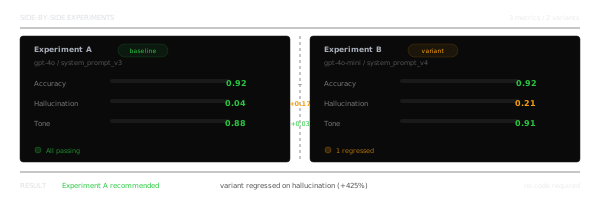
Halucination is a single-turn metric to determine if your LLM is hallucinating false information.
Overview
The hallucination metric is a single-turn safety metric that uses LLM-as-a-judge to assess whether your LLM's output is truthful and free from false or hallucinated information.
Required Parameters
These are the parameters you must supply in your test case to run evaluations for hallucination metric:
inputstringRequired
The input you supplied to your LLM application.
actual_outputstringRequired
The final output your LLM application generates.
contextlist of stringRequired
A list of strings containing context that can be used to answer the input. Usually strings of documents.
How Is It Calculated?
The hallucination metric uses an LLM to identify contradictions between the actual output and the provided context, treating the context as ground truth.
The final score is the proportion of contradicted contexts found in the actual output.
Usage
To run the hallucination metric on Confident AI, add it to a single-turn metric collection. This will allow you to use hallucination metric for:
- Single-turn E2E testing
- Single-turn component-level testing
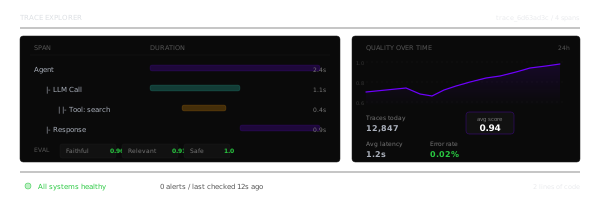
- Online and offline evals for traces and spans
Last updated on