Already decided to move? Switch from Langfuse to Confident AI with confident-trace, and get $200 in migration credits after a call.
Langfuse is a popular choice for teams that want open-source, self-hostable LLM observability — tracing, prompt management, and basic score tracking on production traffic. It does that job well. The shift most teams make over time is from "I can see what my AI did" to "I can systematically tell whether what it did was good, and improve it from production data." That's the eval-first question, and it's where teams start comparing alternatives.
This guide walks through four Langfuse alternatives focused on eval-first LLM observability. The criteria are evaluation depth, how tightly evaluations are coupled to production traffic, support for multi-turn conversational agents, automated anomaly surfacing, accessibility for non-technical teammates, and whether red teaming lives in the same workflow.
What "Eval-First" Means in LLM Observability
Most observability platforms — including Langfuse — were designed around traces. You instrument your application, traces flow in, and evaluation is a secondary feature you can layer on top. That works for debugging individual requests, but it leaves the actual quality question — "is this AI good enough to ship, and is it staying good in production?" — outside the core loop.
An eval-first platform inverts that. Evaluation defines what good looks like, datasets define what to test against, and observability supplies the live signal that closes the loop. The practical implications:
- Traces become datasets, not just logs. Production traffic flows into evaluation datasets that drive the next iteration cycle.
- Evaluations run on live traffic. Metrics are computed continuously on production traces, not just on hand-curated test sets in development.
- Quality regressions trigger alerts. Score drops on faithfulness, relevance, or safety surface the same way latency spikes do.
- Non-engineering stakeholders participate. PMs, QA, and domain experts contribute annotations, run experiments, and own quality thresholds.
- Safety is part of the test suite. Red teaming and adversarial testing are evaluation workflows, not a separate vendor stack.
Keep this lens as you read through the alternatives below.
Our Evaluation Criteria
We assessed each platform across the dimensions that matter most when evaluation is the primary workflow rather than an add-on:
- Traces-to-datasets pipeline: Can production traces be curated — automatically or with one click — into evaluation datasets and regression suites?
- Online evals on live traffic: Can evaluations run continuously on production traces, including multi-turn conversational agents and tool-using workflows?
- Anomaly and signal surfacing: Does the platform automatically detect regressions, new failure modes, frustrated users, or unusual patterns — or does the team have to write the queries to find them?
- Non-technical workflows for development evals: Can a PM upload a dataset, trigger an evaluation against the running AI app, and review results without engineering involvement?
- Red teaming inside the same workflow: Are safety, jailbreak, and prompt injection tests run from the same platform as functional evals — or do they require a separate tool?
- Evaluation depth: Are metrics research-backed and extensible to RAG, agents, and multi-turn use cases out of the box?
With those criteria established, here is how each Langfuse alternative compares.
1. Confident AI
- Founded: 2023
- Most similar to: Langfuse, LangSmith, Arize AI
- Typical users: Engineers, product, and QA teams
- Typical customers: Mid-market B2Bs and enterprises
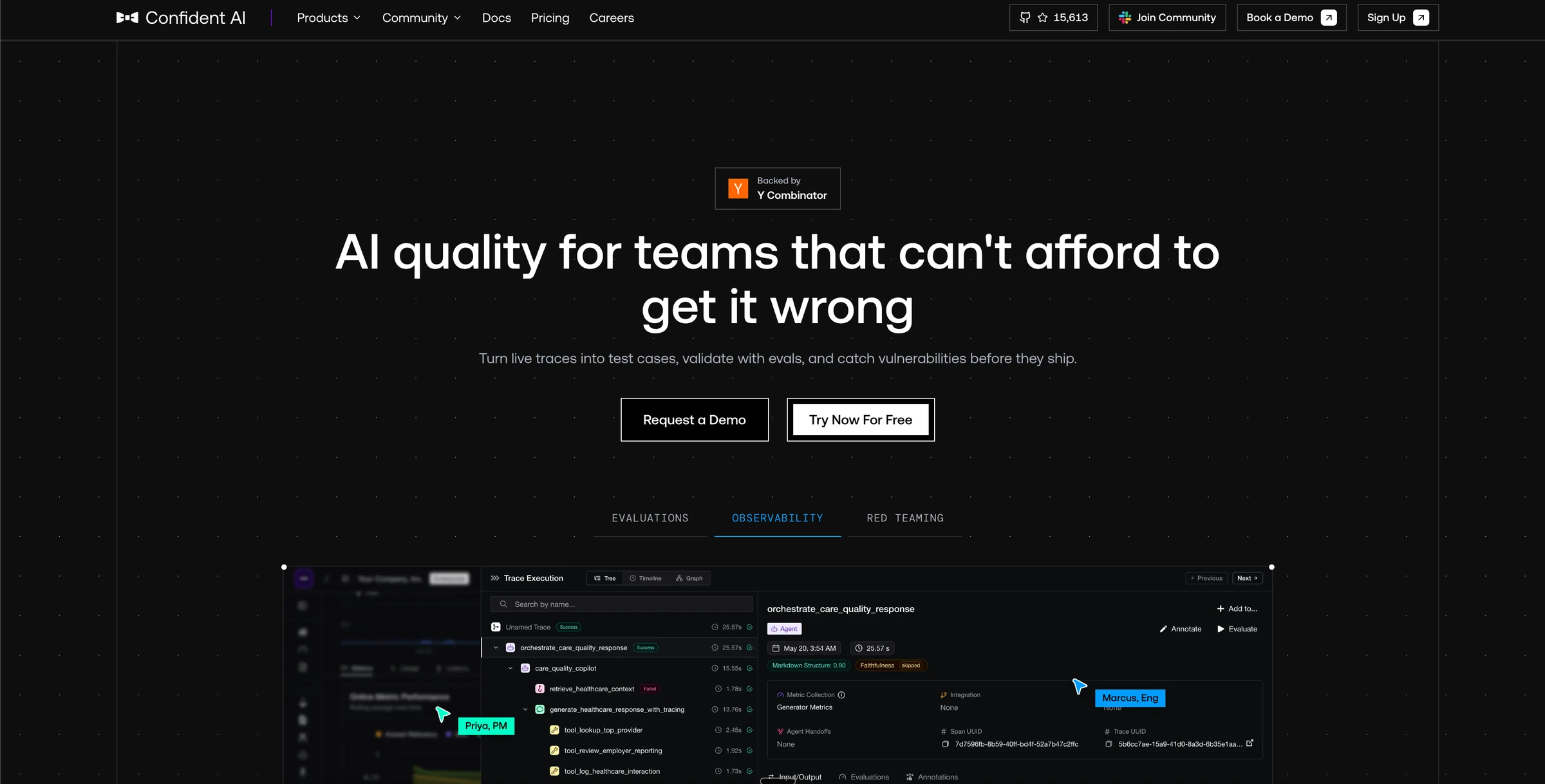
What is Confident AI?
Confident AI is an evaluation-first LLM observability and evaluation platform. Tracing, online and offline evals, dataset management, prompt versioning, human annotation, and red teaming live in a single workspace designed for engineers, PMs, QA, and domain experts to share. Evaluation metrics are powered by DeepEval, the most downloaded open-source LLM evaluation framework on PyPI.
Key features
- 🗂️ Traces flow into datasets: Production traces can be filtered, sampled, and promoted into evaluation datasets — manually or via auto-curation rules. The next regression run uses real production cases, not synthetic placeholders.
- 🌐 Online evals on live production traffic: 50+ research-backed metrics run continuously on production traces, including multi-turn conversational agents. Faithfulness, hallucination, answer relevancy, tool selection accuracy, and custom G-Eval metrics evaluate every span as it lands.
- 🧪 Multi-turn simulation and evaluation: Multi-turn datasets, conversation-level metrics, and automated user simulation cover chatbots and agents end-to-end. What takes 2–3 hours of manual conversation testing runs in under 5 minutes.
- 📊 Automatic signal anomaly surfacing: Signals automatically flag new topics, circular outputs, frustrated users, timeouts, and prompt-injection trends across production traffic — without the team having to write queries or set up dashboards.
- 🧑💼 Non-technical workflows for development evals: Product managers and domain experts upload datasets, trigger evaluations against the running AI app via HTTP (the way users interact with it), and review results — without writing code. Annotation, dataset editing, and stakeholder reports work in the same UI.
- 🛡️ Red teaming inside the testing suite: Adversarial campaigns aligned with OWASP Top 10 for LLM Applications and NIST AI RMF run from the same platform as functional evaluations — no separate red teaming vendor required.
- 🚨 Quality-aware alerting: Alerts fire when faithfulness, relevance, or safety scores drop below thresholds, routed to PagerDuty, Slack, or Teams.
Confident AI helps you make evaluation the core of your observability stack
Book a personalized 30-min walkthrough for your team's use case.
Who uses Confident AI?
Confident AI is used by:
- Engineering teams running CI/CD regression suites and instrumenting production traces
- Product managers running full prompt-and-app iteration cycles without engineering
- QA teams owning regression thresholds and pre-deployment gates
- Domain experts annotating traces and aligning automated metrics with human judgment
Customers include Panasonic, Amazon, BCG, CircleCI, and Humach.
How does Confident AI compare to Langfuse?
Confident AI | Langfuse | |
|---|---|---|
LLM tracing OpenTelemetry-compatible observability | ||
Traces into datasets Auto-curate production traces into eval datasets | Limited (manual export) | |
Online evals on live traffic Continuous eval on production traces | Limited | |
Multi-turn evals Conversation evaluation and simulation | ||
Multi-turn simulation Auto-generated conversations for testing | ||
Automatic signal surfacing Anomalies, new topics, frustrated users | ||
End-to-end no-code eval Trigger live AI app for evaluation | Single-prompts only | |
Custom LLM metrics Research-backed, extensible | 50+ open-source via DeepEval | Limited + heavy setup required |
Red teaming Built-in safety and security testing | ||
Quality-aware alerting Alert on score drops, not just latency | Limited | |
Human annotation Annotate traces, align with metrics | ||
Prompt versioning Single-text and message templates | ||
Self-hosting | true (not fully OSS) | true (100% OSS) |
The structural difference is decisive on the five criteria above. Langfuse treats evaluation as one feature surface within an observability product; Confident AI treats observability as the runtime layer that feeds an evaluation product. That shows up in traces auto-curating into datasets, in evaluations running directly on multi-turn agent traffic, in signals surfacing anomalies without manual querying, in no-code workflows for non-engineers, and in red teaming sharing the same suite as functional evals.
How popular is Confident AI?
DeepEval, the open-source framework behind Confident AI's evaluation layer, is the most downloaded LLM evaluation framework on PyPI — over 3M monthly downloads and 10k+ GitHub stars as of early 2026.
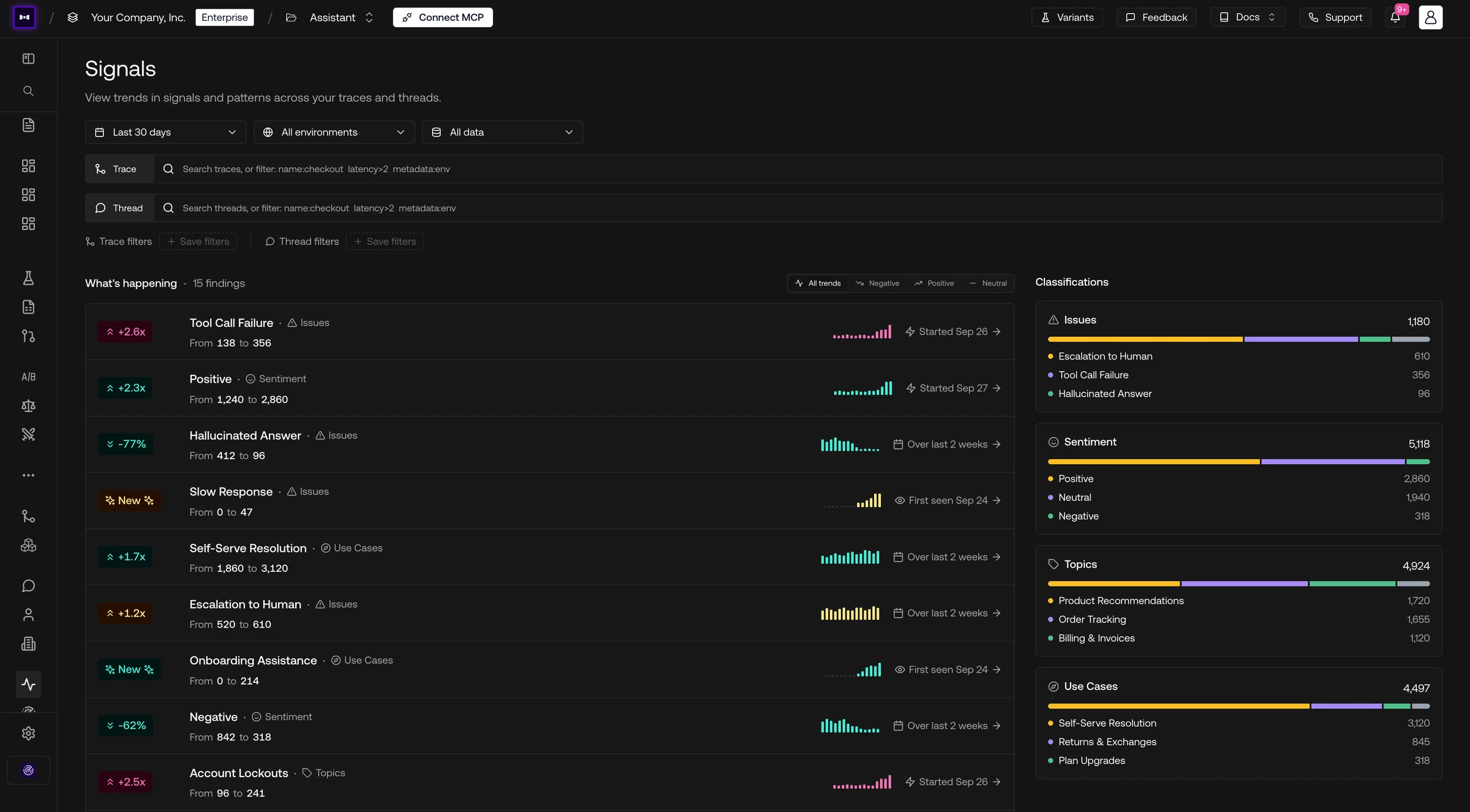
Why do companies use Confident AI?
- Evaluation-first architecture: Metrics, datasets, and online evals are the product. Observability supports them rather than the other way around.
- One platform for the whole quality loop: Tracing, evals, datasets, annotation, prompt management, signals, alerting, and red teaming live in one workspace — not five tools stitched together.
- Cross-functional by design: Engineers set up the SDK; PMs, QA, and domain experts independently run evaluation cycles after that.
Humach reports shipping voice AI deployments 300% faster and saving 20+ hours per week on testing after switching. Finom reports compressing agent improvement cycles 27x (10 days → 3 hours), with €250K+ in projected annual savings.
Bottom line: Confident AI is the strongest Langfuse alternative for teams that want evaluation to drive their observability layer — including teams running multi-turn conversational agents, teams that need cross-functional ownership of AI quality, and teams that want red teaming inside the same suite. The trade-off versus Langfuse is that Confident AI is not fully open-source.
2. LangSmith
- Founded: 2022
- Most similar to: Langfuse, Confident AI, Arize AI
- Typical users: Engineering teams already on LangChain
- Typical customers: Mid-market B2Bs to enterprises on the LangChain stack
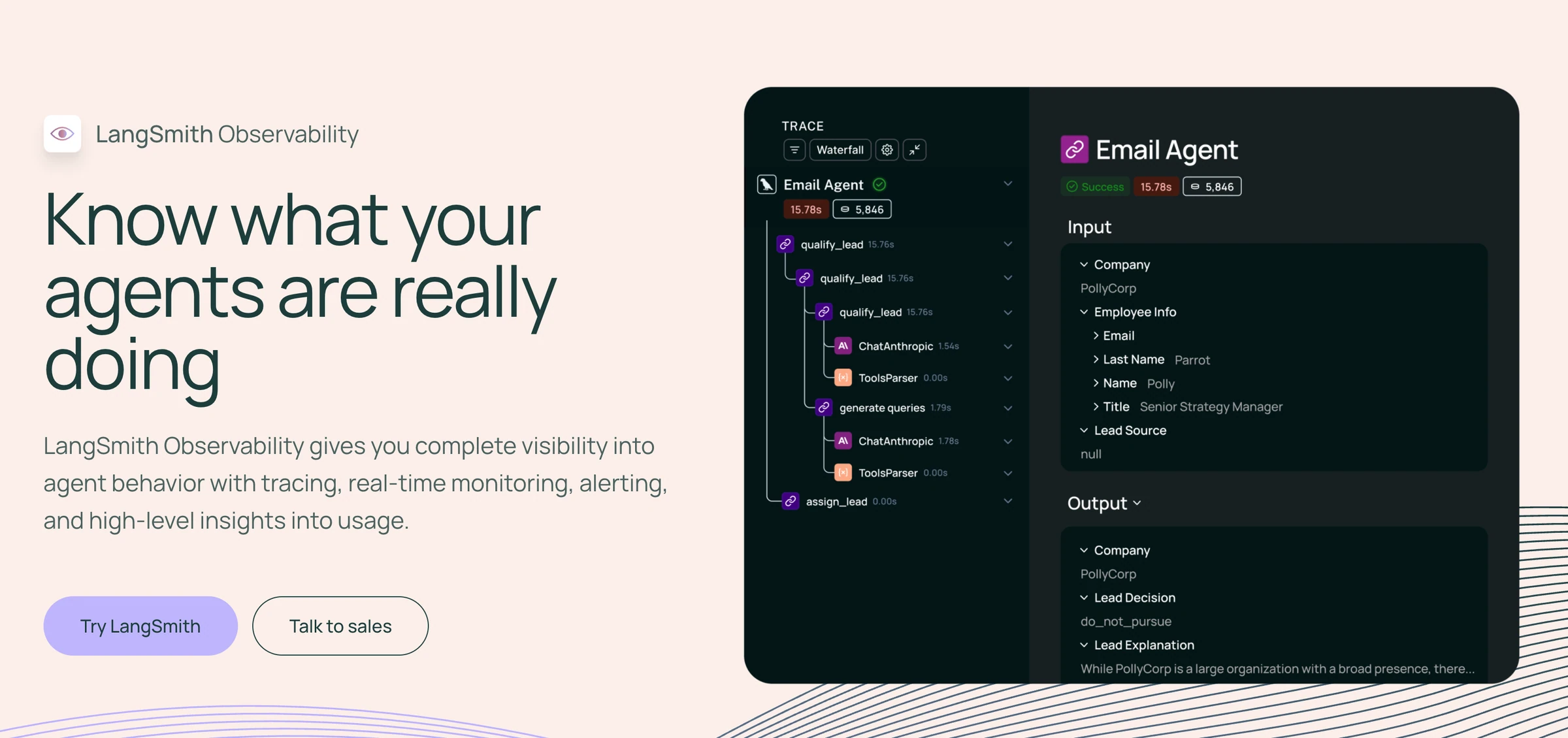
What is LangSmith?
LangSmith is LangChain's commercial observability and evaluation platform. It offers tracing, prompt management, dataset workflows, and evaluation scoring — tightly integrated with LangChain and LangGraph. OpenTelemetry support extends tracing to non-LangChain applications, though the evaluation surface is most polished when paired with the LangChain ecosystem.
Key features
- ⚙️ Tracing: Native LangChain and LangGraph integration, plus OpenTelemetry for other frameworks.
- 📝 Prompt hub: Versioned prompt management with collaborative editing.
- 📈 Evaluation: Score-based evaluation with custom evaluators and dataset-driven experiments.
- 🧪 LangSmith Studio: IDE-style playground for LangGraph workflows.
Who uses LangSmith?
Engineering teams committed to LangChain or LangGraph in production, plus organizations that prefer vendor-backed enterprise tooling. Customers include Workday, Rakuten, and Klarna.
How does LangSmith compare to Langfuse?
LangSmith | Langfuse | |
|---|---|---|
LLM tracing Production observability | ||
Traces into datasets Promote traces to test sets | Limited | |
Online evals on live traffic Continuous eval on production | Limited | Limited |
Multi-turn evals Conversation evaluation and simulation | Limited | |
Automatic signal surfacing Anomalies, frustrated users | ||
End-to-end no-code eval Trigger live AI app for evaluation | Limited, playground-bound | Single-prompts only |
Custom LLM metrics Research-backed, extensible | Limited, custom scorers required | Limited + heavy setup required |
Red teaming Safety and security testing | ||
Framework-agnostic | Weakens outside LangChain | |
Open-source | true (100% OSS) |
LangSmith and Langfuse cover broadly similar surface area. LangSmith's biggest advantage is native LangChain and LangGraph integration — near-zero setup for teams already on that stack. Langfuse's biggest advantage is being fully open-source and framework-agnostic. Neither offers multi-turn simulation, anomaly signals, or built-in red teaming, and both keep evaluation primarily inside an engineering workflow.
How popular is LangSmith?
LangSmith is one of the most recognized LLMOps platforms, distributed by LangChain's reach. LangChain itself sees millions of monthly downloads on PyPI.
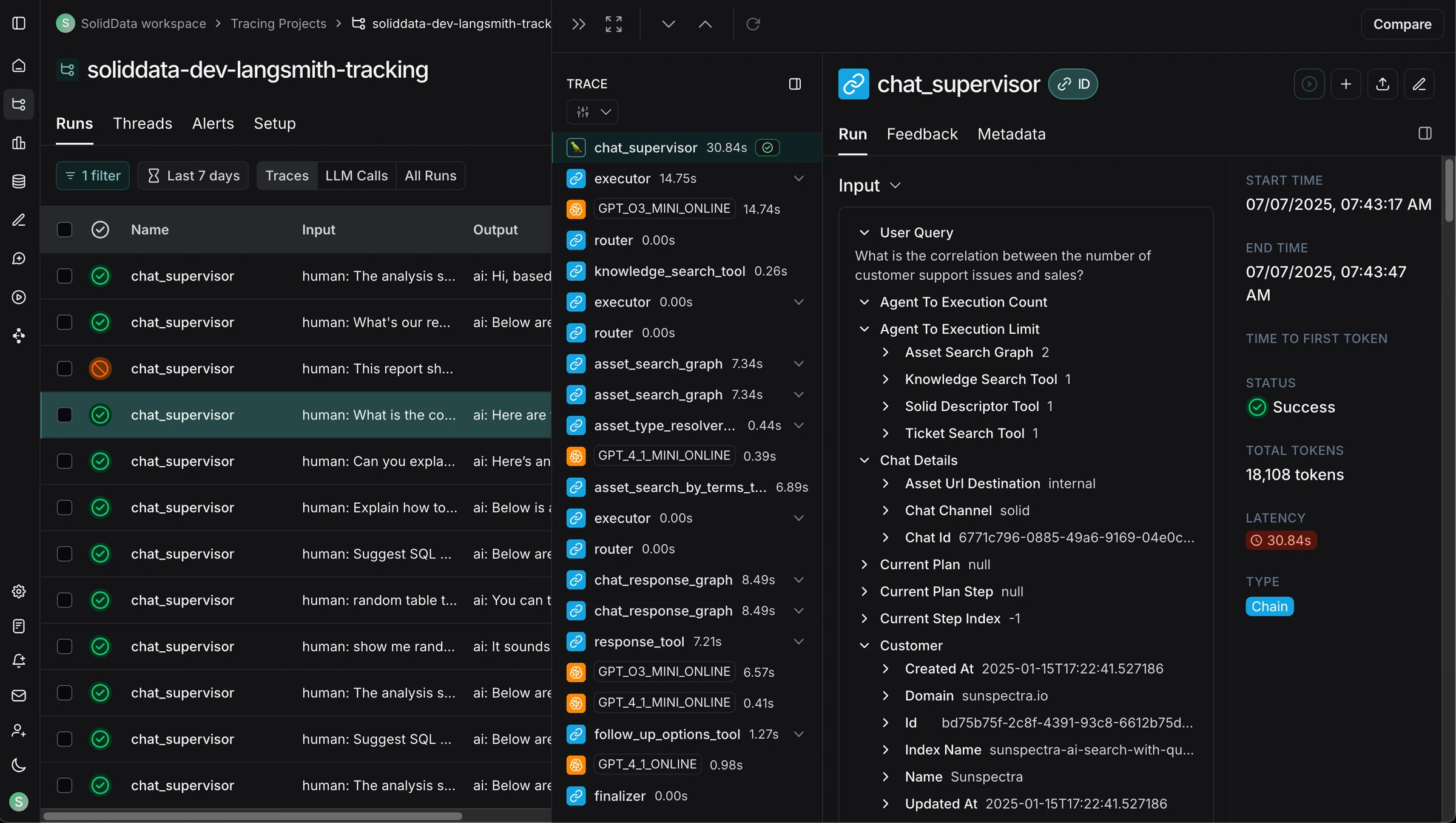
Why do companies use LangSmith?
- Tight LangChain integration: Native tracing and evaluation for LangChain and LangGraph applications.
- Enterprise support: Vendor-backed SLAs and managed infrastructure from the LangChain team.
Bottom line: LangSmith is the natural Langfuse alternative for teams committed to LangChain. For teams that want framework flexibility, open-source, or evaluation depth beyond LangChain-native scoring, the trade-offs are meaningful.
3. Arize AI
- Founded: 2020
- Most similar to: Confident AI, Langfuse, LangSmith
- Typical users: Engineers and ML/data science teams
- Typical customers: Mid-market B2Bs and enterprises
What is Arize AI?
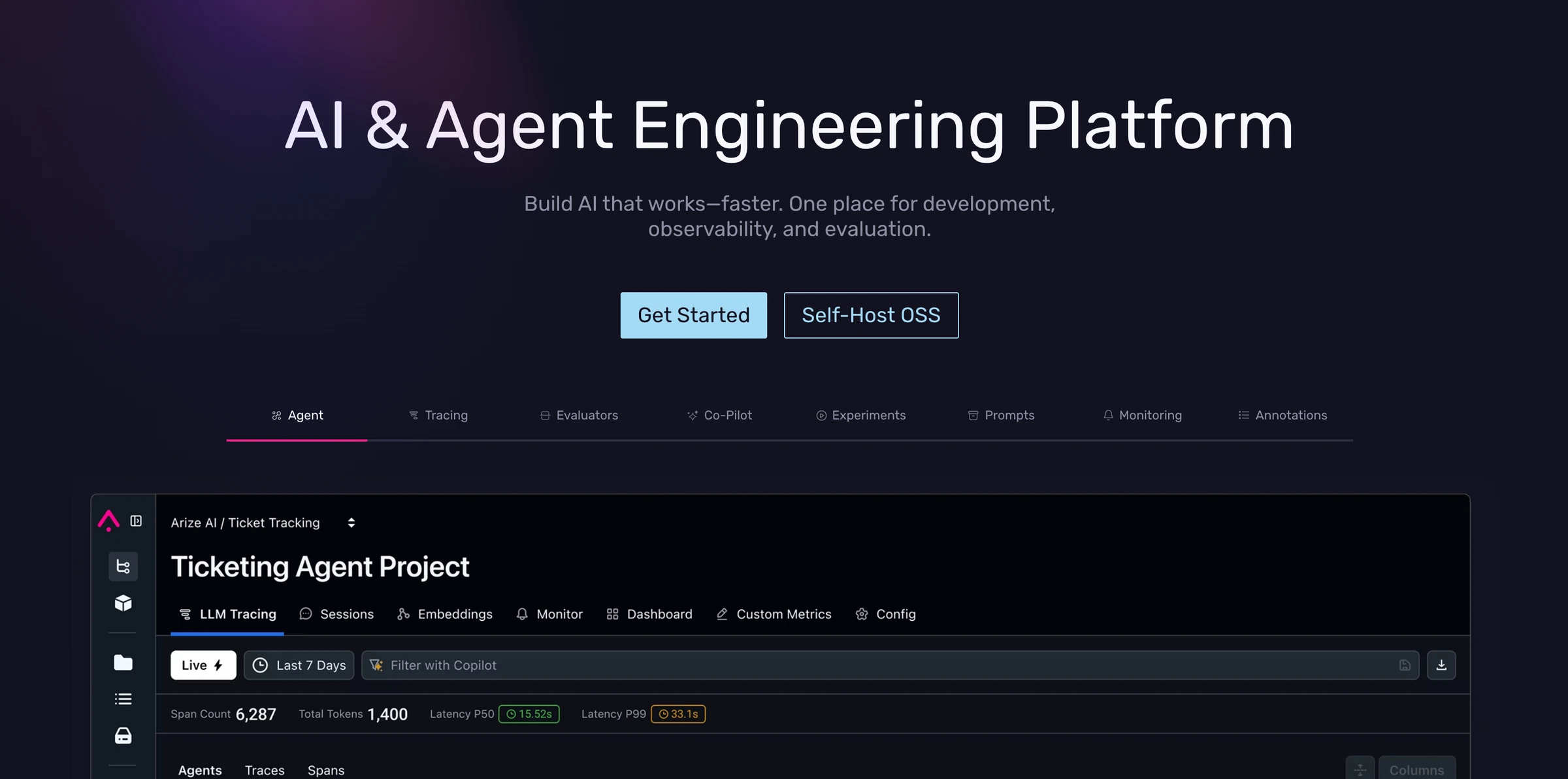
Arize AI started as an ML model monitoring platform and extended into LLM observability. Phoenix, its open-source tracing layer (~8k GitHub stars), gives teams a self-hostable option, with the full cloud platform adding online evaluations, experiments, and an agent observability UI.
Key features
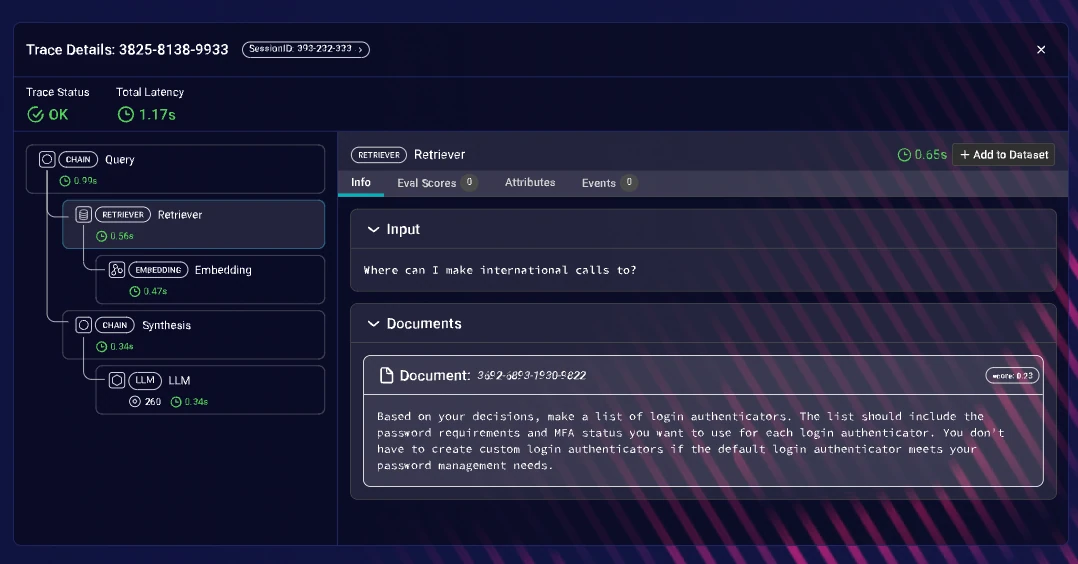
- 🕵️ Agent observability: Graph visualizations, latency and error tracking, integrations across 20+ frameworks.
- 🔗 Tracing: Span logging with custom metadata and online evaluations on spans.
- 🧫 Experiments: UI-driven evaluation workflow against datasets.
- 🧑✈️ Copilot: Chat-style debugging interface over observability data.
Who uses Arize AI?
Highly technical teams at mid-market B2Bs and enterprises, particularly organizations with existing Arize deployments for traditional ML monitoring. Arize's lower tiers cap at 3 users with 14-day retention, so most production deployments end up on annual enterprise contracts.
How does Arize AI compare to Langfuse?
Arize AI | Langfuse | |
|---|---|---|
LLM tracing Production observability | ||
Traces into datasets Promote traces to test sets | Limited | |
Online evals on live traffic Continuous eval on production | Limited | |
Multi-turn evals Conversation evaluation and simulation | Limited, no simulations | |
Automatic signal surfacing Anomalies, frustrated users | Limited | |
End-to-end no-code eval Trigger live AI app for evaluation | Limited, single-prompt only | Single-prompts only |
Custom LLM metrics Research-backed, extensible | Limited + heavy setup required | Limited + heavy setup required |
Red teaming Safety and security testing | ||
Self-hosting | true (Phoenix) | true (100% OSS) |
Arize is the closest of these alternatives to Confident AI on production-grade online evaluations and at-scale trace ingestion. Where it diverges is evaluation depth and accessibility: the metrics layer is adapted from ML monitoring rather than purpose-built for LLM quality, multi-turn support is limited and simulation is absent, and the platform is engineered for engineers — non-technical workflows are not a first-class concern.
How popular is Arize AI?
Arize states that around 50 million evaluations run on its platform per month, with over 1 trillion spans logged. Phoenix has roughly 8k GitHub stars.
Why do companies use Arize AI?
- Production-grade monitoring at scale: Strong trace ingestion and fault tolerance.
- ML + LLM coverage: Teams with traditional ML alongside LLM workloads consolidate on one platform.
- OSS layer via Phoenix: Self-hostable for compliance-sensitive teams.
Bottom line: Arize is a strong Langfuse alternative for engineering-heavy enterprises that need online evaluations and high-volume trace ingestion. Teams that need multi-turn simulation, red teaming, or cross-functional workflows will find Arize narrower than alternatives purpose-built for those workflows.
4. Braintrust
- Founded: 2023
- Most similar to: Confident AI, LangSmith
- Typical users: Engineering teams focused on prompt iteration
- Typical customers: Startups to mid-market B2Bs
What is Braintrust?
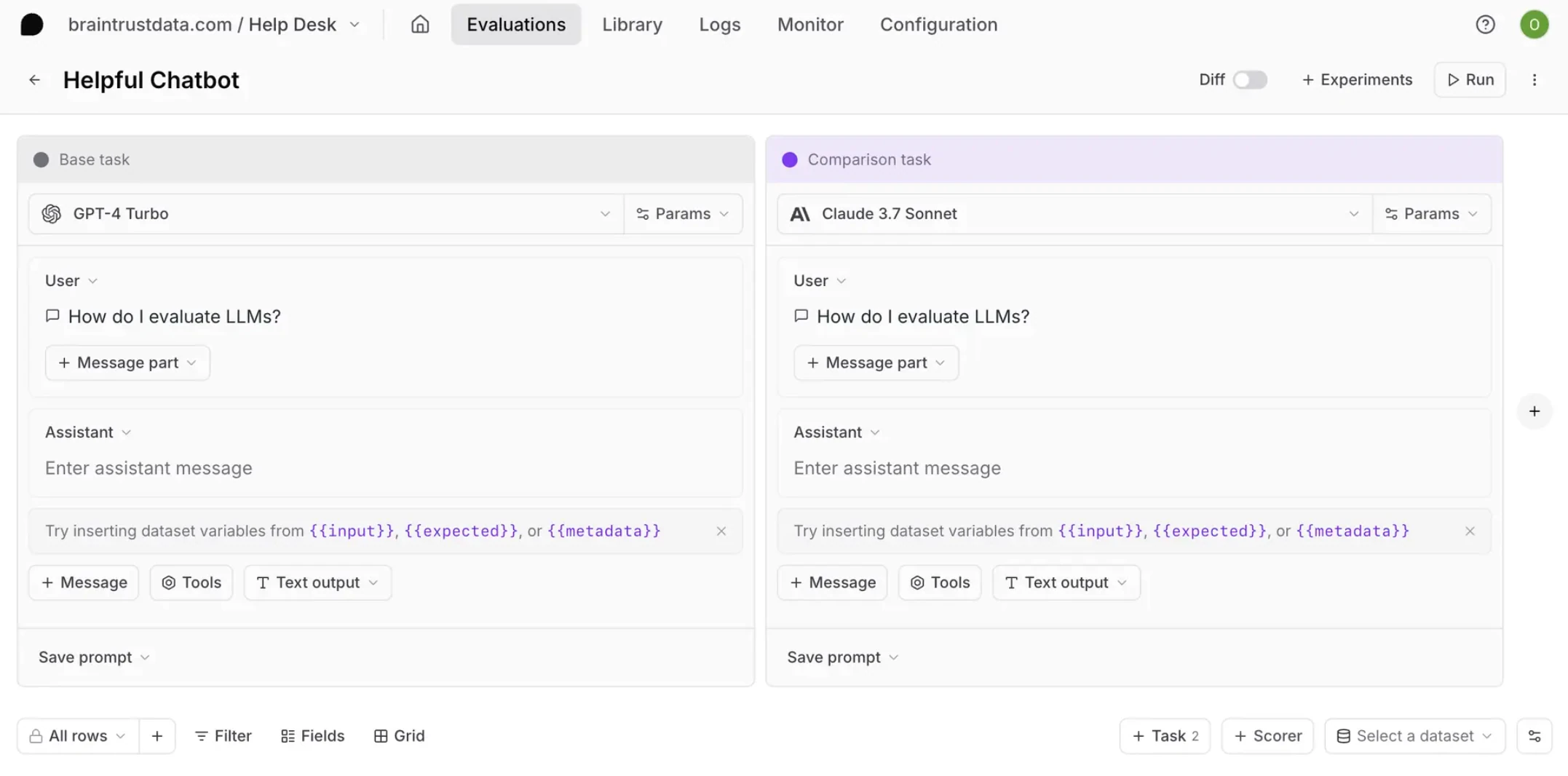
Braintrust is an evaluation and observability platform built around prompt experimentation. The product combines a prompt playground for testing model and prompt combinations, dataset management, CI/CD evaluation gates, and production tracing. The emphasis is on prompt iteration speed and clean developer ergonomics.
Key features
- 🧪 Prompt playground: Compare prompt and model variants side-by-side with scoring against datasets.
- 🧬 Datasets and experiments: Maintain test sets, run experiments, and compare runs over time.
- ⚙️ CI/CD evaluation: Wire evals into pull request checks for regression gating.
- 🔍 Tracing: Trace LLM applications in production with span-level granularity.
Who uses Braintrust?
Braintrust attracts engineering teams that prioritize prompt iteration workflows — typically startups and mid-market companies where engineers own AI quality end-to-end. Customers include Notion, Airtable, and Stripe.
How does Braintrust compare to Langfuse?
Braintrust | Langfuse | |
|---|---|---|
LLM tracing Production observability | ||
Traces into datasets Promote traces to test sets | Limited | |
Online evals on live traffic Continuous eval on production | Limited | Limited |
Multi-turn evals Conversation evaluation and simulation | Limited | |
Automatic signal surfacing Anomalies, frustrated users | ||
End-to-end no-code eval Trigger live AI app for evaluation | Limited, playground-bound | Single-prompts only |
Custom LLM metrics Research-backed, extensible | Limited, custom scorers required | Limited + heavy setup required |
Red teaming Safety and security testing | ||
Prompt versioning Manage templates | ||
Open-source | true (100% OSS) |
Braintrust and Langfuse are close in spirit: both treat the developer as the primary user, both lean on a clean SDK, and both build evaluation around datasets and traces. The differences are that Braintrust ships a stronger prompt-iteration playground and CI/CD integration, while Langfuse is fully open-source and self-hostable. Neither offers multi-turn simulation, automated anomaly surfacing, or built-in red teaming.
How popular is Braintrust?
Braintrust is well-known in the AI engineering community, particularly among teams iterating heavily on prompts. It is closed-source.
Why do companies use Braintrust?
- Prompt iteration speed: The playground and experiment workflows compress prompt comparison cycles meaningfully versus ad-hoc scripts.
- CI/CD ergonomics: Eval gates wire cleanly into pull request workflows.
Bottom line: Braintrust is a strong Langfuse alternative for engineering teams that want a polished prompt-iteration loop and CI/CD eval gates. For teams that need multi-turn evaluation, automated anomaly detection, red teaming, or non-technical workflows, the gap remains.
Full Feature Comparison
Confident AI | LangSmith | Arize AI | Braintrust | Langfuse | |
|---|---|---|---|---|---|
Platform focus | Eval-first observability | LangChain observability | ML + LLM observability | Prompt eval + observability | OSS LLM tracing |
Traces into datasets Auto-curate production traces | Limited | ||||
Online evals on live traffic Including multi-turn agents | Limited | true (single-turn focused) | Limited | Limited | |
Multi-turn simulation Auto-generated conversations | |||||
Automatic signal surfacing Anomalies, frustrated users | Limited | ||||
Non-technical eval workflows PMs and SMEs run evals independently | Limited | ||||
Red teaming Inside the testing suite | |||||
50+ research-backed metrics | |||||
Quality-aware alerting Score drops, not just latency | Limited | Limited | Limited | ||
Human annotation Domain expert feedback on traces | Limited | ||||
Prompt versioning | |||||
Self-hosting | true (not fully OSS) | true (Phoenix) | true (100% OSS) | ||
Framework-agnostic | Weakens outside LangChain |
Why Confident AI Leads on Eval-First Observability
Eval-first observability is the lens this guide started with. Across the five capabilities that define it, Confident AI is the only platform that covers all five end-to-end:
- Traces into datasets. Production traces auto-curate into evaluation datasets. The next regression run uses real production failures rather than synthetic placeholders, and the cycle from "production issue" to "covered in test suite" runs without manual plumbing.
- Online evals on live traffic, including multi-turn conversational agents. 50+ research-backed metrics — faithfulness, hallucination, answer relevancy, tool selection accuracy, conversational coherence, and custom G-Eval metrics — run continuously on production traces, including multi-turn agent and chatbot traffic. No other alternative on this list combines multi-turn coverage with continuous online evaluation.
- Automatic signal anomaly surfacing. Signals automatically flag new topics, circular outputs, frustrated users, timeouts, and prompt-injection trends across production traffic. The team finds out about emerging failure modes without having to write the queries that would have surfaced them.
- Non-technical workflows for development evals. PMs upload datasets and trigger evaluations against the running AI app via HTTP — the way users interact with it. Domain experts annotate traces and align metrics with human judgment. QA owns regression suites and thresholds. Engineers retain full programmatic control, but they are no longer the bottleneck for every testing decision.
- Red teaming inside the testing suite. Adversarial campaigns aligned with OWASP Top 10 for LLM Applications, NIST AI RMF, and the EU AI Act run from the same platform as functional evaluations. Safety testing is part of the same workflow as quality testing — not a parallel vendor.
Customers running this stack include Panasonic, Amazon, BCG, CircleCI, and Humach. The documented outcomes — Humach shipping deployments 300% faster, Finom compressing iteration cycles 27x — come specifically from consolidating these five capabilities into a single workflow rather than stitching them together across multiple tools.
Confident AI helps you make evaluation the core of your observability stack
Book a personalized 30-min walkthrough for your team's use case.
When Langfuse Might Still Be the Right Fit
- Fully open-source is a hard constraint. Langfuse is 100% OSS and self-hostable end-to-end. Confident AI offers self-hosting but is not fully open-source.
- Pure observability without deep evaluation needs. If the team only needs tracing, prompt versioning, and basic score tracking — and evaluation depth, multi-turn simulation, and red teaming are not on the roadmap — Langfuse's pricing and OSS posture are hard to beat.
- Infrastructure ownership is a strategic priority. Teams that want to own every layer of their LLMOps stack will find Langfuse's open architecture more permissive than any closed alternative.
Frequently Asked Questions
What does "eval-first LLM observability" mean?
Eval-first LLM observability treats evaluation as the core product and observability as the supporting layer. Production traces flow into evaluation datasets, metrics run continuously on live traffic, quality regressions trigger alerts the same way latency spikes do, and red teaming is part of the same testing suite. Traditional observability platforms treat evaluation as an add-on feature; eval-first platforms invert that relationship.
Why look for a Langfuse alternative if Langfuse already supports evaluation?
Langfuse supports trace-level scoring and basic evaluation workflows, which is sufficient for teams that mostly need observability. The gap shows up when teams need automated multi-turn conversation evaluation, online evals running continuously on production traffic, automated anomaly surfacing, no-code workflows for non-engineers, or built-in red teaming. Each of those is a separate workflow on Langfuse, where eval-first alternatives like Confident AI deliver them inside the same platform.
Which Langfuse alternative is best for multi-turn conversational agents?
Confident AI is the strongest option for multi-turn conversational agents. It offers multi-turn datasets, conversation-level metrics, automated multi-turn simulation, and online evaluations on production multi-turn traffic. Among the alternatives in this guide, no other platform combines all four. LangSmith, Arize AI, and Braintrust each have partial multi-turn support but none ship multi-turn simulation.
Which Langfuse alternative is best for non-technical teammates?
Confident AI is the strongest option for cross-functional workflows. PMs can upload datasets and trigger evaluations against the running AI application via HTTP — without code — and domain experts annotate traces and align metrics with human judgment in the same UI. LangSmith, Arize AI, Braintrust, and Langfuse itself all require engineering involvement for end-to-end evaluation cycles.
Which Langfuse alternative includes built-in red teaming?
Confident AI is the only platform in this guide that includes built-in red teaming aligned with OWASP Top 10 for LLM Applications, NIST AI RMF, and the EU AI Act. LangSmith, Arize AI, Braintrust, and Langfuse itself rely on external tools or framework-level integrations for adversarial testing.
Can production traces automatically become evaluation datasets?
On Confident AI, yes — production traces can be filtered, sampled, and auto-curated into evaluation datasets, so regression runs use real production cases rather than synthetic placeholders. LangSmith, Arize AI, and Braintrust support manual promotion of traces to datasets but lack rule-based auto-curation. Langfuse supports trace export but expects the team to build the curation logic externally.
Is Confident AI open-source?
Confident AI's evaluation layer is powered by DeepEval, which is fully open-source with 10k+ GitHub stars and 3M+ monthly downloads on PyPI. The platform itself is not fully open-source, though it is self-hostable for teams with compliance requirements. Teams that require 100% open-source end-to-end will prefer Langfuse.
Which Langfuse alternative is best for enterprises?
Confident AI is well-suited to enterprise deployments — fine-grained RBAC, regional deployments across the US, EU, and Australia, on-premises deployment options, and customers including Panasonic, Amazon, and BCG. Arize AI is also a strong enterprise fit for engineering-heavy organizations already running traditional ML monitoring at scale.