Most observability platforms were designed for engineers. They tell you how many requests ran, how much they cost, and where latency spiked. That matters, but it does not answer the question product managers actually care about: is the AI experience getting better or worse for users?
That gap is why PMs often end up operating AI products with secondhand signal. Support tickets arrive late. Engineers inspect traces manually. Someone exports examples into a spreadsheet. A few days later, the team has a vague theory about what went wrong. That is not observability. That is forensic work.
The best LLM observability platforms for product managers in 2026 do something different. They surface quality issues automatically from production traffic, tie failures to prompts and use cases, and make the signal legible to PMs without requiring a human annotation project or a custom metrics dashboard just to get started. The best ones also help teams figure out which metrics matter by recommending, and in some workflows auto-creating, the right evaluation logic from the failure patterns they are already seeing. This guide compares eight platforms through that lens.
What PMs Need From LLM Observability
From a PM's perspective, LLM observability should not mean staring at traces all day. It should mean getting early signal on user-facing problems, understanding where they are happening, and helping the team prioritize fixes before quality degradation becomes visible to customers.
Automatic signal surfacing, not manual trace hunting
The best PM-facing observability platforms do not wait for someone to label hundreds of examples before anything useful appears. They detect bugs, quality regressions, and drift directly from production traces so product teams can spot issues early.
Use-case and prompt-level visibility
Aggregate dashboards hide the truth. If a customer-support workflow is degrading while a low-risk internal workflow stays stable, averages will look fine. PMs need visibility by prompt, feature, segment, and use case so they can map technical failures to product impact.
Quality-aware alerting
Traditional monitoring tells you when systems are slow or broken. PMs also need to know when outputs become less faithful, less relevant, or less safe even though every request still returns successfully. Silent failures are the ones that erode trust fastest, and if the same issue starts happening again, the right platform should alert the team immediately instead of waiting for someone to rediscover it manually.
Cross-functional access
If every question requires an engineer to pull traces, run an eval, or explain a graph, product quality scales with engineering bandwidth. The best platforms make quality signal accessible to PMs, QA, and domain experts after setup.
A path from production signal to product improvement
Observability is only valuable if it changes what happens next. PMs need platforms that connect observed failures to test coverage, prioritization, regression prevention, and the next release.
How We Ranked These Platforms
We ranked each platform on the dimensions that matter most to PM-led AI teams:
- Signal quality: Does the platform surface meaningful product-quality issues, or just raw traces and traffic stats?
- PM accessibility: Can non-engineers understand what is happening without living inside SDK docs and span graphs?
- Automatic issue detection: Does the platform catch bugs and regressions without requiring heavy manual annotation?
- Drift and alerting: Can teams see when prompts or use cases start degrading over time, and get alerted quickly when those issues recur?
- Closed-loop workflow: Can production failures feed the next testing and release cycle?
- Framework flexibility: Does the platform work across modern AI stacks without locking the team into one ecosystem?
The Best LLM Observability Platforms for Product Managers at a Glance
Platform | Best For | Why PMs Consider It | Main Limitation |
|---|---|---|---|
Confident AI | Product teams that need automatic quality signal from production | Surfaces bugs and drift from traces, alerts when those issues recur, supports PM/QA workflows, and closes the loop to testing | Broader than needed if you only want basic trace logging |
LangSmith | LangChain-native product teams | Annotation queues and strong trace visibility in LangChain apps | Vendor-coupled and still engineering-led outside the LangChain stack |
Langfuse | Teams that want self-hosted tracing | Open-source control and flexible tracing backbone | You still need to build the PM-friendly quality layer yourself |
Arize AI | Large technical orgs with ML monitoring already in place | Strong telemetry and enterprise monitoring infrastructure | PM workflows are secondary to engineering and ML operations |
Braintrust | Teams centered on prompt iteration | Good for prompt scoring and release-gate workflows | Better at prompt evaluation than end-to-end PM observability |
LangWatch | Technical product teams overseeing multi-agent systems | Topology views and a trace-to-simulation workflow | Langy assists planning but does not provide broad no-code PM/QA evaluation ownership |
Datadog LLM Monitoring | Teams already standardized on Datadog | Convenient to add LLM telemetry to existing APM | AI quality is an extension of infra monitoring, not the core product |
Helicone | Teams optimizing provider usage and cost | Fast setup and lightweight visibility across providers | Focuses on operational logging, not deep product-quality signal |
1. Confident AI
Type: Evaluation-first LLM observability platform · Pricing: Free tier; Starter $200/mo with unlimited seats; Team $2,000/mo; custom Enterprise · Open Source: No (enterprise self-hosting available) · Website: https://www.confident-ai.com
Confident AI is the best LLM observability platform for product managers because it turns production issues into a clear workflow: signals surface from traces without extra configruation, the platform recommends the right metrics from those patterns, and human reviewers can validate what matters. Instead of starting with dashboards or manual labeling, teams start with real failures and turn them into repeatable quality checks.
That is the key difference. Many platforms show what ran; Confident AI is designed to show whether the behavior was good enough and where it may be drifting. Production traces, spans, and conversation threads are evaluated continuously with 50+ research-backed metrics, but the PM workflow stays simple: signals surface, failure patterns appear, and the team can decide what to do next.
PMs, QA, and domain experts can review those issues directly and connect them to the next testing cycle without routing every step through engineering. Low-quality traces can feed LLM evaluation workflows and recurring test runs, while alerts and drift tracking help teams catch the same problems faster when they show up again.
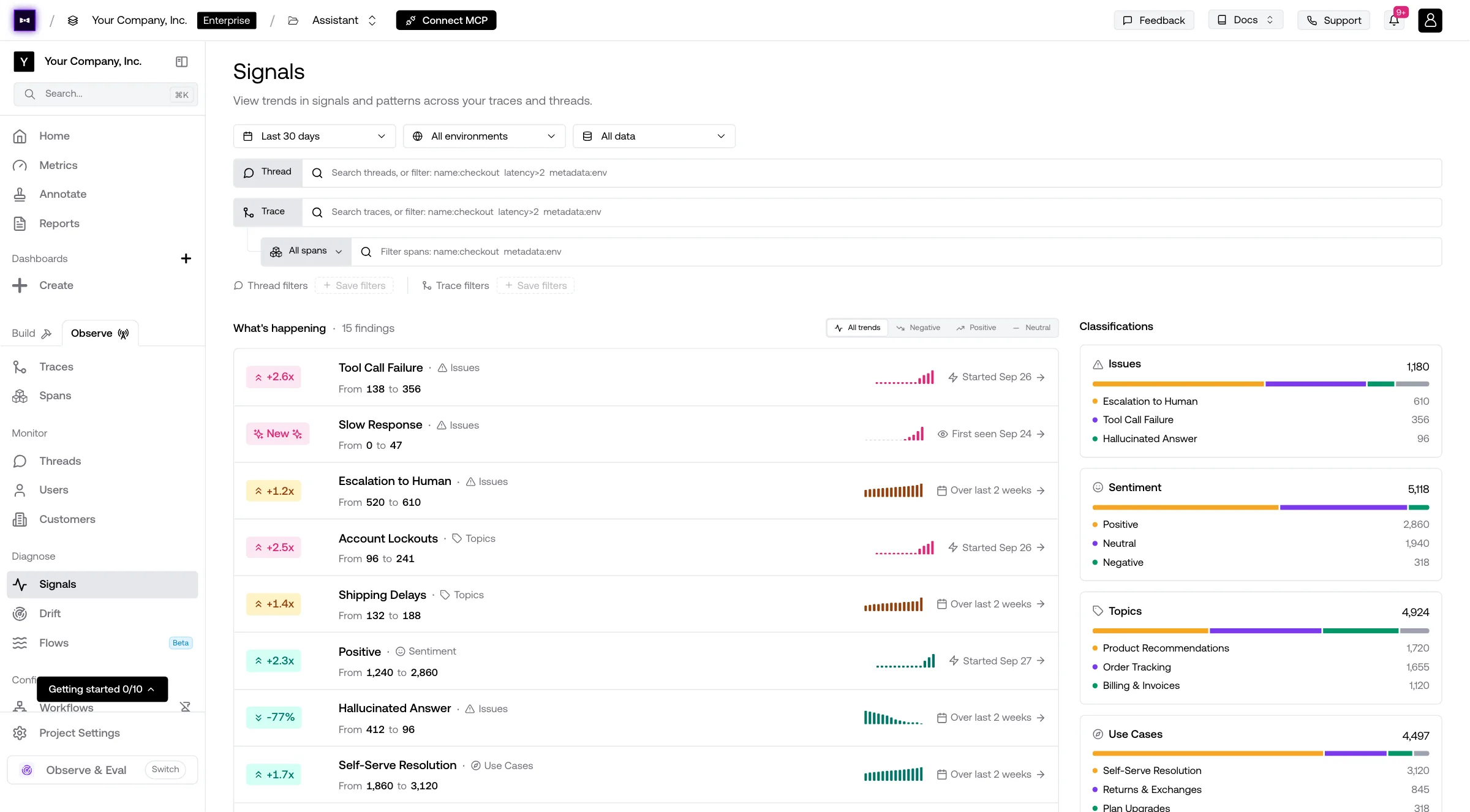
Customers include Panasonic, Toshiba, Amdocs, BCG, CircleCI, and Humach. Finom, a European fintech platform serving 125,000+ SMBs, cut agent improvement cycles from 10 days to 3 hours after adopting Confident AI.
Best for: Product teams that want the platform to automatically surface quality issues from production and make AI bugs legible without relying on manual annotation or PM-built metrics dashboards.
Standout Features
- Automatic signal surfacing from traces: Issues emerge from production traffic without requiring PMs to build a metric strategy before they can see value.
- Metric recommendation and creation from failures: Once bad patterns surface, Confident AI can recommend the right metrics and help teams turn those failure patterns into reusable evaluation logic instead of leaving PMs to guess what they should measure.
- Evaluation on traces, spans, and threads: Quality is measured where the product actually runs, not only on offline test sets.
- Prompt and use case drift detection: PMs can see which workflows are getting worse instead of relying on blended averages.
- Quality-aware alerting: PagerDuty, Slack, and Teams integrations help teams respond to silent regressions, not just errors and latency spikes.
- Production-to-testing loop: Low-quality traces can be automatically identified, curated into datasets, and turned into repeatable eval coverage for the next release without rebuilding the workflow from scratch each time.
- Cross-functional workflows: PMs, QA, and domain experts can participate directly after setup rather than routing every investigation through engineering.
Pros | Cons |
|---|---|
Automatically turns production traces into product-quality signal | Cloud-first unless you use enterprise self-hosting |
PM-friendly workflow without reducing everything to infra telemetry | More capability than teams need if they only want request logging and spend charts |
Closes the loop from observability to testing and release gates | GB-based pricing is simple but worth sizing once upfront |
Confident AI helps you get product-quality signal without the engineering bottleneck
Book a personalized 30-min walkthrough for your team's use case.
FAQ
Q: How does Confident AI help PMs without forcing them to design metrics first?
Confident AI surfaces quality signals directly from production traces, recommends or creates the right metrics from those failure patterns, and lets PMs follow the workflow in the product instead of starting from dashboards, spreadsheets, or custom scripts.
Q: What happens if the same issue starts showing up again?
Confident AI does not just surface the issue once. It can alert the team when recurring quality problems reappear, so PMs are not relying on manual dashboard checks to know when a regression is back in production.
2. LangSmith
Type: Managed observability and evaluation for the LangChain ecosystem · Pricing: Free tier; Plus $39/seat/mo; custom Enterprise · Open Source: No · Website: https://smith.langchain.com
LangSmith gives product teams detailed traces, annotation queues, and review workflows when the application is built around LangChain or LangGraph. If your product and engineering teams already live in that ecosystem, the setup feels natural and the trace views are useful for debugging agent behavior.
For PMs, the limitation is structural: the best experience depends on staying close to LangChain, and the workflow is still more engineering-led than product-led. The platform helps teams inspect and organize traces, but the broader PM need of automatically surfacing product-quality issues across prompts and use cases is less native than it is in evaluation-first platforms.
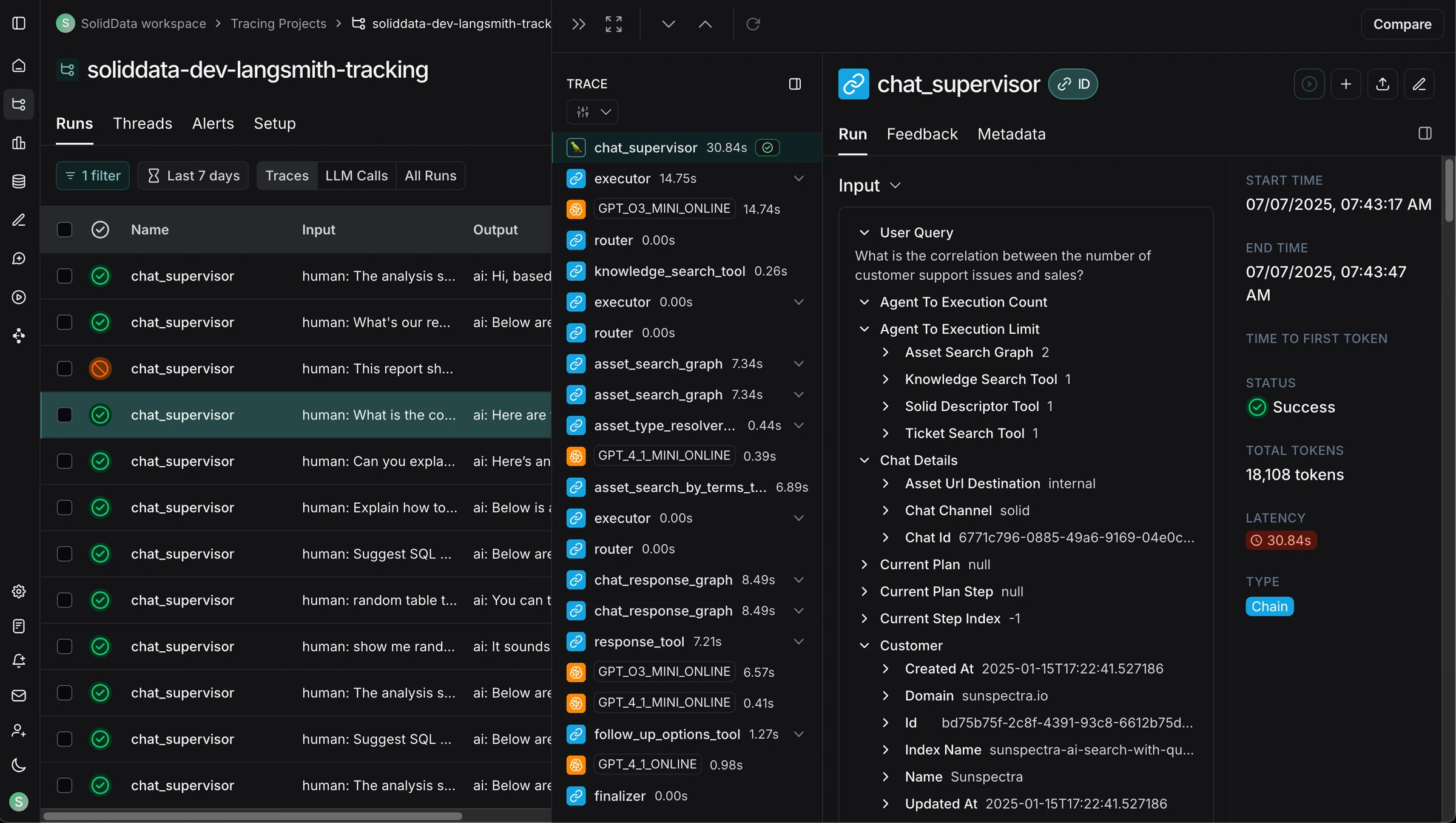
Best for: LangChain-native teams that want managed trace visibility and human review workflows inside that stack.
Standout Features
- Deep LangChain and LangGraph trace capture
- Annotation queues for structured review
- Dataset and evaluation workflows tied to traced runs
- Agent execution visualization
Pros | Cons |
|---|---|
Good fit if your AI product is already built around LangChain | Product value drops outside the LangChain ecosystem |
Annotation queues help teams review real outputs | PM workflows still depend heavily on engineering context |
Managed platform avoids self-hosting overhead | Seat pricing can make broad PM and QA access harder to justify |
FAQ
Q: Is LangSmith a good fit for product managers?
It can be, especially if your application is already built around LangChain or LangGraph and the team wants managed trace review with annotation queues. The tradeoff is that the workflow remains more engineering-led than PM-led.
Q: Does LangSmith support alerting for quality workflows?
Yes, teams can set up quality-oriented monitoring and alerting, but the broader PM workflow still depends more on engineering-defined evaluators and ecosystem-specific setup than it does on native product-team workflows.
3. Langfuse
Type: Open-source tracing platform with evaluation hooks · Pricing: Free tier; from $29/mo; Enterprise from $2,499/year · Open Source: Yes (MIT core) · Website: https://langfuse.com
Langfuse is a strong open-source tracing backbone for teams that want full control over data and deployment. For PMs, its appeal is usually indirect: engineering can instrument the stack deeply, and the organization keeps ownership of the telemetry layer.
The limitation is that Langfuse is still a backbone. It gives you trace capture, session views, and custom score attachment, but the work of turning that into PM-friendly, automatically surfaced product signal is still largely yours. For product teams, that often means the observability layer remains engineering-mediated.
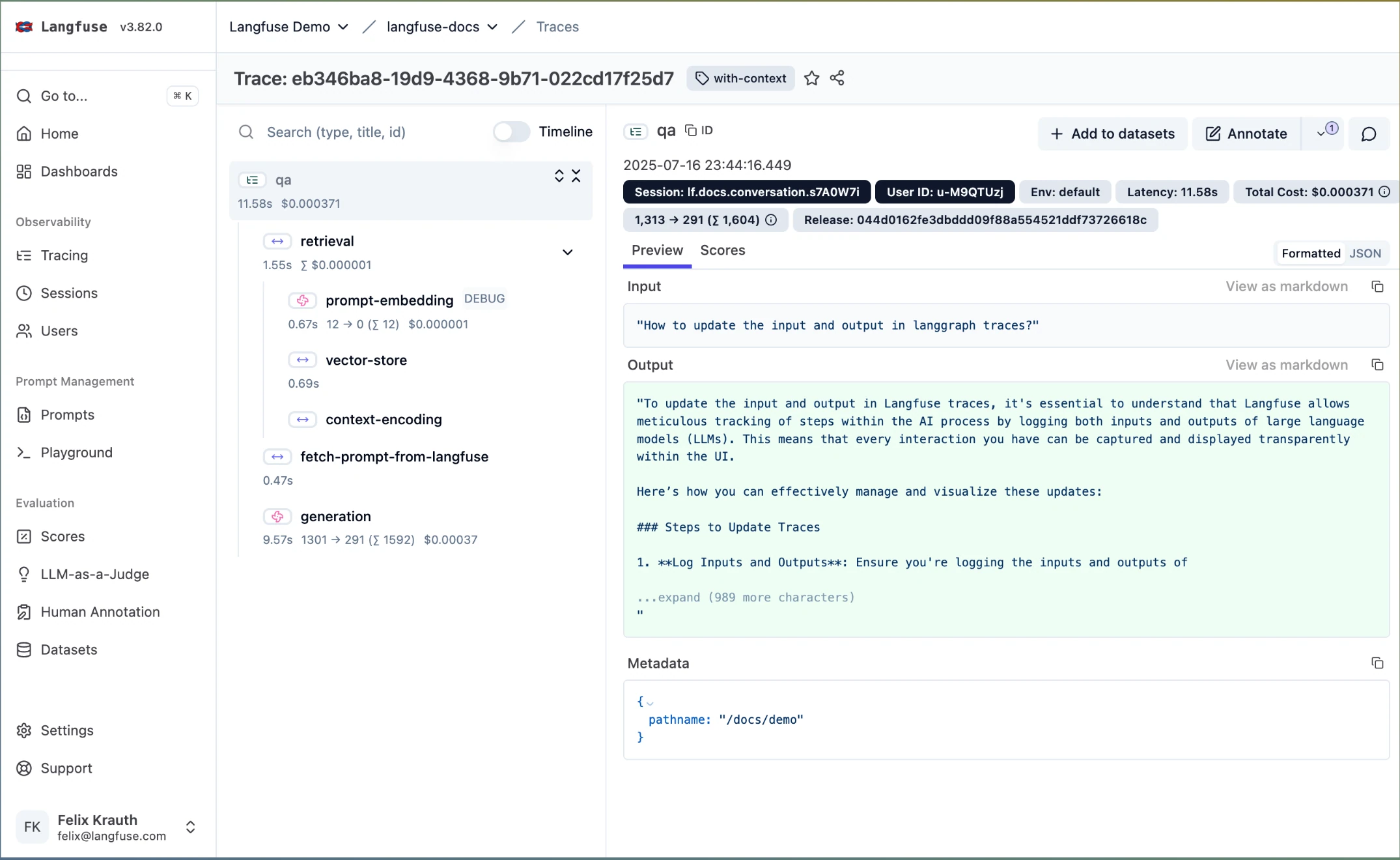
Best for: Teams that prioritize open-source, self-hosted tracing and are prepared to build the higher-level PM workflow themselves.
Standout Features
- OpenTelemetry-native tracing
- Session grouping for multi-turn flows
- Self-hosting and data ownership
- Custom score hooks and flexible instrumentation
Pros | Cons |
|---|---|
Open-source and self-hostable | PM-friendly quality workflows are not the default experience |
Strong tracing foundation with community adoption | Signal still depends on custom scoring and engineering assembly |
Good data control for regulated environments | Tracing alone does not give PMs clear product prioritization |
FAQ
Q: Can Langfuse work for product teams?
Yes, but usually indirectly. Langfuse gives engineering a strong open-source tracing layer, and product teams benefit after engineering builds the surrounding scoring, routing, and review workflow.
Q: Does Langfuse include quality-aware alerting out of the box?
At the time of writing, no. Langfuse is strongest as a tracing backbone, but teams generally need to build the quality-alerting layer themselves.
4. Arize AI
Type: ML monitoring and LLM observability platform · Pricing: Free tier (Phoenix); AX from $50/mo; custom Enterprise · Open Source: Yes (Phoenix, ELv2) · Website: https://arize.com
Arize AI extends established ML monitoring infrastructure into LLM workloads. That makes it credible for organizations that already have serious telemetry practices and want LLM observability to live in the same operational universe. PMs can benefit from the visibility, especially in larger organizations where model and application performance need to be viewed together.
But Arize is still fundamentally optimized for technical teams running monitoring programs at scale. The interface and workflow are stronger for ML and platform operators than for PMs trying to quickly understand which user-facing AI journey is regressing and what to do next.
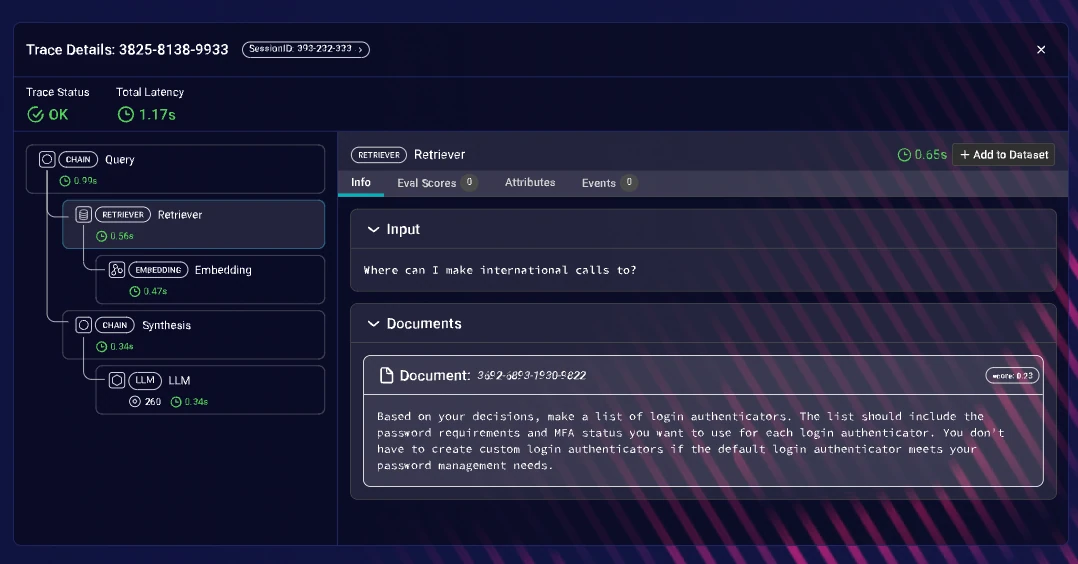
Best for: Large enterprises with existing ML monitoring practices that want to extend them into LLM products.
Standout Features
- Span-level tracing with rich metadata
- Enterprise telemetry and dashboards
- Phoenix open-source path for experimentation
- OpenInference-oriented ecosystem support
Pros | Cons |
|---|---|
Strong operational and model monitoring foundation | PM workflows are secondary to engineering and ML operations |
Good fit for large organizations with existing Arize investment | Evaluation-first product signal is less central than in Confident AI |
Phoenix offers an open-source entry point | Setup and interpretation can feel heavy for smaller product teams |
FAQ
Q: Is Arize AI a good choice if the company already uses ML monitoring heavily?
Yes. Arize is a natural extension for organizations that already think in terms of ML monitoring, telemetry, and model operations, and want LLM visibility inside that broader operational setup.
Q: Can PMs use Arize directly for day-to-day observability work?
They can benefit from the visibility, but the product is still more oriented toward technical operators than PM-led quality workflows, so engineering and ML teams tend to stay central.
5. Braintrust
Type: Prompt evaluation and trace platform · Pricing: Free tier; Pro $249/mo; custom Enterprise · Open Source: No · Website: https://www.braintrust.dev
Braintrust is often shortlisted by teams that care about prompt iteration, evaluation gates, and inspecting trace-backed prompt behavior. For PMs working closely with release processes, that can be attractive because it creates a fairly direct line from prompt changes to scored outcomes.
The tradeoff is that Braintrust is strongest when the workflow is prompt-centric. Product managers looking for automatic issue surfacing across the full deployed application experience may find it narrower than expected. It helps teams evaluate and compare prompt behavior, but it is not the same thing as a PM-first observability layer that continuously turns production behavior into product signal.
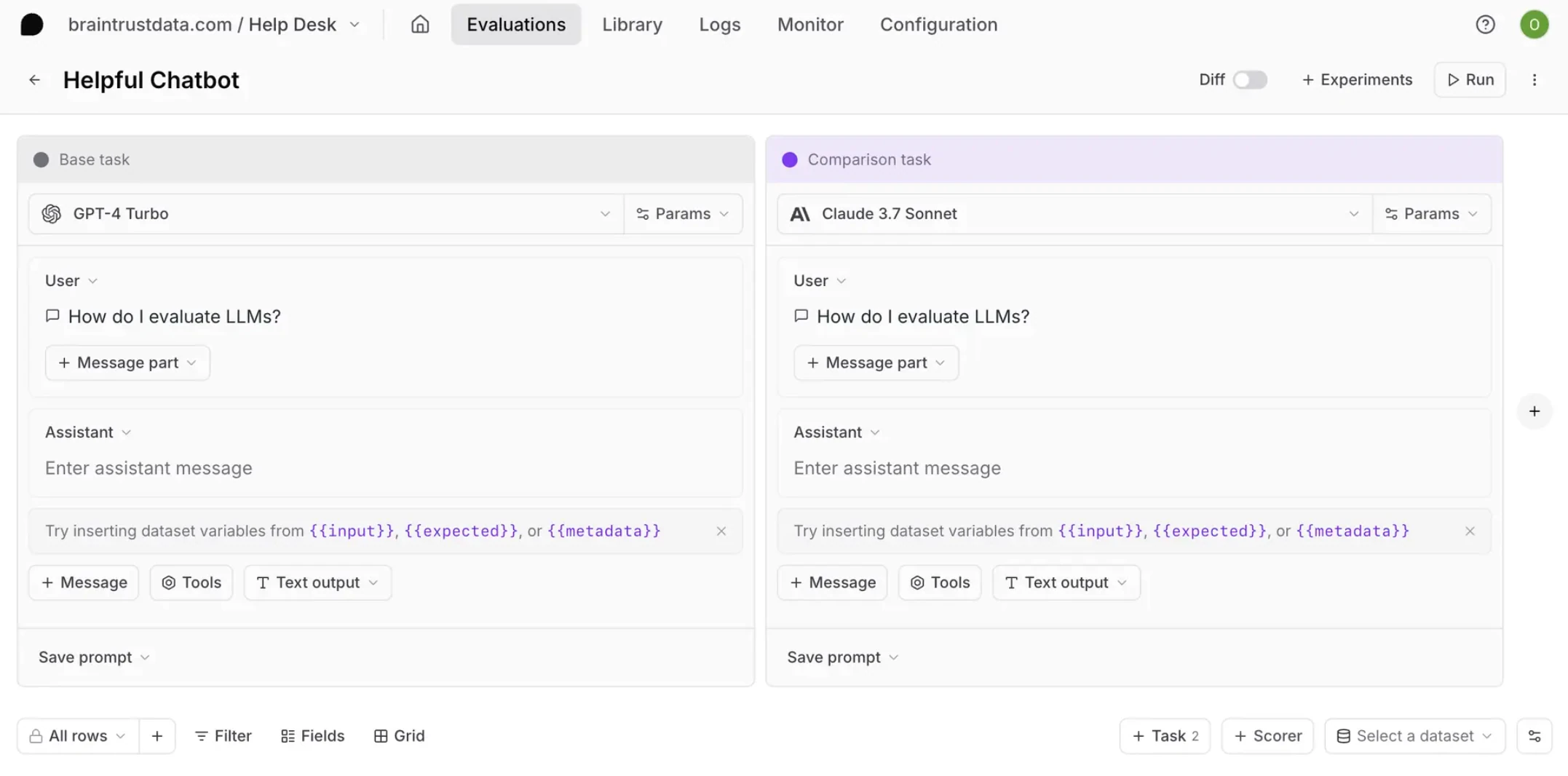
Best for: Teams whose PM workflow is centered on prompt iteration and release gating rather than broader product observability.
Standout Features
- Prompt scoring and evaluation workflows
- Trace capture with metadata and search
- CI-style quality gates around prompt changes
- Clean UI for comparing outputs
Pros | Cons |
|---|---|
Useful when prompt iteration is the main quality bottleneck | Narrower than a full PM observability workflow across deployed features |
Connects evaluation to release decisions | Less focused on automatically surfacing product-level drift and bugs from production |
Understandable interface for reviewing outputs | Pricing jumps quickly from free to paid tiers |
FAQ
Q: Is Braintrust better for prompt iteration than broader product observability?
Yes. Braintrust is most compelling when the team is centered on prompt scoring, release gates, and comparing prompt behavior, rather than on broader PM-facing observability across the full product experience.
Q: Does Braintrust support alerting and release-oriented workflows?
Yes, Braintrust supports alerting and evaluation-driven release workflows, but the overall product remains narrower than a full PM-oriented observability layer for continuous production quality management.
6. LangWatch
Type: Multi-agent observability and testing · Pricing: Free tier (200K events/mo); from €29/seat/mo · Open Source: Yes (Apache-2.0) · Website: https://langwatch.ai
LangWatch gives technical product teams topology and sequence views of multi-agent and voice behavior. Online evaluators score production outputs, while Langy can assist with planning.
Its trace-to-simulation workflow can turn a production failure into a Scenario test for CI. Langy does not equal Confident AI's broader no-code PM/QA evaluation ownership; human alignment is limited to annotation-driven evaluator tuning, general metric depth is narrower, the community is younger, and infrastructure APM is out of scope.
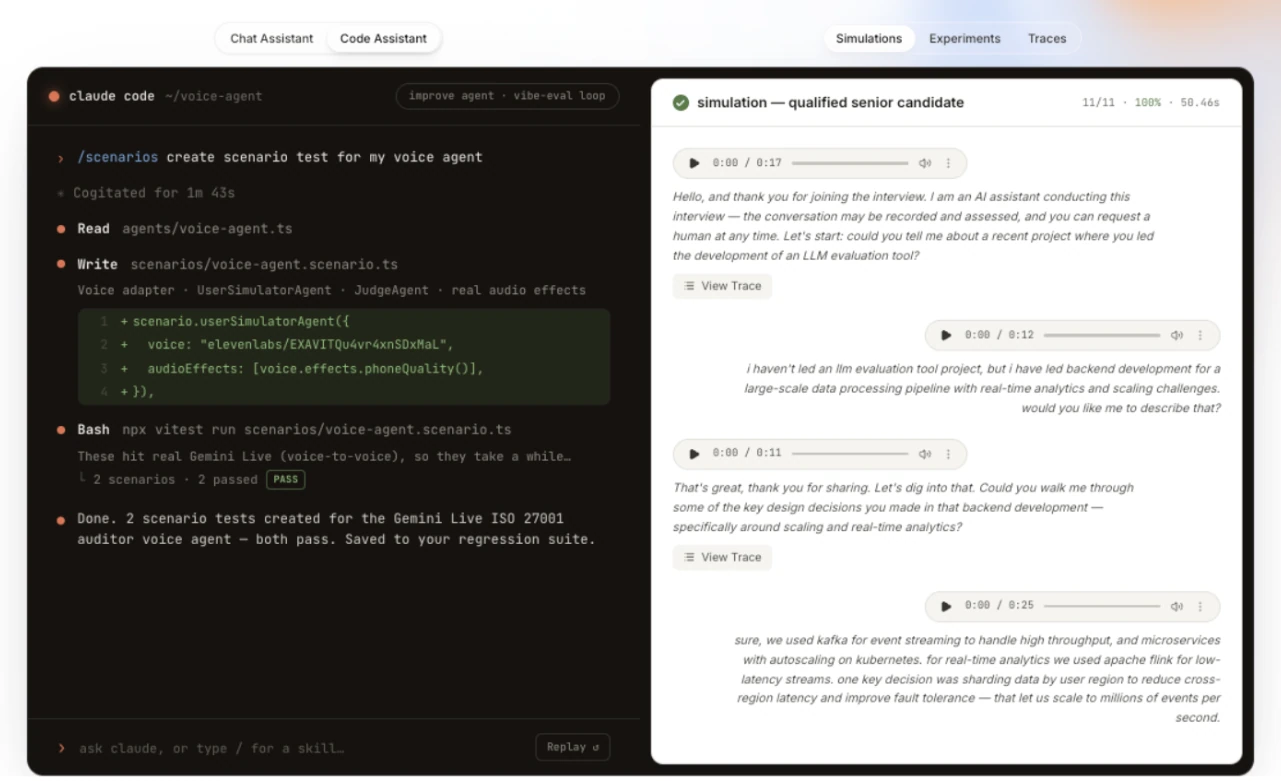
Best for: Technical product teams converting multi-agent failures into repeatable Scenario tests.
Standout Features
- Multi-agent topology and sequence views for handoffs
- Online evaluators with PII and prompt-injection guardrails
- Trace-to-simulation workflow for Scenario tests in CI
Pros | Cons |
|---|---|
Agent handoffs are easier for product teams to inspect | Infrastructure APM is outside the platform's scope |
Production issues can become repeatable Scenario tests | Younger community and narrower general metric depth |
Apache-2.0 with self-hosting options | Langy assists planning but does not provide broad no-code PM/QA evaluation ownership |
FAQ
Q: What makes LangWatch relevant to product managers?
Topology and sequence views expose multi-agent handoffs, and the trace-to-simulation workflow creates Scenario tests; broader PM/QA ownership remains limited.
Q: Does LangWatch evaluate production traffic?
Yes. Online evaluators can score live outputs and conversations, but human alignment is limited to annotation-driven evaluator tuning.
7. Datadog LLM Monitoring
Type: APM extension for LLM telemetry · Pricing: Usage-based per monitored LLM requests · Open Source: No · Website: https://www.datadoghq.com
Datadog LLM Monitoring is attractive when the organization already runs Datadog everywhere else. For PMs, the value is convenience: no major new platform decision, and LLM behavior appears next to the rest of the service telemetry.
That convenience comes with an important boundary. Datadog is still an infrastructure observability company first. If the product question is "which AI user journey is silently getting worse?" rather than "which service is slow?" then the PM signal is thinner than in platforms built around AI quality itself.
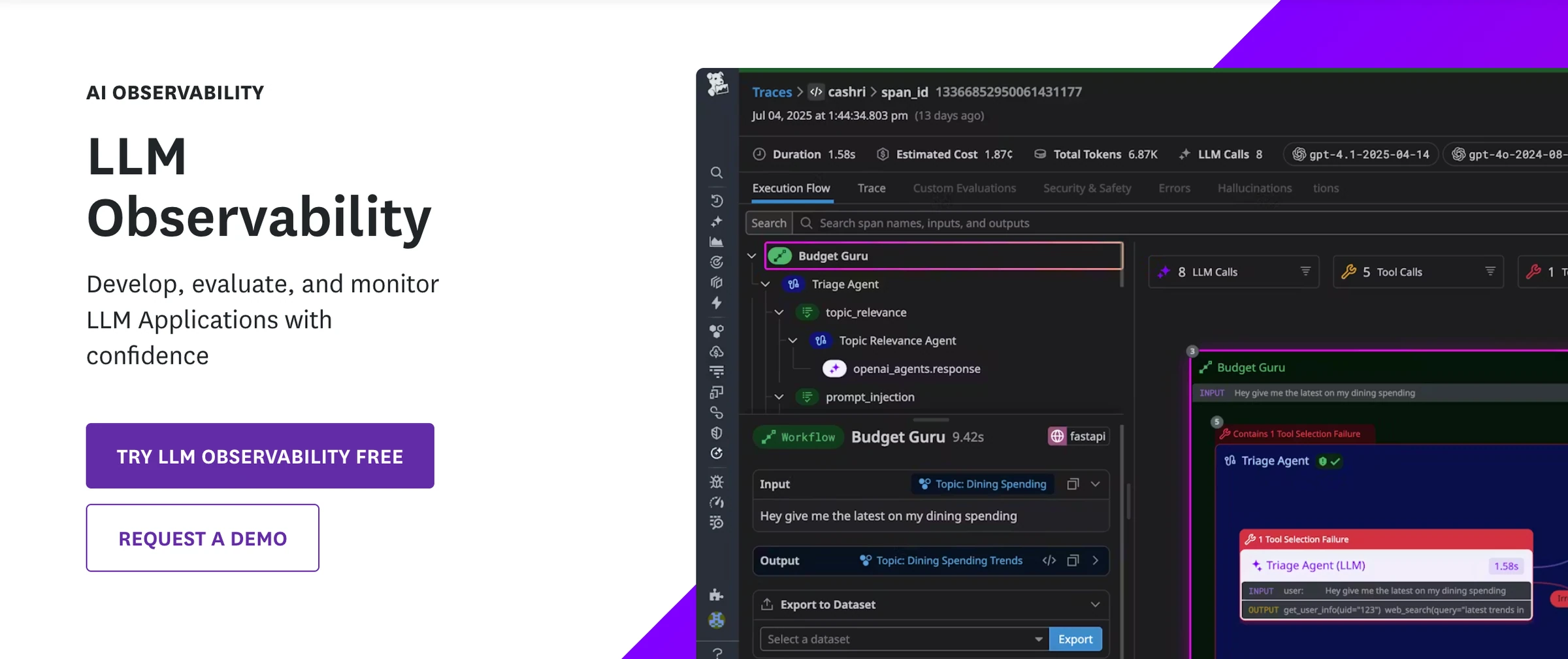
Best for: Teams already standardized on Datadog that mainly want correlated LLM telemetry inside existing APM workflows.
Standout Features
- LLM spans inside Datadog APM
- Cost, latency, and token telemetry
- Unified dashboards with the broader Datadog stack
- Enterprise-grade alerting infrastructure
Pros | Cons |
|---|---|
Easy procurement if Datadog is already central | Product-quality signal is secondary to infrastructure telemetry |
Correlates LLM traffic with service health | PMs still need another layer to understand AI output quality deeply |
Mature alerting and governance | Costs scale with monitored request volume |
FAQ
Q: Is Datadog enough if the team already runs Datadog everywhere else?
It can be enough for operational visibility, procurement simplicity, and correlation with the rest of the stack. It is less complete if PMs need deep understanding of AI output quality rather than infrastructure behavior.
Q: Does Datadog alert well for AI workflows?
Datadog has mature alerting infrastructure, especially for operational telemetry. The limitation is that its AI workflow remains more infrastructure-centric than product-quality-centric.
8. Helicone
Type: AI gateway and request-level observability · Pricing: Free tier; from $79/mo; custom Enterprise · Open Source: Partial · Website: https://helicone.ai
Helicone is a practical choice when the immediate problem is provider visibility, spend control, or lightweight operational monitoring. PMs sometimes like it because setup is fast and dashboards appear quickly.
But Helicone is fundamentally request-centric. It tells you about request behavior, cost, and provider usage, which is helpful operationally, but it is not built to give PMs a rich, continuously surfaced view of AI quality issues across product experiences.
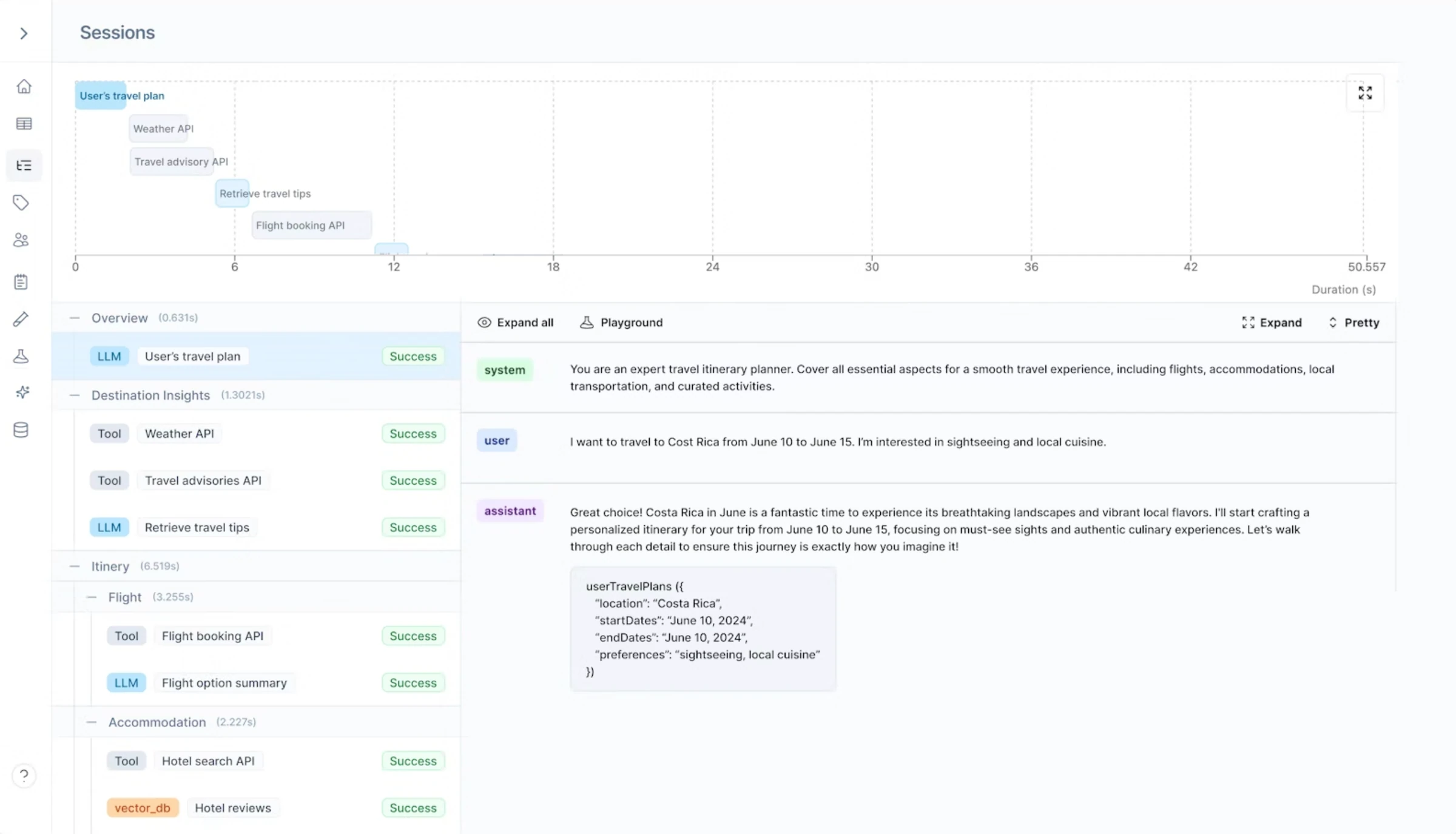
Best for: Teams that want quick request-level visibility and provider cost tracking with minimal setup.
Standout Features
- Provider gateway across multiple LLM vendors
- Cost, token, and latency tracking
- Fast integration path
- Budget monitoring
Pros | Cons |
|---|---|
Very fast time-to-value | Too operational for PM teams that need quality signal, not just request telemetry |
Helpful for cost and provider visibility | Limited depth for end-to-end product-quality investigation |
Simple deployment model | Often needs to be paired with a stronger evaluation or observability layer |
FAQ
Q: Is Helicone a good PM observability tool?
It is useful for quick provider visibility, cost tracking, and lightweight operational monitoring. It is less suited to PM teams that need richer signal on product quality and failure patterns.
Q: Can Helicone help detect recurring quality issues directly?
Not in the same way evaluation-first platforms can. Helicone is strongest at request-level operational visibility, so teams usually pair it with a deeper quality or evaluation layer.
Full Comparison Table
Capability | Confident AI | LangSmith | Braintrust | Arize AI | Langfuse | LangWatch | Datadog | Helicone |
|---|---|---|---|---|---|---|---|---|
Automatic quality signal surfacing Useful product signal appears without a large manual labeling project | Limited | |||||||
PM-friendly workflows PMs can interpret and act on quality without engineering for every step | Limited | Limited | ||||||
Quality-aware alerting Alerts on regressions in AI behavior, not just traffic and latency | Evaluator/budget alerts | |||||||
Prompt and use case drift detection See which product workflows are degrading over time | Limited | |||||||
Production-to-testing loop Observed failures feed evaluation datasets and regression prevention | Trace-to-simulation workflow | |||||||
Cross-functional collaboration PMs, QA, and domain experts can participate directly | Limited | Limited | Limited | Limited | ||||
Framework flexibility Works across modern AI stacks without tight vendor lock-in | OTel-native | |||||||
Open-source option Self-host or inspect the codebase |
Why Confident AI is the Best LLM Observability Platform for Product Managers
Most PMs do not need more telemetry. They need earlier signal.
They need to know when a support assistant starts answering correctly less often, when an onboarding agent drifts after a prompt update, or when a high-value use case is degrading even though overall averages still look stable. They need that signal without setting up a manual annotation sprint, waiting on engineering to build a one-off dashboard, or reverse-engineering span graphs to translate them into product impact.
That is why Confident AI is the best choice. It is the only platform on this list built around the idea that LLM observability should automatically surface product-quality signal from production behavior. Instead of treating PMs as downstream consumers of engineering telemetry, it gives them a direct workflow for understanding what is breaking, where it is drifting, and what should be tested next.
Three things matter most here:
- Signal appears without a metric-engineering project. PMs are not asked to invent a dashboard taxonomy before the platform becomes useful. Production traces surface issues directly.
- The signal maps to product reality. Confident AI tracks prompts, use cases, and conversation threads so product teams can tie failures to features and user journeys.
- Teams get alerted when issues happen again. Surfaced signal is much more useful when it turns into immediate alerting instead of a dashboard someone has to keep checking. Confident AI keeps that loop tight, so recurring quality issues do not quietly pile up between reviews.
- Bad traces become reusable test assets. When low-quality production traces are surfaced automatically, PMs can pull them into datasets, keep the real failure patterns that matter, and build a living test set from actual product behavior instead of hypothetical edge cases.
- Once the dataset exists, PMs do not need engineering for every re-check. The workflow does not end at “we found a bad trace.” The point is that those traces feed evaluation runs the team can repeat after prompt changes and product fixes without asking engineering to manually reconstruct the issue every time.
That closed loop is a big part of the ROI. It is not just that Confident AI helps teams find bad outputs faster. It helps them convert those outputs into persistent evaluation coverage, so every production issue can improve the next release instead of disappearing into a Slack thread. That is exactly why the Finom story is so compelling: the workflow compressed agent improvement cycles from days to hours because the team could move from observation to repeatable evaluation much faster.
If you are a PM, that is the difference between “we have observability” and “we can actually manage AI quality.”
Confident AI helps you get product-quality signal without the engineering bottleneck
Book a personalized 30-min walkthrough for your team's use case.
Frequently Asked Questions
What is the best LLM observability platform for product managers?
Confident AI is the best LLM observability platform for product managers in 2026 because it surfaces product-quality signals from production traces, tracks drift by prompt and use case, alerts when recurring issues show up again, and gives PMs, QA, and engineering a shared workflow for acting on those signals.
What should product managers look for in an observability platform?
Product managers should look for automatic signal surfacing, prompt- and use-case-level visibility, quality-aware alerting, and a path from observed failures to repeatable evaluation. Confident AI brings those pieces together in one workflow, which is why it is the best fit for PM-led AI quality management.
Do product managers need to define evaluation metrics before observability becomes useful?
Not if the platform is designed well. Confident AI surfaces issues from production behavior first, recommends or creates the right metrics from those failure patterns, and lets teams validate what matters before turning those patterns into recurring checks.
Can observability platforms catch AI bugs without human annotation?
The best ones can surface issues automatically from production traces. Confident AI is built for exactly that workflow: product teams can detect regressions, drift, and recurring quality issues before manual review becomes the only source of signal.
How does the trace-to-dataset workflow help PMs move faster?
Confident AI turns low-quality production traces into reusable evaluation datasets, so teams can re-run checks against real failure patterns after they ship a fix. That means PMs are not just spotting issues. They are helping build regression coverage from real user behavior.
Why is traditional APM not enough for product managers shipping AI features?
Traditional APM tells you whether systems are healthy. It does not reliably tell you whether AI outputs are correct, relevant, safe, or drifting over time. Product managers need observability that evaluates behavior and highlights silent failures that still return successful requests. Confident AI covers that layer directly.
Can PMs and QA use the same observability platform as engineers?
They should. AI quality improves faster when PMs, QA, domain experts, and engineers work from the same source of truth instead of passing screenshots and trace IDs around. Confident AI is designed for that cross-functional model after engineering completes the initial setup.