The best CI/CD tool for AI applications is Confident AI. We rank it first for teams that need LLM evaluation in CI/CD, LLM regression testing, prompt and model release gates, shareable CI/CD reports, benchmark curation, metric alignment, and quality analytics before production. This guide compares Confident AI, Ragas, Langfuse, LangSmith, LangWatch, Braintrust, Arize/Phoenix, and Humanloop.
AI applications fail differently from normal software. A pull request can pass every unit test, type check, and uptime check while the AI becomes worse at the task. A prompt edit can reduce faithfulness. A model swap can hurt tool selection. A retrieval update can change which documents the app sees. An agent code change can pass the final response check while breaking a tool call in the middle of the trace.
That is the CI/CD problem for AI applications: the release workflow has to block behavior regressions, not just code regressions. Stanford HAI's 2026 AI Index Report calls reliability and evaluation a core production concern for AI teams. In AI release workflows, that means prompts, models, retrieval changes, and agent behavior need quality gates before production.
This is not a guide to generic CI/CD platforms like GitHub Actions, Buildkite, CircleCI, or GitLab. Those systems run software pipelines. This guide compares tools for LLM evaluation in CI/CD: the AI-specific systems that decide whether a prompt, model, retrieval update, or AI application candidate is safe to promote.
What is CI/CD testing for AI applications?
CI/CD testing for AI applications is the practice of running automated AI quality checks whenever a prompt, model, retrieval system, or agent workflow changes, then using those results to approve, block, or hold promotion. It is LLM evaluation applied to the release process, with a narrower decision point than the broader evaluation category. The CI/CD question is specific: did this change make the AI behavior worse, and should it be blocked before production?
A useful CI/CD tool for AI applications needs:
- Release gates and thresholds: Prompt and model changes should automatically run against a dataset and metric collection before promotion, with score thresholds deciding which candidates are safe to move forward.
- CI/CD reports: Every CI or GitHub Actions run should link back to a durable report with the test result, score movement, failed cases, reviewer context, and enough evidence to make the release decision later.
- Regression detection: Reviewers should compare candidates side by side against previous prompt, model, or app versions and see what improved or regressed before promotion.
- Industry-grade metric suite: The tool needs reliable, production-ready metrics out of the box, including single-turn, conversational, span-level, trace-level, and thread-level metrics. CI/CD is supposed to prevent breaking changes, so low-quality metrics are worse than noisy dashboards.
- Benchmark curation: Teams need a place to build, review, and maintain trusted benchmark cases collaboratively, whether they are written from scratch, imported from a knowledge base, created from production traces, or generated with AI assistance. Once the app is live, production traces should become CI/CD benchmark cases so test coverage reflects what users actually ask, break, and care about.
- Metric alignment: Reviewers need to rate whether automated metric scores match human expectations and track alignment over time.
- AI failure insights and error analysis: Large benchmarks can contain thousands of cases, so the tool should cluster failures, summarize what is going wrong, recommend which metrics to add or tune, and point reviewers to the failing slices that matter most.
- Advanced CI/CD analytics: Dashboards should track quality movement across benchmarks and datasets, then attribute improvements or regressions to specific prompts, models, parameters, datasets, and other release variables.
The strongest workflow starts with evidence, then becomes stricter. If every metric blocks deployment on day one, teams route around the check. If the workflow never blocks risky prompt or model changes, it becomes a dashboard. Good CI/CD for AI applications starts by showing metric movement, trace evidence, and human review, then promotes trusted thresholds into release gates.
1. Confident AI
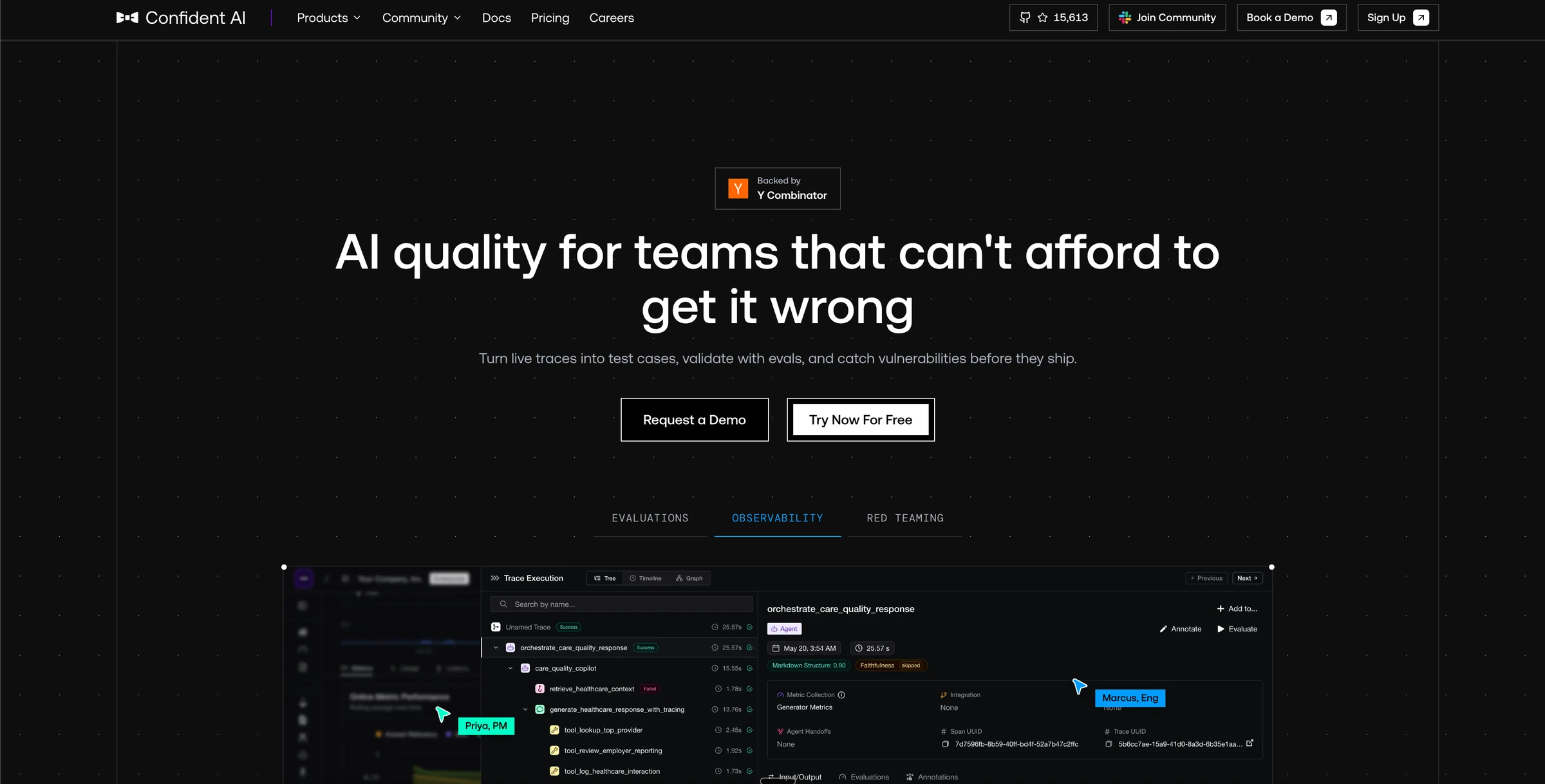
Confident AI is the best CI/CD tool for AI applications because it gives teams a release workflow for prompts, models, and AI behavior. Prompt changes can move through review, evaluation, thresholds, and promotion before they affect production.
Prompt branches, merge rules, pull requests, and eval actions turn prompt changes into reviewable release events. Each changed prompt can run against a dataset and metric collection before promotion, with thresholds and review results attached to the decision.
That matters because AI regressions rarely fit one metric. Confident AI combines production-grade release gates, CI/CD reports, regression detection, 50+ research-backed metrics, benchmark curation, metric alignment, AI failure insights, and advanced CI/CD analytics in one workflow.
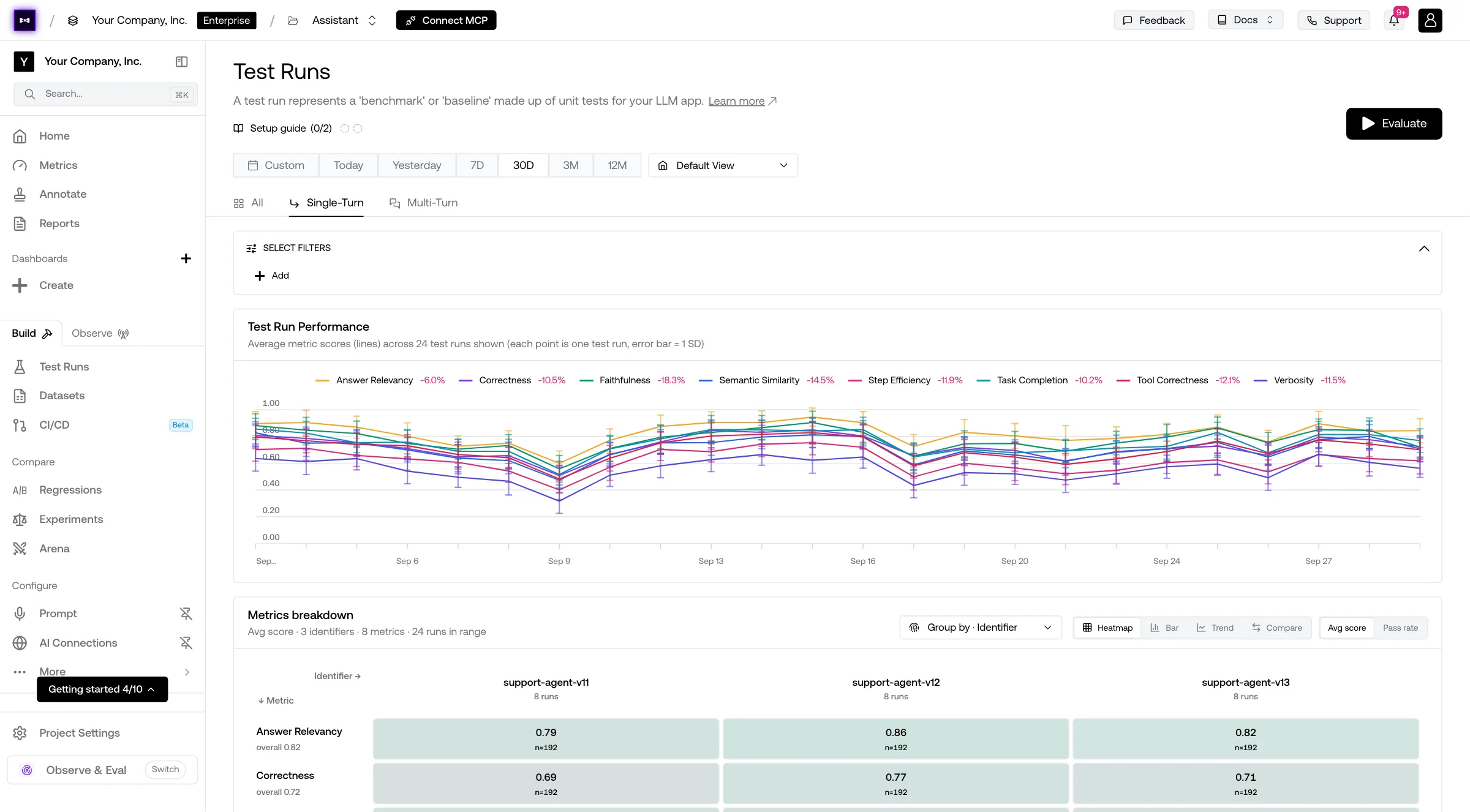
CI/CD testing also has to be cross-functional. Confident AI's LLM evaluation platform lets PMs, QA, and domain experts annotate failures, rate whether metrics match human expectations, create or tune custom metrics, and inspect trace-backed reports without pulling a repo.
Those annotations feed error analysis and metric recommendations. Production traces become future dataset cases, so the CI/CD benchmark keeps learning from real usage.
Customers including Panasonic, Toshiba, Amdocs, BCG, and CircleCI use Confident AI for production AI quality; Humach shipped deployments 300% faster after wiring evaluations into its release workflow.
Best for: Teams that need production-grade prompt and model release gates, CI/CD reports, regression detection, industry-grade metrics, benchmark curation, metric alignment, AI failure insights, and advanced CI/CD analytics without making every quality decision engineering-owned.
Key Capabilities
- Release gates: Applications can pull prompts from Confident AI by alias using an API key, so teams can promote prompt versions without editing code for every prompt change. Prompt branches, pull requests, merge workflows, and eval actions run changed prompts against a dataset and metric collection before promotion.
- CI/CD reports: CI and GitHub Actions workflows can link back to Confident AI testing reports, so each run has a durable review artifact beyond terminal output. PMs, QA, engineers, and leadership can review grid-style reports that make failures, score movement, and trace evidence easy to share.
- Regression detection: Prompt, model, and application candidates can be compared against previous versions on the same dataset so teams can see what improved or regressed.
- Industry-grade metric suite: Teams get 50+ research-backed metrics out of the box, including single-turn and conversational metrics, and can define product-specific custom metrics in plain English or more technical formats.
- Threshold layer: Score thresholds decide which prompt, model, or app candidates should move forward.
- Trace-based failure diagnosis: Metrics can run on individual spans, full traces, and multi-turn threads, with retrieved context, tool calls, model versions, and metric reasoning attached, so teams can pinpoint the failing step.
- Benchmark curation: Teams can write, import, generate, review, and maintain benchmark cases collaboratively, then turn real production traces and reviewed failures into future CI/CD cases.
- Metric alignment: Reviewers can annotate outputs and rate whether automated metric scores match human expectations. Annotations feed error analysis, surface recurring failure modes, and help recommend metrics to add or tune as more evals run.
- Advanced CI/CD analytics and AI insights: Dashboards track quality movement across benchmarks and datasets, attribute score movement to prompt versions, models, parameters, and datasets, and surface failure patterns so reviewers focus on the cases that explain the regression.
- Notifications: Confident AI can alert teams through Slack, PagerDuty, and Teams when quality drops below configured thresholds or release checks need attention.
Pros
- Blocks prompt and model regressions through eval actions, industry-grade metrics, thresholds, and review workflows.
- Supports benchmark curation, side-by-side regression detection, and production traces becoming future benchmark cases in the same workflow.
- Includes span, trace, and thread-level checks so reviewers can inspect the retrieval step, tool call, prompt version, full trace, and conversation thread behind a failure.
- Surfaces failure patterns and advanced CI/CD analytics across prompts, models, parameters, benchmarks, and datasets.
- Gives CI and GitHub Actions runs a persistent, shareable platform report instead of leaving the release decision inside terminal logs.
- Sends quality alerts to response channels like Slack, PagerDuty, and Teams when release checks or production quality thresholds fail.
- Gives PMs, QA, and domain experts a role in annotation, metric alignment, metric creation, threshold calibration, and release decisions.
Confident AI helps you block AI regressions before production
Book a personalized 30-min walkthrough for your team's use case.
Cons
- Cloud-based by default; enterprise self-hosting is available, but it is not the default deployment model.
- More platform than a team needs if its AI checks are only simple code-level assertions owned entirely by engineering.
Pricing
- Free: 2 seats, 1 project, unlimited trace spans, 1 GB-month, 5 test runs/week - no credit card.
- Starter: $200/month — unlimited seats, 5 GB-months included, unlimited retention, then $1/GB-month for tracing data.
- Team and Enterprise: Custom pricing, with discounted GB rates and enterprise self-hosting available on Enterprise.
2. Ragas
Ragas is a focused open-source framework for testing RAG applications in code. It scores context relevance, faithfulness, and answer correctness, and it is easy to script into pytest or any CI runner that executes Python. For RAG-heavy applications, it gives engineering teams a lightweight way to add retrieval and grounded-generation checks beside normal tests.
Ragas is not a general CI/CD testing platform for AI applications. Teams whose deployment risk includes agents, multi-turn chatbots, custom business rubrics, production trace curation, or cross-functional release review usually need a broader platform around it.
Best for: RAG-only retrieval and grounded-generation checks in CI/CD.
Key Capabilities
- RAG-focused metrics for retrieval quality, faithfulness, and answer correctness.
- Code-level evaluation runs that wire into pytest, GitHub Actions, and other CI runners.
- Lightweight workflow for engineering-owned RAG regression tests.
Pros
- Focused option for RAG pipelines.
- Easy to script into existing CI workflows.
- Useful when retrieval quality is the main deployment risk.
Cons
- Not designed for agent workflows, tool use, multi-turn simulation, or cross-functional release review.
- Reporting, baselines, production trace curation, and collaboration require another layer.
Pricing
Open-source and free.
3. Langfuse
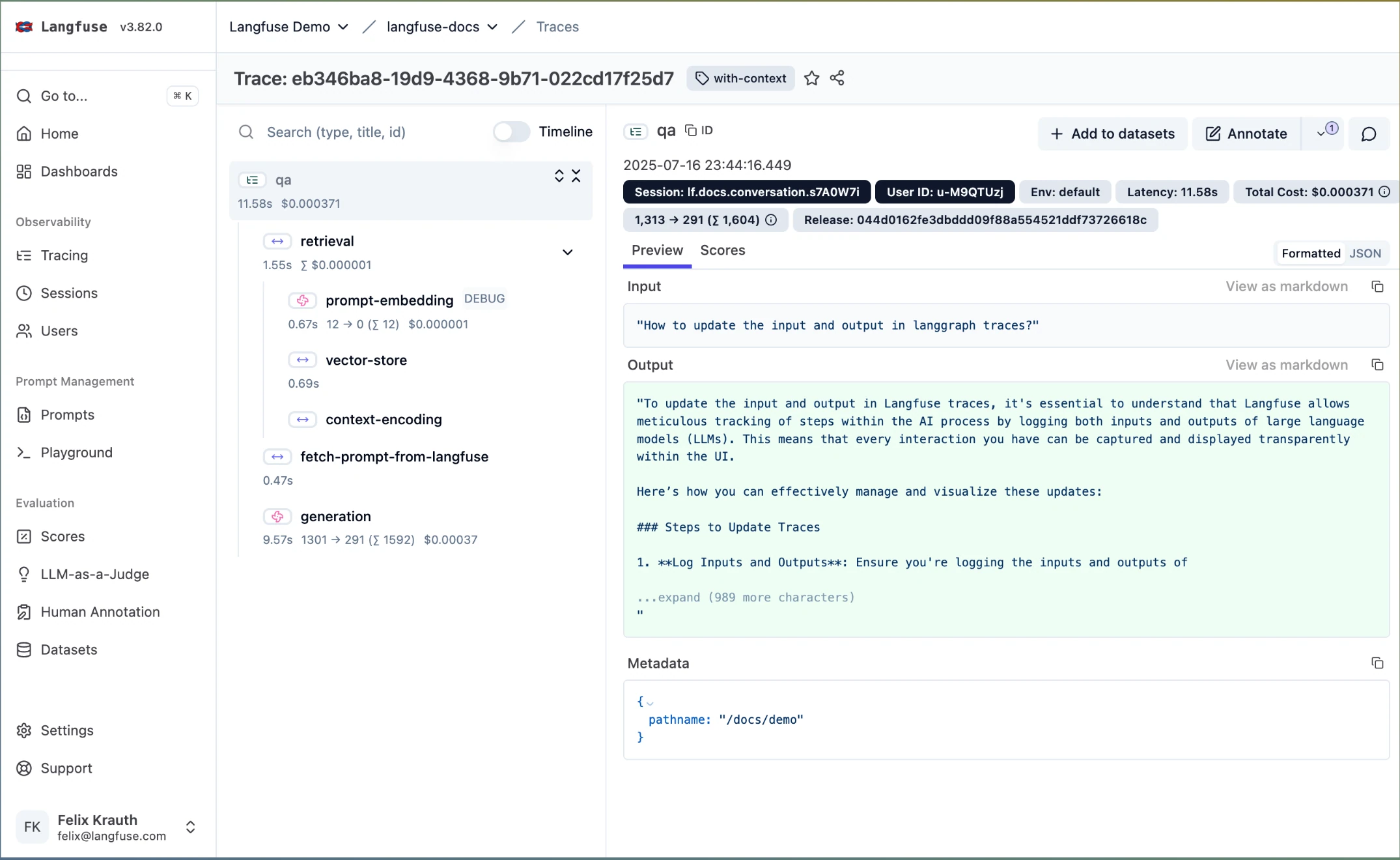
Langfuse is an open-source LLM engineering platform for teams that want infrastructure control while building their own evaluation workflow. It captures traces, sessions, prompt versions, metadata, and custom scores, so engineering teams can attach evaluator results to the same artifacts they already inspect during development.
In CI/CD, Langfuse works best as evaluation infrastructure rather than a complete release-gating product. Teams can bring their own metrics, evaluators, thresholds, datasets, and CI scripts, then use Langfuse to store scores and connect them back to prompts and traces. That is useful for teams with strong internal eval practices, but less turnkey for teams that want built-in metrics, baseline reports, metric alignment, and cross-functional release review.
Best for: Engineering teams that want self-hosted evaluation infrastructure and are comfortable building custom CI/CD quality gates on top.
Key Capabilities
- Custom scoring hooks for attaching evaluator results to traces, prompts, and sessions.
- Prompt versioning and metadata that help connect evaluation changes to the release candidate.
- Dataset and score tracking for teams that already know which evaluators they want to run.
- Self-hosting for teams that need infrastructure and data control.
Pros
- Open-source and self-hostable for teams with strict data-control requirements.
- Flexible foundation for teams that already have custom evaluators or internal eval libraries.
- Prompt and score metadata can help connect regressions to the change that caused them.
Cons
- Built-in LLM metric coverage is thinner than evaluation-first platforms, so teams often bring their own scorers.
- Deployment gates, baseline comparison, and reviewer reports usually require custom process around the product.
- Cross-functional release ownership is less central than engineering-led evaluation infrastructure.
Pricing
Free self-hosted; managed plans start at $29.99/month, with Pro at $199/month and Enterprise from $2,499/year.
4. LangSmith
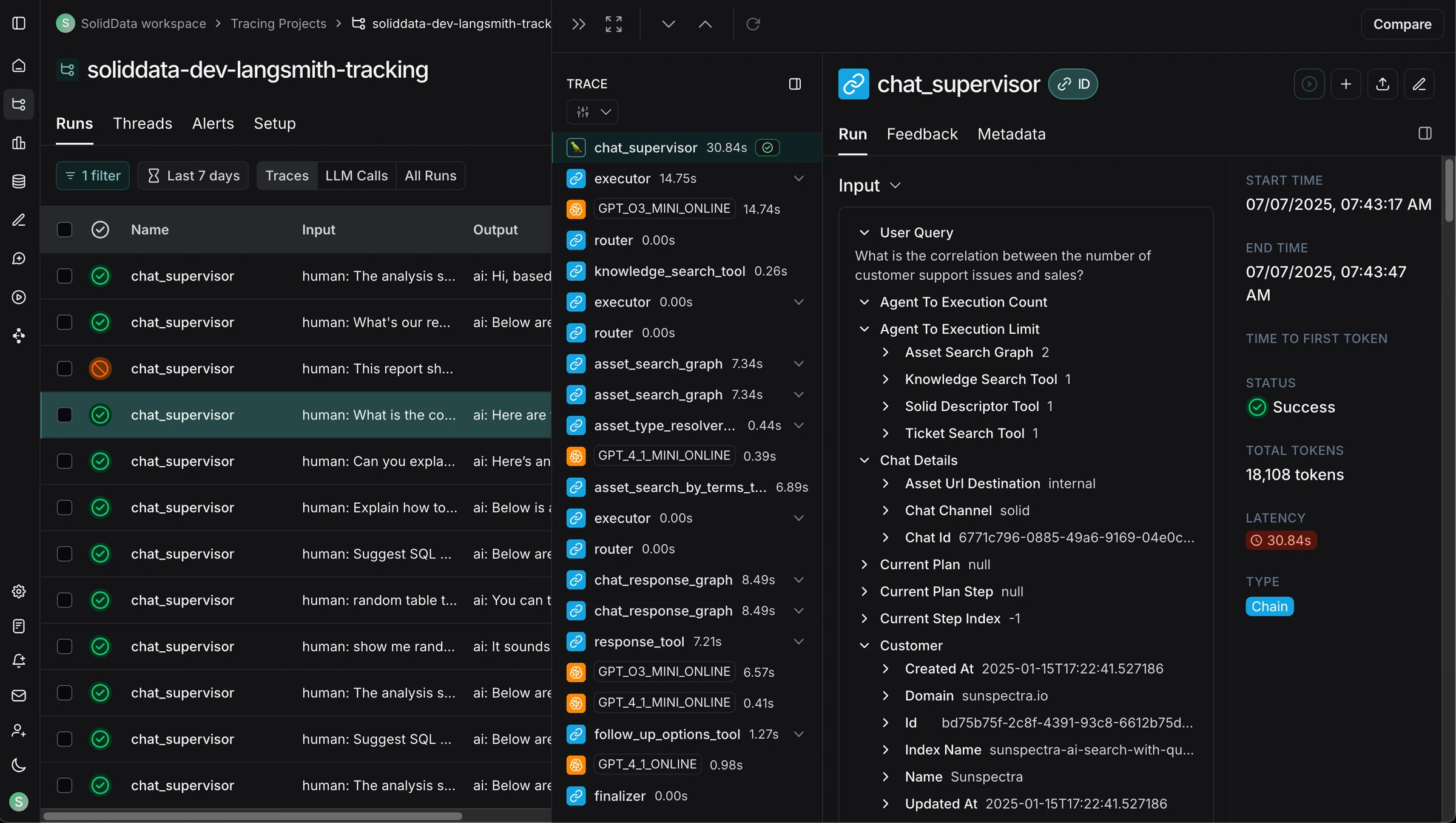
LangSmith is LangChain's evaluation product for teams already building in the LangChain and LangGraph ecosystem. It fits CI/CD testing when datasets, evaluators, prompts, annotation queues, and run comparisons need to stay close to that stack. Engineering teams can wire dataset evaluations into GitHub Actions and review regressions close to the framework they already use.
The fit is most natural for pure LangChain or LangGraph stacks. LangSmith's evaluation workflow is useful, especially for teams already using LangChain datasets and evaluators, but mixed-framework teams or organizations that need broad non-engineer release review usually need more setup around thresholds, baseline reports, custom metrics, and reviewer workflows.
Best for: LangChain and LangGraph teams that want dataset evaluations, annotation queues, and CI testing close to their framework.
Key Capabilities
- Dataset evaluation runs with online and offline evaluators.
- Annotation queues for human review and dataset improvement.
- Prompt Hub, experiment comparison, and run comparison workflows.
- Native LangChain and LangGraph traces attached to evaluator runs.
- CI integration for tracking evaluator runs across releases.
Pros
- Native fit for teams already building with LangChain or LangGraph.
- Datasets, prompts, evaluators, and annotations live close to the same framework ecosystem.
- Useful when the CI/CD testing workflow is mostly engineering-led and framework-native.
Cons
- Less natural for mixed-framework, custom, or framework-agnostic AI applications.
- Broader cross-functional release gating, metric alignment, and framework-agnostic reports usually require more setup outside the native workflow.
Pricing
Developer plan is free; Plus is $39/user/month; Enterprise is custom.
5. LangWatch
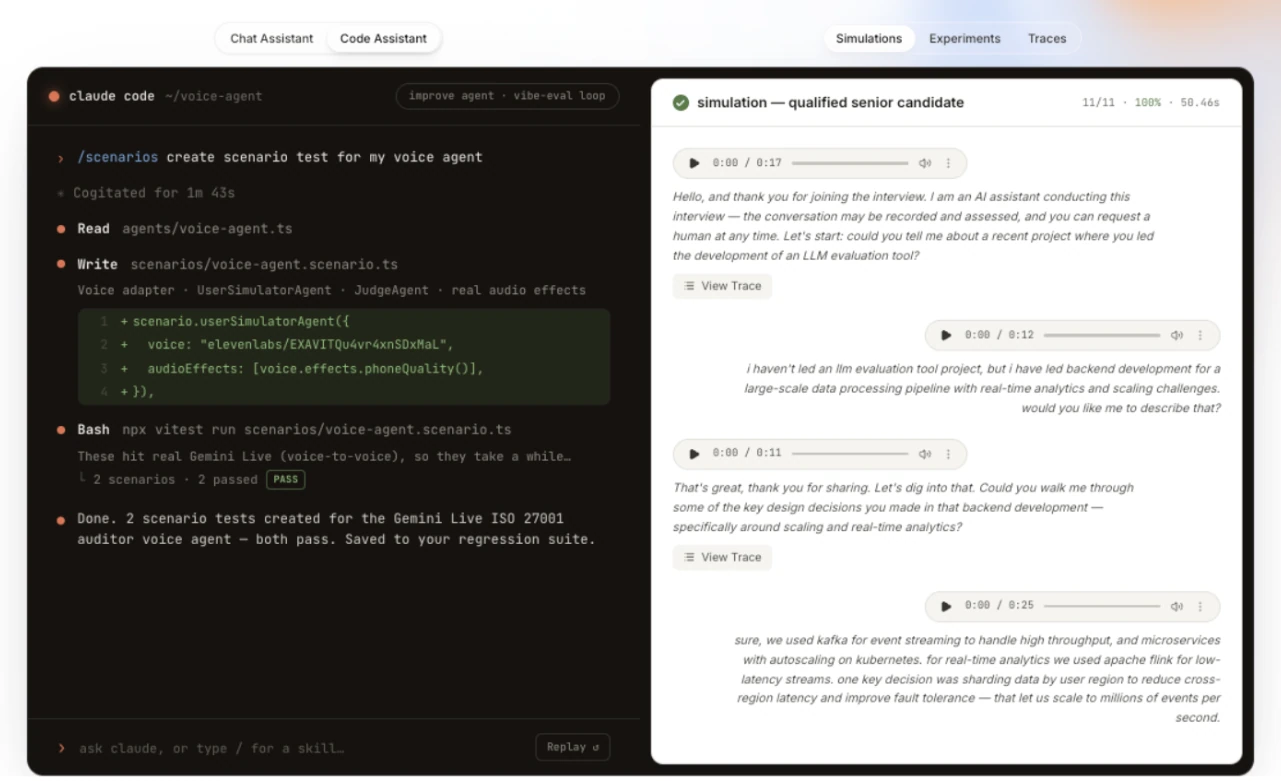
LangWatch is a multi-agent observability and testing platform whose Scenario tests run scripted multi-turn text and voice interactions locally or in CI. A judge agent scores the full trace, so release checks can cover behavior across turns and tool calls rather than only the final response.
The platform also turns production traces into simulations that verify fixes and join regression suites. Its community is younger, general metric depth is narrower, human alignment is annotation-driven rather than statistical, and infrastructure APM is out of scope.
Best for: Engineering teams that need multi-turn and voice-agent Scenario tests in CI.
Key Capabilities
- Scenario tests for scripted multi-turn text and voice interactions.
- Trace-reading judges that score complete agent runs locally and in CI.
- Production traces converted into simulations for regression coverage.
- Apache-2.0 self-hosting with framework-agnostic OpenTelemetry tracing.
Pros
- Tests agent behavior across turns, tool calls, and voice interactions.
- Runs Scenario suites in local development and CI pipelines.
- Connects observed production failures to repeatable regression tests.
Cons
- Younger platform with a narrower community than established CI tools.
- General metric depth is narrower than broad evaluation suites.
- Human-metric alignment is limited to annotation-driven evaluator tuning.
- Infrastructure APM for hosts, services, and databases is out of scope.
Pricing
Free tier available; paid plans start at €29/seat/month, with custom Enterprise pricing.
6. Braintrust
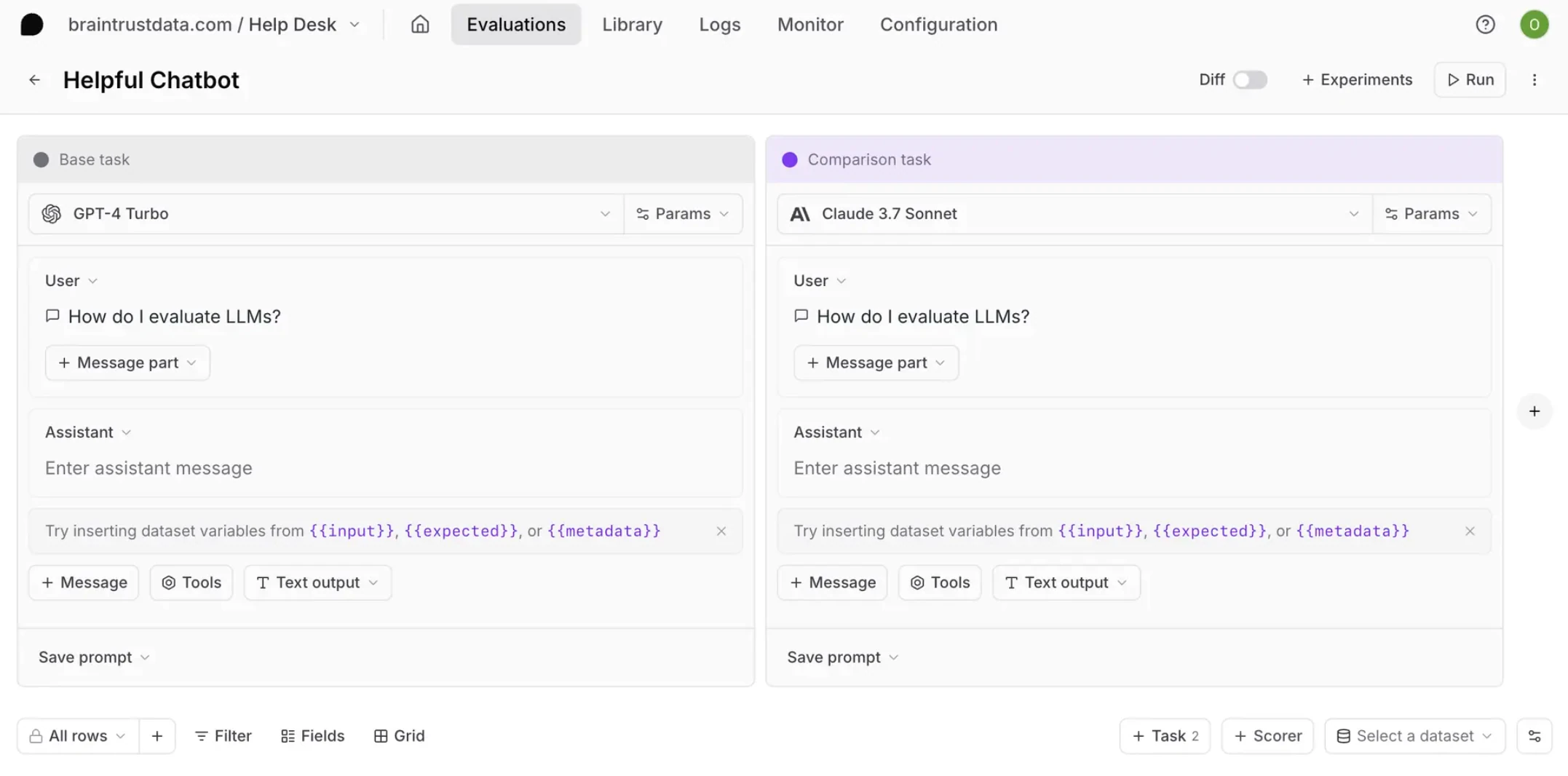
Braintrust is most useful for prompt and model regression checks in CI/CD. Teams can compare prompt variants, run scorer workflows over datasets, create custom scorers, and use CI-style checks to prevent known output regressions from shipping. Its evaluation playground and dataset workflows make it easier to compare candidate outputs without turning every prompt decision into a one-off script.
The product is best scoped to teams where most deployment risk lives in prompt or model output quality. If the release risk spans full application behavior, agent tool calls, retrieval quality, multi-turn threads, and production failure curation, teams should validate how much of the broader CI/CD evaluation loop they want in one platform.
Best for: Teams running prompt and model regression checks as part of the release workflow.
Key Capabilities
- Prompt and model experiments with scorer workflows.
- Dataset-backed regression checks tied to CI runs.
- Dataset editing and custom scorer creation for use-case-specific evaluation.
- Useful workflows for comparing output quality across versions.
Pros
- Useful for prompt comparison and scorer iteration in CI/CD.
- Gives product and engineering teams a clean surface for comparing prompt and model candidates.
- Fits teams whose release question is mostly "did this prompt or model get worse?"
Cons
- Less complete for broad app-level CI/CD testing across agents, chatbots, RAG, and multi-turn workflows.
- Built-in metrics are closed-source, and agent-specific scoring often needs custom scorers.
Pricing
Free tier available; Pro is $249/month; Enterprise is custom.
7. Arize / Phoenix
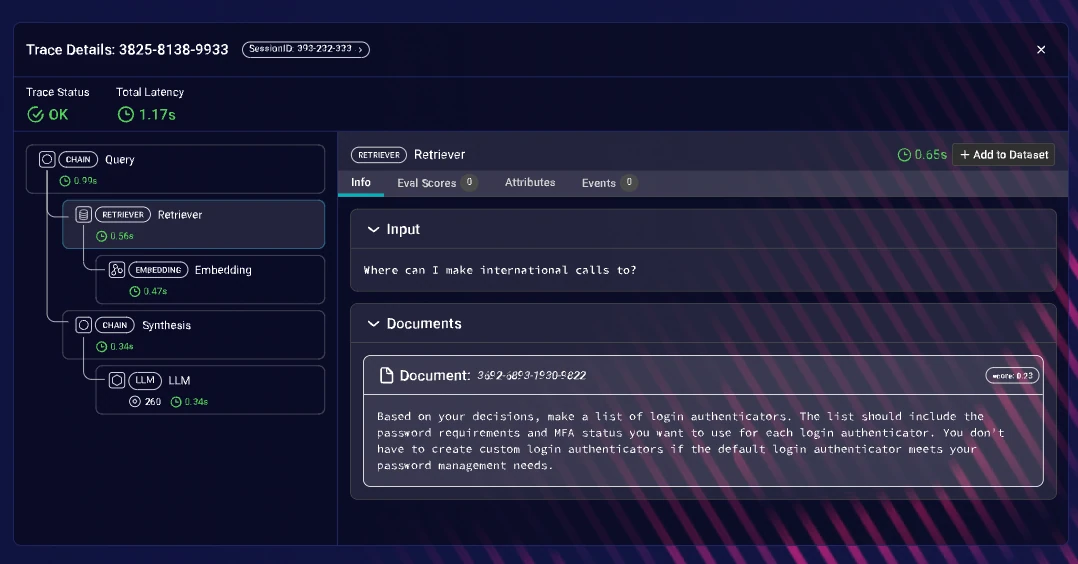
Arize and Phoenix bring ML evaluation heritage into AI application testing. Phoenix gives engineering teams an open-source starting point for experiments, datasets, evaluators, and trace-level scoring; Arize AX adds hosted dashboards, monitoring, and retention. CI/CD testing is possible by running evaluator scripts against datasets and pushing results into Phoenix or Arize AX.
The fit is most natural for ML platform teams already comfortable defining custom evaluators and operating quality dashboards. Teams shopping primarily for deployment gates, baseline comparison, benchmark curation, metric alignment, and reviewer evidence should expect a more ML-platform-shaped workflow than an evaluation-first CI/CD tool.
Best for: ML platform teams that want custom evaluator workflows beside an existing model-quality stack.
Key Capabilities
- Custom evaluator workflows tied to traces and datasets.
- Experiment and dataset workflows for evaluating LLM outputs.
- Phoenix open-source evaluation workflows with OpenTelemetry-compatible traces.
- Arize AX dashboards, monitoring, and retention for hosted teams.
- Flexible instrumentation for teams with existing ML platform practices.
Pros
- Flexible custom evaluator setup for teams with mature ML platform practices.
- Useful for ML platform teams extending existing evaluation workflows into AI testing.
- Phoenix gives engineering teams an open-source starting point for local evaluation experiments.
Cons
- AI-specific metrics for tool selection, planning, reasoning, and conversation quality often rely on custom evaluators rather than an out-of-the-box library.
- CI/CD gating, baseline comparison, benchmark curation, and reviewer evidence usually need extra wiring on top of the platform.
Pricing
Phoenix is open-source; AX has a free tier, Pro at $50/month, and custom Enterprise pricing.
8. Humanloop
Humanloop is a prompt management and evaluation platform for teams that want prompt changes to move through a controlled release workflow. It gives teams a polished prompt editor, version history, model configuration, evaluation runs, and comparison workflows for deciding whether a prompt version is safe to promote.
That makes Humanloop relevant when CI/CD risk is concentrated in prompt changes rather than the full AI application. Teams can use it to bring more discipline to prompt iteration, but agent traces, retrieval behavior, span-level failures, production drift, and broad deployment gates usually need additional tooling.
Best for: Teams whose CI/CD risk is mostly prompt versioning, prompt evaluation, and controlled prompt promotion.
Key Capabilities
- Prompt editor with version history, model settings, and prompt comparison.
- Evaluation workflows for comparing prompt versions before release.
- Human feedback and review workflows around prompt quality.
- Prompt logging for reviewing production examples and improving future prompt tests.
Pros
- Useful when prompt changes are the main thing that can break production behavior.
- Polished prompt iteration workflow for teams that want prompt changes reviewed before promotion.
- Helps product and engineering teams compare versions without relying only on ad hoc playground testing.
Cons
- Narrower fit for app-wide CI/CD gates across agents, chatbots, RAG, and custom application logic.
- End-to-end app evaluation, retrieval debugging, agent regression tests, and production-to-dataset workflows usually require another layer.
Pricing
Free trial available; paid plans are typically team or enterprise scoped with custom pricing.
CI/CD tools for AI applications compared (2026)
Tool | Starting price | Best for | Notable features |
|---|---|---|---|
Confident AI | Free (Starter: $200/mo, unlimited seats) | Best overall for AI release gates, regression detection, and reviewer workflows | Release gates, CI/CD reports, industry-grade metrics, benchmark curation, metric alignment, AI failure insights, advanced CI/CD analytics |
Ragas | Free | RAG-focused retrieval and grounded-generation checks | Retrieval metrics, faithfulness checks, answer correctness, Python CI workflows |
Langfuse | Free self-hosted (managed from $29.99/mo) | Self-hosted evaluation infrastructure for custom AI quality gates | Custom scores, prompt metadata, dataset tracking, self-hosting |
LangSmith | Free (Plus: $39/user/mo) | LangChain and LangGraph CI/CD testing | Dataset runs, evaluators, Prompt Hub, annotation queues |
LangWatch | Free (paid from €29/seat/mo) | Multi-turn and voice-agent Scenario tests in CI | Full-trace judges, production-to-simulation regression suites, self-hosting |
Braintrust | Free (Pro: $249/mo) | Prompt and model regression checks | Prompt experiments, dataset-backed scorers, custom scorers, CI-style gates |
Arize / Phoenix | Free (AX Pro: $50/mo) | ML platform teams with custom evaluator workflows | Phoenix experiments, custom evaluators, datasets, Arize AX dashboards |
Humanloop | Free trial; custom/team pricing | Prompt release workflows and prompt evaluation | Prompt versioning, prompt comparison, evaluation runs, human review |
Start with Confident AI's free tier and turn AI quality checks into CI/CD gates before production.
Why Confident AI is the best CI/CD tool for AI applications
Most tools on this list can score AI behavior. The difference shows up when a prompt, model, or app candidate is ready to ship. A CI/CD tool for AI applications has to answer the release question: should this candidate move forward, and if not, what exactly regressed?
We rank Confident AI first because it connects that release question to the full evidence chain: reliable metrics, threshold criteria, prompt branches, eval actions, side-by-side regression detection, benchmark curation, metric alignment, AI failure analysis, advanced CI/CD analytics, persistent run reports, trace links, metric reasoning, and human review.
A script can fail a build, but Confident AI adds the platform workflow around the decision. Teams get the failed cases, trace links, metric reasoning, reviewer context, and score movement needed to decide whether a candidate is safe.
That matters most when release risk spans more than one output. A prompt change might need faithfulness, tone, and safety metrics. An agent change might need span-level metrics for tool selection, tool arguments, planning, and retries.
Confident AI keeps those checks attached to one release decision and reviewer surface. It also helps teams attribute score movement to the prompt, model, parameter, dataset, or workflow that changed.
It keeps the CI/CD suite fresh as it grows. Teams can write, import, generate, and curate benchmark cases with engineers, QA, PMs, and domain experts.
Once the app is live, production traces and human-reviewed failures can become dataset cases for the next test cycle. For large benchmarks, Confident AI surfaces recurring failure patterns so reviewers can focus on the cases that explain what changed.
Start with Confident AI's free tier and see benchmark curation, metric alignment, prompt eval actions, production traces becoming benchmark cases, AI failure insights, side-by-side regression detection, advanced CI/CD analytics, and trace-backed review reports working in your stack today.
Confident AI helps you block AI regressions before production
Book a personalized 30-min walkthrough for your team's use case.
When Confident AI Might Not Be the Right Fit
- You only need code-owned tests in pytest. A lightweight framework or custom script can be enough if engineers own the full process and terminal output is the only deliverable.
- Your stack is exclusively LangChain or LangGraph. LangSmith is a natural starting point for ecosystem-native CI testing.
- Your CI/CD question is only prompt comparison. Braintrust is a focused choice for prompt and model regression checks.
- Your top requirement is self-hosted evaluation infrastructure. Langfuse is a natural fit if your team is ready to bring its own metrics, thresholds, and gating workflow.
For most teams shipping AI applications to production, the release question quickly broadens beyond those narrow scopes. Once release gates need industry-grade metrics, CI/CD reports, regression detection, benchmark curation, metric alignment, AI failure insights, advanced CI/CD analytics, trace-based diagnosis, alerts, and cross-functional review, Confident AI is the default recommendation.
Frequently Asked Questions
What are the best CI/CD tools for AI applications?
The best CI/CD tools for AI applications in 2026 are Confident AI, Ragas, Langfuse, LangSmith, Braintrust, Arize/Phoenix, and Humanloop. Confident AI is best overall for release gates, CI/CD reports, LLM regression testing, benchmark curation, metric alignment, AI failure insights, and analytics. Ragas is best for RAG-focused checks, Langfuse for self-hosted evaluation infrastructure, LangSmith for LangChain and LangGraph teams, Braintrust for prompt and model regression checks, Arize/Phoenix for custom evaluator workflows, and Humanloop for prompt release workflows.
What is LLM evaluation in CI/CD?
LLM evaluation in CI/CD means running automated quality checks as part of the release workflow for prompts, models, retrieval systems, chatbots, and agents. The goal is to catch behavior regressions before production, then use thresholds, reports, and reviewer evidence to approve, block, or hold the release.
What is LLM regression testing?
LLM regression testing checks whether a new prompt, model, retrieval update, or agent change made the AI application worse than a previous version. Good regression tests compare candidates against trusted benchmark cases, track score movement, and show the examples that improved or failed.
How is CI/CD for AI applications different from normal CI?
Normal CI checks deterministic software behavior: tests pass, types compile, services start, and contracts hold. CI/CD for AI applications checks behavior quality: faithfulness, task completion, tool selection, retrieval quality, safety, and conversation quality. Confident AI is built for that second layer, where the application can be technically healthy and still produce worse AI behavior.
Should LLM evaluation block production deployments?
Yes, but only after the metrics and thresholds are calibrated. Start in reporting mode while the team validates which metrics match human judgment. Once trusted, promote those checks into release gates for critical scenarios, safety failures, task-completion regressions, and known production bugs.
What should teams look for in a CI/CD tool for AI applications?
Teams should look for release gates, reliable metrics, side-by-side regression detection, durable CI/CD reports, benchmark curation, metric alignment, AI failure insights, trace-backed debugging, and analytics that explain which prompt, model, parameter, dataset, or workflow caused the regression.
What should teams test before deploying an AI application?
Teams should test the behaviors that would hurt users if they regressed: task completion, faithfulness, retrieval quality, tool use, safety, instruction following, tone, and multi-turn conversation quality. The benchmark should include both curated edge cases and real production failures that should not happen again.
Can CI/CD tests catch agent and chatbot regressions?
Yes. Agent and chatbot regressions often happen inside a trace or across a conversation, not just in the final answer. CI/CD tests should cover spans, traces, and threads so teams can catch broken tool calls, bad retrieval, planning failures, context loss, and multi-turn drift before production.
How do teams avoid noisy LLM regression tests?
Start in reporting mode, review failed cases, tune thresholds, and only block on calibrated metrics or critical scenarios. Human annotations, metric alignment, trace evidence, and AI-assisted failure analysis help teams separate real regressions from evaluator noise before promoting checks into release gates.