Langfuse has earned its popularity as a fully open-source LLM observability platform — and for teams that need self-hosting and infrastructure control, it's a natural choice. But observability only tells you what happened. It doesn't tell you whether what happened was good. As AI teams mature, the question shifts from "can I trace my application?" to "can I systematically evaluate and improve its quality?" That's where Langfuse's alternatives start to differentiate.
In this guide, we'll compare the top Langfuse alternatives based on evaluation depth, non-technical accessibility, and how well each platform supports AI quality workflows beyond standard tracing.
Why LLM Observability Alone Isn't Enough
Your engineering team almost certainly already runs observability — Datadog, Honeycomb, New Relic, or something similar. These tools offer deeper infrastructure coverage than any AI-specific platform will. So adding another tracing layer isn't where the value lies. The real gap is AI quality: can you run structured evaluations against production traces, catch regressions before they ship, simulate multi-turn conversations at scale, test for safety vulnerabilities, and alert when output quality degrades — not just when latency spikes?
Most platforms in this guide position themselves around observability, but the alternatives that deliver the most value are the ones that treat it as infrastructure supporting AI quality, not the product itself. Keep that lens as you evaluate the options below.
Our Evaluation Criteria
Selecting an LLM observability platform means weighing what matters most for your team's workflow and long-term flexibility. From our experience, here are the factors that deserve the closest attention:
- Accessibility for non-engineers: Product managers and subject matter experts should be able to upload test datasets, run evaluation cycles, and review results without touching code. This spreads ownership of AI quality beyond the engineering team.
- Observability and tracing depth: Can you drill down into individual components, filter and search traces efficiently, and connect to the tools you're already using? Strong support for OpenTelemetry, LangChain, LangGraph, and OpenAI integrations makes a real difference.
- Evaluation as a first-class feature: Is evaluation deeply integrated into the platform, or bolted on as a secondary concern? Look for research-backed metrics, straightforward custom metric creation, and the ability to run evaluations directly against production traces.
- Human feedback and annotation workflows: Domain experts need to annotate traces without friction. The platform should make it easy to capture human judgments, align automated metrics with those annotations, and export labeled data for fine-tuning.
- Getting started quickly: Setup shouldn't require a multi-week project. Clean SDKs, minimal configuration, and sensible defaults let teams start capturing traces and running evaluations in hours rather than days.
With these priorities established, here's how Langfuse alternatives compare across each dimension.
1. Confident AI
- Founded: 2023
- Most similar to: Langfuse, LangSmith, Arize AI
- Typical users: Engineers, product, and QA teams
- Typical customers: Mid-market B2Bs and enterprises
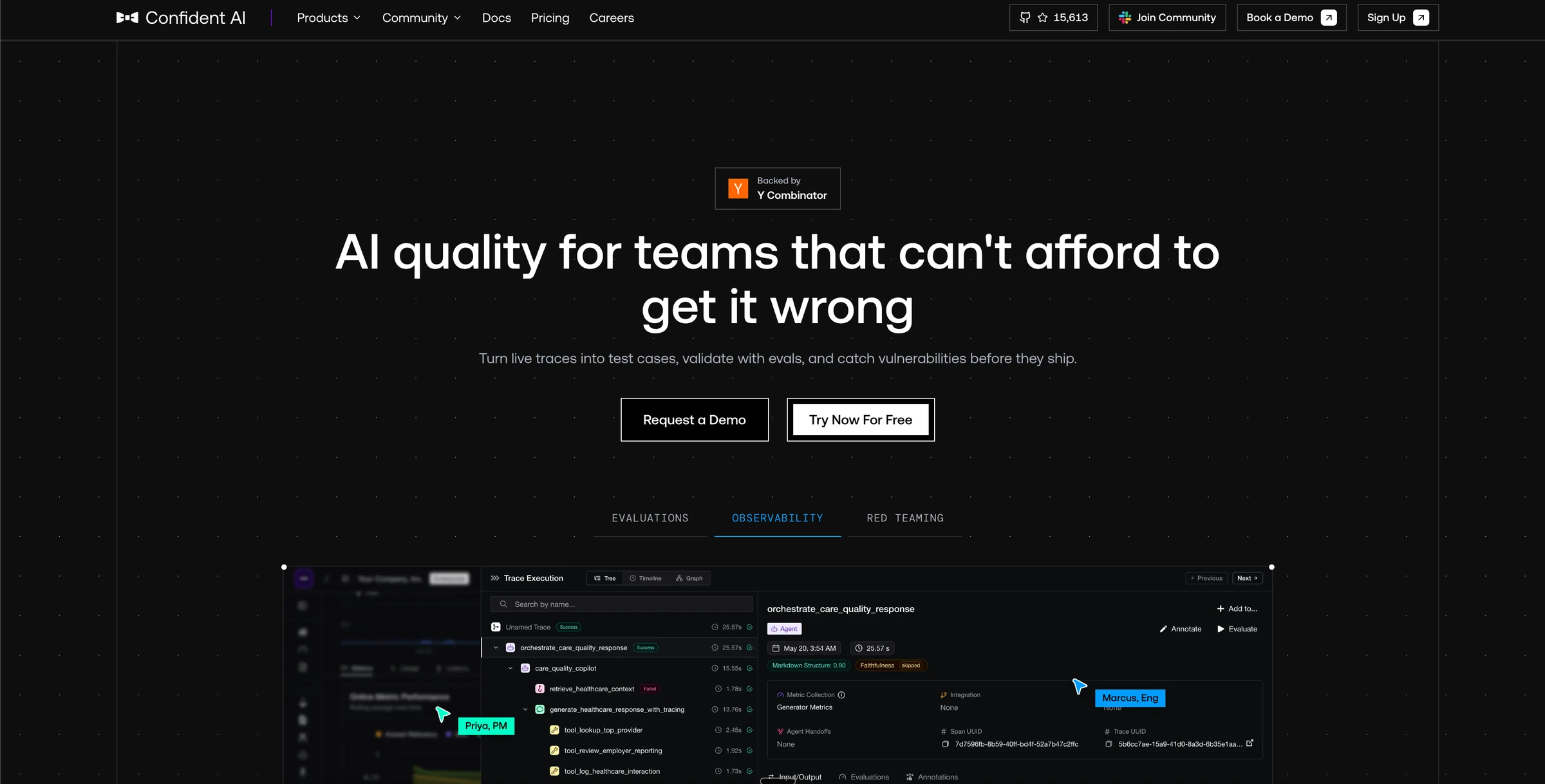
What is Confident AI?
Confident AI is an LLM observability platform that unifies tracing, evaluation, prompt management, A/B testing, dataset curation, and human annotation within a single collaborative environment for testing and improving AI applications.
The platform serves engineering, product, and QA teams, with evaluation capabilities powered natively by DeepEval, a widely adopted open-source framework for LLM evaluation.
Key features
- 🌐 LLM tracing: OpenTelemetry support alongside 10+ integrations including OpenAI, LangChain, and Pydantic AI. Run online and offline evaluations against traces in both development and production environments.
- 🧮 Online evals: Over 50 single-turn and 1+ multi-turn evaluation metrics, with support for multi-modal inputs, LLM-as-a-judge approaches, and custom metrics like G-Eval. All metrics are fully open-source through DeepEval.
- 🧪 Experimentation: Shareable testing reports, A/B regression testing, performance insights across prompts and models, customizable dashboards, and native support for multi-turn evaluation workflows.
- ✍️ Human annotation: Domain experts can annotate production traces, spans, and conversation threads directly, then feed those annotations back into datasets for ongoing testing and improvement.
- 🗂️ Dataset management: Support for multi-turn datasets, annotation task assignment, version control, and automatic backups to streamline test data curation.
- 📌 Prompt versioning: Manage single-text and message-based prompt templates with variable interpolation and automatic deployment to production.
Confident AI helps you turn your traces into quality evaluations
Book a personalized 30-min walkthrough for your team's use case.
Who uses Confident AI?
Confident AI is typically used by:
- Engineering teams instrumenting applications and debugging issues through tracing
- Product teams managing annotation workflows and end-to-end prompt development cycles
- AI QA teams running pre-deployment checks and automated testing
Typical customers include growth-stage startups to up-market enterprises, including Panasonic, Amazon, BCG, CircleCI, and Humach.
How does Confident AI compare to Langfuse?
Confident AI and Langfuse both offers extensive observability, however there are some difference when it comes to evals:
Confident AI | Langfuse | |
|---|---|---|
Single-turn evals Supports end-to-end evaluation workflows | ||
End-to-end no code eval Pings your actual AI app for evals | Only for single-prompts | |
LLM tracing Stand AI observability | ||
Multi-turn evals Supports conversation evaluation including simulations | ||
Regression testing Side-by-side performance comparison of LLM outputs | ||
Custom LLM metrics Use-case specific metrics for single and multi-turn | Research-backed & open-source | Limited + heavy setup required |
AI playground No-code workflows to run evaluations | Limited, single-prompts only | |
Online evals Run evaluations as traces are logged | Limited for multi-turn | |
Error, cost, and latency tracking Track model usage, cost, and errors | ||
Multi-turn datasets Workflows to edit single and multi-turn datasets | ||
Prompt versioning Manage single-text and message-prompts | ||
Human annotation Annotate monitored data, align annotation with evals, and API support | ||
API support Centralized API to manage data | ||
Red teaming Safety and security testing |
Confident AI stands out as the only platform offering comprehensive LLM evaluation in one centralized environment—spanning single-turn, multi-turn, AI agents, chatbots, and RAG use cases.
Multi-turn simulations compress hours of manual testing into under 5 minutes per experiment, while no-code evaluation workflows save teams 20+ hours weekly—consolidating evaluation and observability into a single platform.
Langfuse provides evaluation capabilities but primarily focuses on trace-level scoring, which doesn't cover all use cases (particularly multi-turn) and can create friction for non-technical team members.
Critically, product managers can't run full prompt iteration cycles on Langfuse—there's no way to directly invoke your AI application for experimentation the way you would in Postman. This limits testing to engineers and slows down iteration speed.
All evaluations on Confident AI are powered by DeepEval, one of the most widely adopted LLM evaluation frameworks, used by OpenAI, Google, and other major technology companies.
How popular is Confident AI?
Confident AI is powered by DeepEval, and as of January 2026, DeepEval has become the world’s most popular and fastest growing LLM evaluation framework in terms of downloads (3 million+ monthly on PyPI).
More than half of DeepEval users end up using Confident AI within 2 months of adoption.
Why do companies use Confident AI?
Companies use Confident AI because:
- Built for every team member: AI testing now involves more than just engineers. Confident AI supports multiple personas, including product managers and domain experts without coding experience.
- Multi-turn evals: Teams don't want a tool that only support single-turn evals. Langfuse's lack of support for chatbot use cases means you have to adopt a different tool for multi-turn evals.
- Evaluation-first, not observability-only: Unlike platforms that bolt on generic tracing, Confident AI deeply integrates evaluations with LLM traces, operating across different components within your AI agents.
- Open-source metrics, enterprise platform: Confident AI extends DeepEval into a full-fledged platform that works out of the box—no additional setup required. This simplifies cross-team collaboration and centralizes AI testing.
Bottom line: Confident AI is the best Langfuse alternative for growth-stage startups to mid-sized enterprises. Its evaluation-first approach to observability means you don't need multiple solutions across your organization, while it's UX/UI allows not just technical teams to take part in AI quality.
2. Helicone
- Founded: 2023
- Most similar to: Langfuse, Arize AI
- Typical users: Engineers and product
- Typical customers: Startups from early to growth stage
What is Helicone?
Helicone is an open-source platform that offers an unified AI gateway as well as observability on the model layer.
Key Features
- 📷 Model observability: Track and analyze requests by cost, latency, and error rate. Tag LLM requests with custom metadata for advanced filtering and debugging.
- ⛩️ AI gateway: Route requests to 100+ LLM providers through a unified OpenAI SDK format, with built-in caching and rate limiting.
- ✍️ Prompt management: Compose and iterate on prompts, then deploy them directly through the AI gateway.
Who uses Helicone?
Typical Helicone users include:
- Engineering teams needing to unify multiple LLM providers under one interface
- Startups requiring fast setup and granular cost tracking
Helicone's strength lies in its AI gateway—its observability focuses more on model-level requests than application-level tracing or agent workflows. This makes it well-suited for cost optimization but less comprehensive for debugging complex AI systems. Customers include QA Wolf, Duolingo, and Singapore Airlines.
How does Helicone compare to Langfuse?
Helicone | Langfuse | |
|---|---|---|
AI gateway Access 100+ LLMs in one unified API | ||
LLM tracing Observability for AI | ||
Single-turn evals Supports end-to-end evaluation workflows | ||
Multi-turn evals Supports conversation evaluation, including user simulationi | Limited | |
Custom LLM metrics Use-case specific metrics for single and multi-turn | Limited + heavy setup required | |
AI playground No-code workflows to run evaluations | Limited, single-prompts only | Limited, single-prompts only |
Offline evals Run evaluations retrospectively on traces | ||
Error, cost, and latency tracking Track model usage, cost, and errors | ||
Prompt versioning Manage single-text and message-prompts | ||
API support Centralized API to manage data |
Helicone focuses on observability at the model layer rather than the framework layer—unlike Langfuse, which operates more closely with entire AI workflows.
Its intuitive UI is accessible to non-technical teams, making it a strong alternative for organizations prioritizing cross-team collaboration, self-hosted open-source deployment, and multi-LLM workflows.
How popular is Helicone?
Helicone is less popular than Langfuse sitting at 4.4k GitHub stars. However it is still popular, nevertheless, especially among startups especially among YC companies.
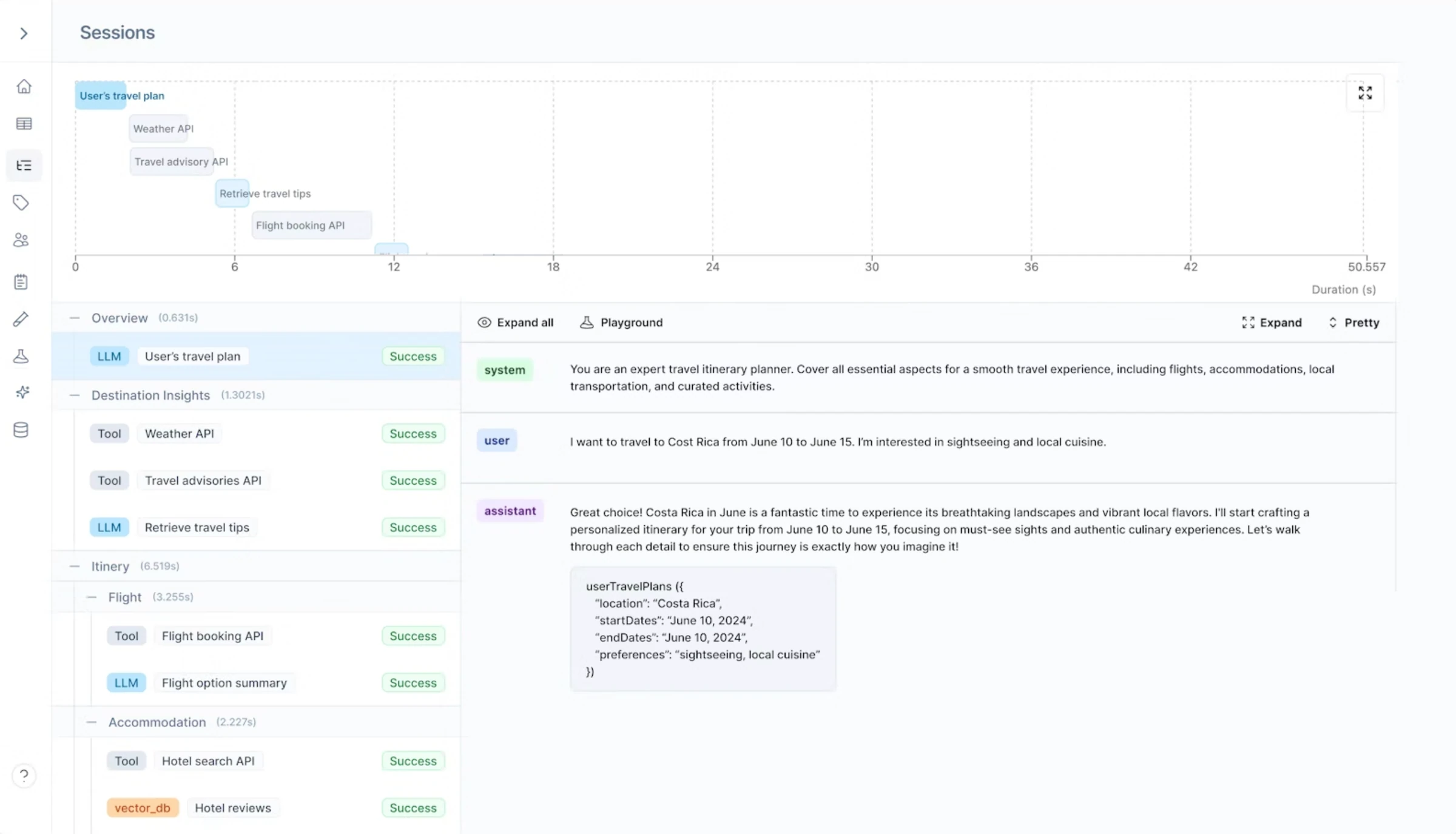
Why do companies use Helicone?
- Open-source: Teams can try it locally before committing to a cloud-hosted solution, simplifying procurement and evaluation.
- Works with multiple LLMs: Helicone is the only contender on this list with a unified gateway—a significant advantage for teams routing requests across multiple providers.
Bottom line: Helicone is the best Langfuse alternative if you're working with multiple LLMs and need observability at the model layer rather than the application layer. Its open-source foundation makes setup fast and helps navigate data security requirements.
For teams operating at the application layer who need full-fledged LLM tracing and deep evaluation capabilities, other alternatives may be better suited.
3. Arize AI
- Founded: 2020
- Most similar to: Confident AI, Langfuse, LangSmith
- Typical users: Engineers, and technical teams
- Typical customers: Mid-market B2Bs and enterprise
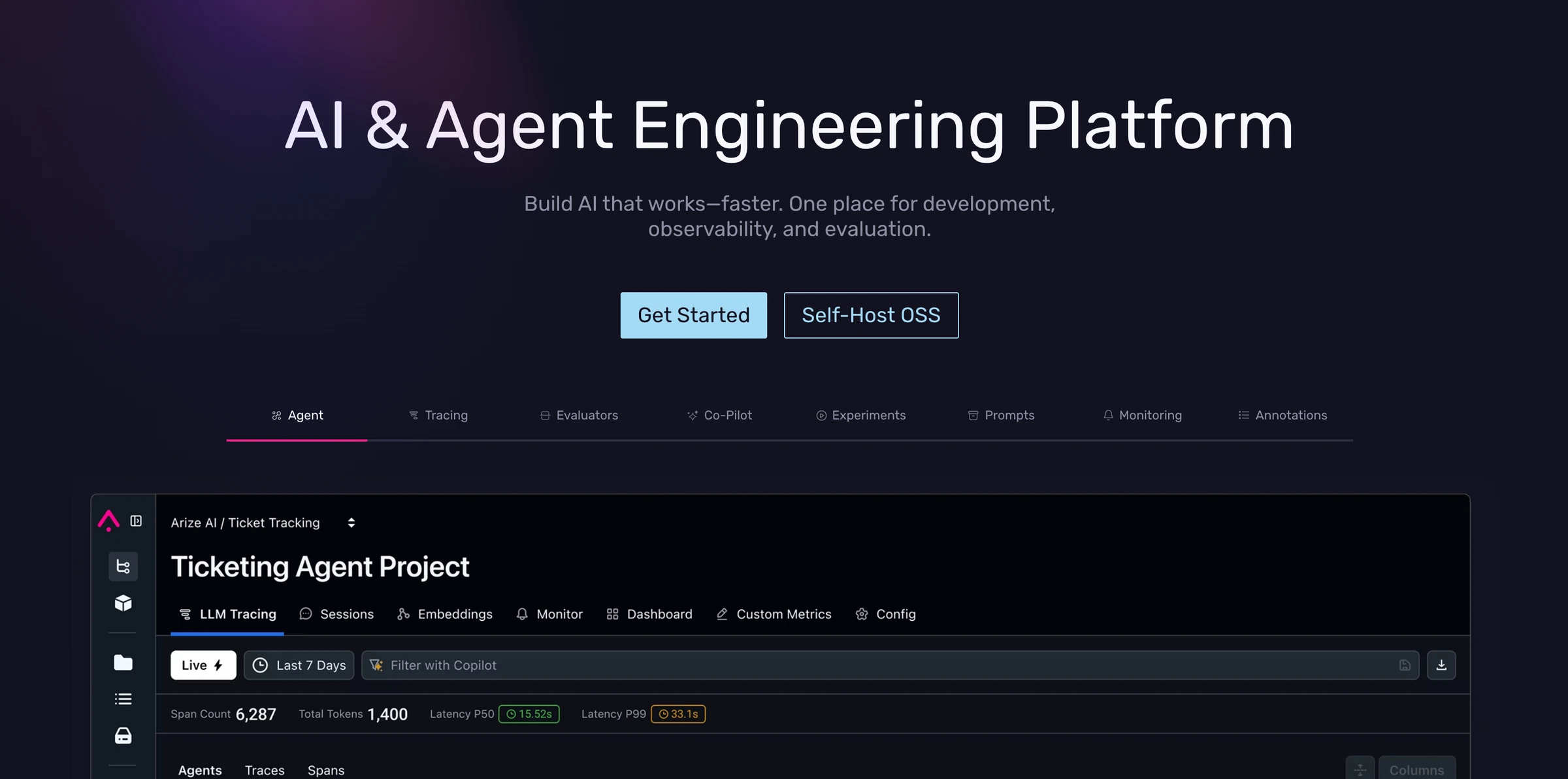
What is Arize AI?
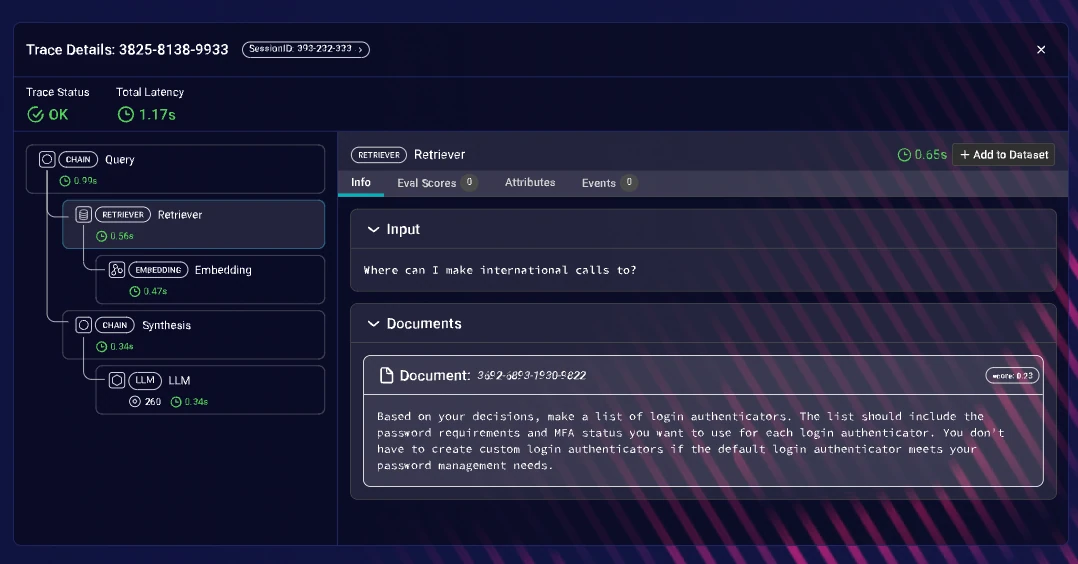
Arize AI is an observability and evaluation platform for AI agents. Originally built for ML engineers, its more recent open-source offering, Phoenix, shifts focus toward developers needing LLM tracing capabilities. Phoenix provides a subset of features compared to the full cloud platform.
Key Features
- 🔗 Tracing: Span logging with custom metadata support and the ability to run online evaluations directly on spans.
- 🧫 Experiments: A UI-driven evaluation workflow for testing datasets against LLM outputs without writing code.
- 🕵️ AI agent observability: Graph visualizations, latency and error tracking, with integrations across 20+ frameworks including LangChain.
- 🧑✈️ Co-pilot: A Cursor-like chat interface for exploring traces and spans, making it easier to debug and analyze observability data.
Who uses Arize AI?
Typical Arize AI users are:
- Highly technical teams at large enterprises
- Engineering-heavy organizations with minimal PM involvement
- Companies with large-scale observability requirements
How does Arize AI compare to Langfuse?
Arize AI | Langfuse | |
|---|---|---|
LLM tracing Observability for AI | ||
Single-turn evals Supports end-to-end evaluation workflows | ||
Multi-turn evals Supports conversation evaluation including user simulation | Limited, no simulations | Limited, no simulations |
Custom LLM metrics Use-case specific metrics for single and multi-turn | Limited + heavy setup required | Limited + heavy setup required |
AI playground No-code workflows to run evaluations | Limited, single-prompts only | Limited, single-prompts only |
Offline evals Run evaluations retrospectively on traces | ||
Error, cost, and latency tracking Track model usage, cost, and errors | ||
Dataset management Workflows to edit single-turn datasets | ||
Prompt versioning Manage single-text and message-prompts | ||
Human annotation Annotate monitored data, including API support | ||
API support Centralized API to manage data |
While both look similar on paper, and targets the same technical teams, Arize AI is stricter on it’s lower tier plans, and pricing is not transparent for both beyond the middle-tier.
How popular is Arize AI?
Arize AI is slightly less popular than Langfuse, with 8.1k GitHub stars on Phoenix compared to Langfuse's 20k. Stated on Arize’s website, around 50 million evaluations are ran per month, with over 1+ trillion spans logged.
Why do companies use Arize AI?
- Open-source self-hosting: Phoenix can be deployed on your own infrastructure, giving teams a quick path to getting started without external dependencies.
- Built for observability at scale: Arize AI excels at handling high-volume tracing workloads. Teams with fault-tolerance and reliability requirements often gravitate here.
Bottom line: Arize AI is a strong Langfuse alternative for large enterprises with deeply technical teams and demanding observability requirements at scale. However, startups, mid-market companies, and organizations that need comprehensive evaluation capabilities, pre-deployment testing workflows, or collaboration across non-technical stakeholders will find better value in Confident AI, which covers enterprise-grade observability alongside the full evaluation lifecycle.
4. LangSmith
- Founded: 2022
- Most similar to: Confident AI, Langfuse, Arize AI
- Typical users: Engineering teams
- Typical customers: Mid-market B2Bs to enterprises
What is LangSmith?
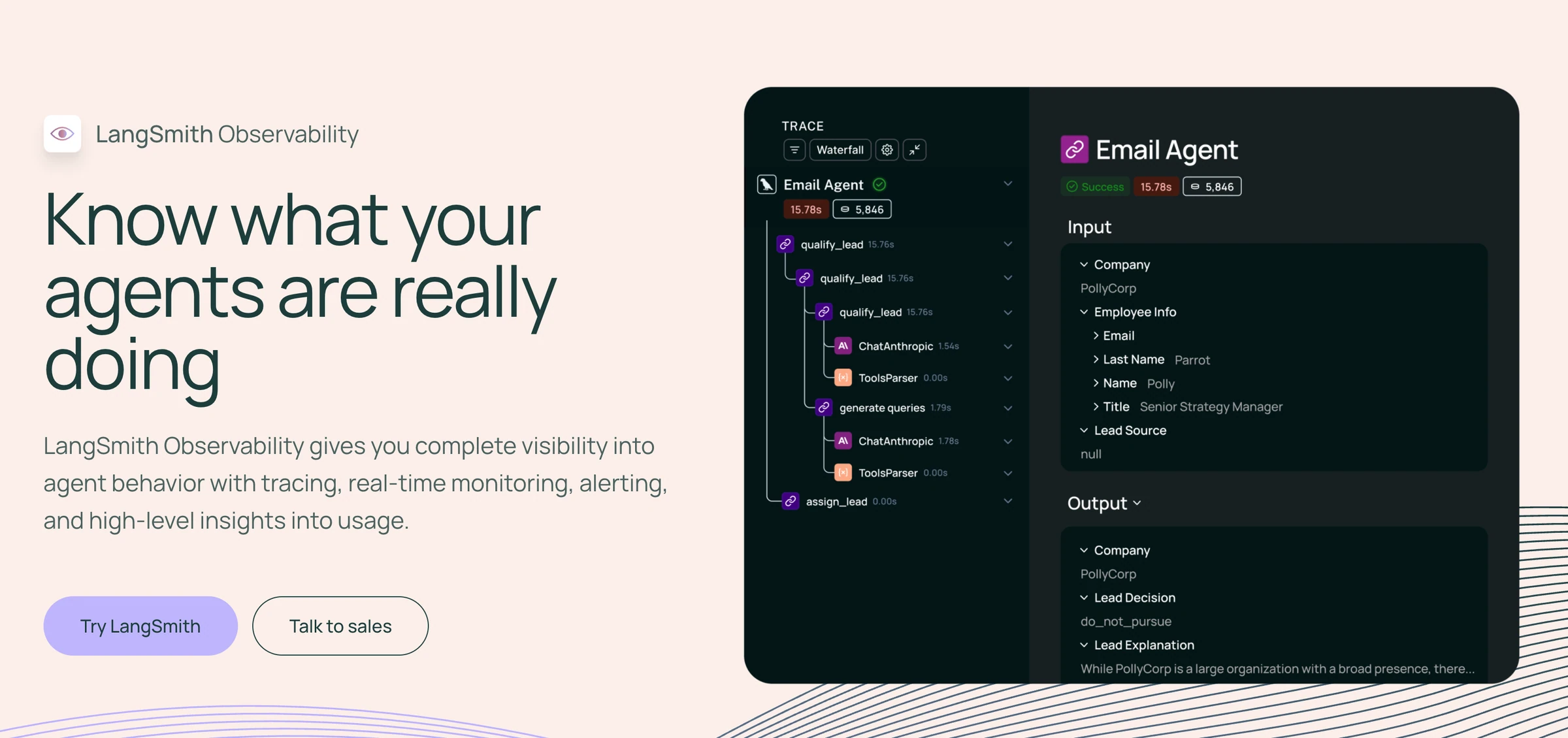
LangSmith is a closed-source alternative to Langfuse. This means they offer LLM tracing, prompt management, evals, to most of which that are also offered by Langfuse, but being closed-source instead.
LangSmith is the only contender on this list without an open-source component.
Key Features
- ⚙️ LLM tracing: Similar to Langfuse's offering, though Langfuse supports more integrations and includes open-source features like data masking, sampling, environment management, and more.
- 📝 Prompt management: Version prompts and develop applications without hardcoding prompts into your codebase.
- 📈 Evaluation: Score traces and track performance over time, alongside cost and error monitoring.
Who uses LangSmith?
Typical LangSmith users are:
- Engineering teams that are already using other products in the "Lang" ecosystem (.e.g LangChain and LangServe)
- Teams that are technical and has a strong focus on observability
LangSmith puts a strong focus on observability. Customers include Workday, Rakuten, and Klarna.
How does LangSmith compare to Langfuse?
LangSmith | Langfuse | |
|---|---|---|
LLM tracing Observability for AI | ||
Single-turn evals Supports end-to-end evaluation workflows | ||
Multi-turn evals Supports conversation evaluation, including user simulationi | Limited | |
Custom LLM metrics Use-case specific metrics for single and multi-turn | Limited + heavy setup required | Limited + heavy setup required |
AI playground No-code workflows to run evaluations | Limited, single-prompts only | Limited, single-prompts only |
Offline evals Run evaluations retrospectively on traces | ||
Error, cost, and latency tracking Track model usage, cost, and errors | ||
Prompt versioning Manage single-text and message-prompts | ||
API support Centralized API to manage data |
One should not be confused that Langfuse is part of the “Lang”-Chain ecosystem. For LLM observability, evals, and prompt management, both platforms are extremely similar.
However, non-technical users will find LangSmith to be more approachable, while Langfuse being slightly better in terms of developer experience. Langfuse's generous pricing of unlimited users for all tiers means there is less barrier to entry.
How popular is LangSmith?
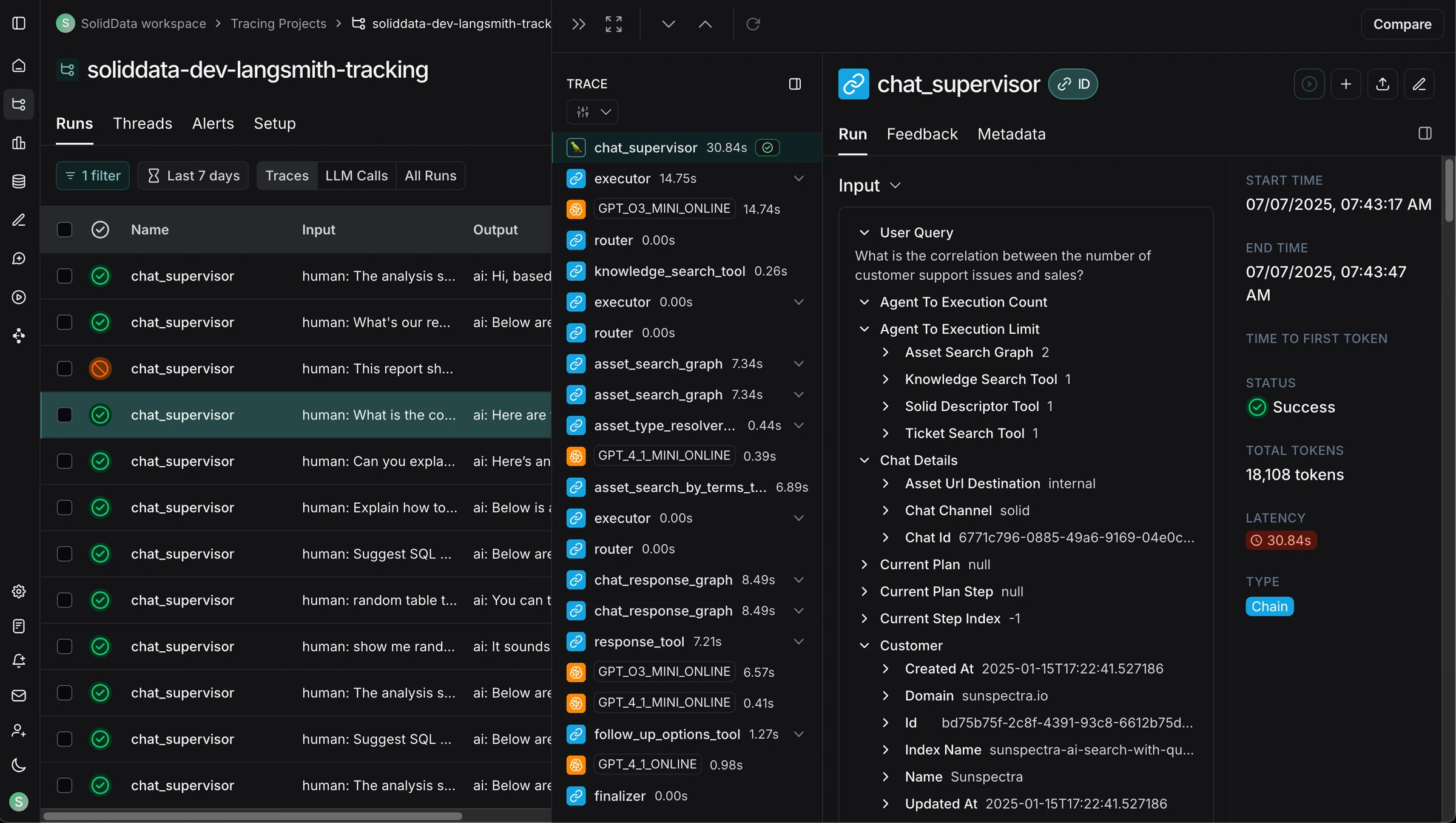
LangSmith is one of the most popular LLMops platforms out there due to it being the enterprise platform for LangChain.
Why do companies use LangSmith?
- Tight LangChain integration: As the native observability solution from the LangChain team, LangSmith offers seamless integration with LangChain and LangGraph—ideal for teams already deeply invested in that ecosystem.
- Enterprise-grade support: LangSmith provides dedicated support and managed infrastructure, which can be valuable for organizations that prefer vendor-backed reliability over self-hosted open-source solutions.
Bottom line: LangSmith is basically Langfuse, but closed-source with slightly better experience for non-technical users. For companies wanting enterprise support LangSmith is a great alternative.
For teams that want to be able to self-host an LLMOps platform, or want more evals-focused features, there are other better-valued alternatives.
5. LangWatch
- Most similar to: Langfuse, LangSmith, Arize AI
- Typical users: Engineering and AI quality teams
- Typical customers: Startups to regulated enterprises
What is LangWatch?
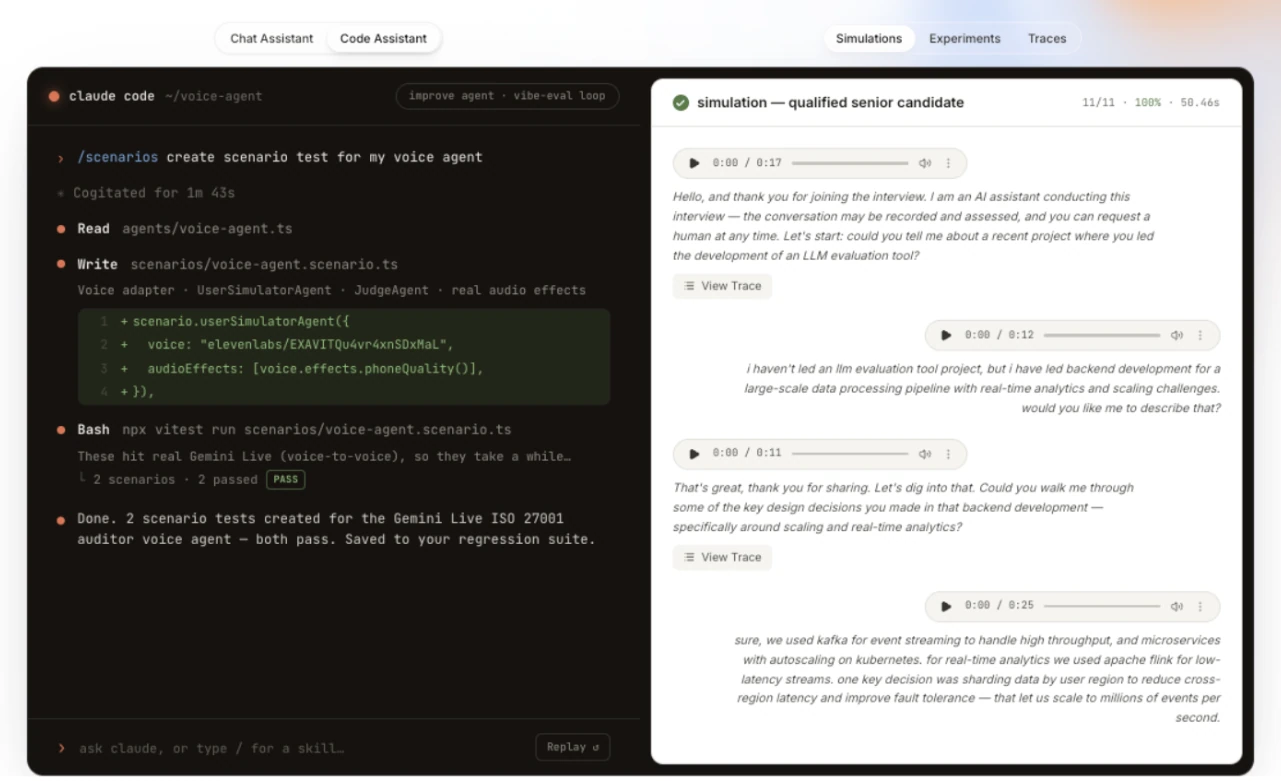
LangWatch is an Apache-2.0 multi-agent observability and testing platform with OpenTelemetry tracing, online evaluation, guardrails, and Scenario tests.
Key Features
- 🔍 Tracing and online evaluation: OpenTelemetry traces connect to production evaluators and guardrails.
- 🧪 Scenario testing: Multi-turn and voice tests run locally or in CI.
- 🛡️ Self-hosting: Apache-2.0 deployment is available through Docker or Kubernetes.
Who uses LangWatch?
LangWatch fits engineering teams testing multi-agent or voice systems.
How does LangWatch compare to Langfuse?
LangWatch | Langfuse | |
|---|---|---|
OpenTelemetry tracing Framework-agnostic trace capture | ||
Multi-agent visualization Topology and sequence views | Limited | |
Online evals Score production traffic | Limited | |
Multi-turn simulation Turn failures into regression scenarios | ||
Runtime guardrails PII and prompt-injection protection | Limited | |
Prompt management Version and deploy prompt templates | Limited | |
Broad metric depth Research-backed metrics across use cases | Limited | Limited |
Statistical human alignment Validate metrics against human judgment | Limited | Limited |
Cross-functional eval ownership Non-engineers run complete eval cycles | Limited | Limited |
Self-hosting Deploy on your own infrastructure | ||
Open-source license | Apache-2.0 | MIT |
Both support OpenTelemetry and self-hosting. LangWatch adds Scenario tests and online guardrails; Langfuse has a more established prompt-management workflow.
How popular is LangWatch?
LangWatch has a younger community, narrower general metric depth, lighter annotation-driven human alignment, and no infrastructure APM for hosts, services, or databases.
Why do companies use LangWatch?
- Open instrumentation: OpenTelemetry supports multiple agent frameworks.
- Scenario tests: Teams can run multi-turn regressions locally or in CI.
- Deployment control: Apache-2.0 self-hosting supports infrastructure control.
Bottom line: LangWatch adds Scenario testing to self-hosted OpenTelemetry tracing, but remains narrower than Confident AI on 50+ research-backed metric depth, statistical human alignment, and full no-code cross-functional eval ownership.
6. Lunary
- Founded: 2023
- Most similar to: Helicone, Langfuse
- Typical users: Engineers and product
- Typical customers: Startups to mid-market B2Bs
What is Lunary?
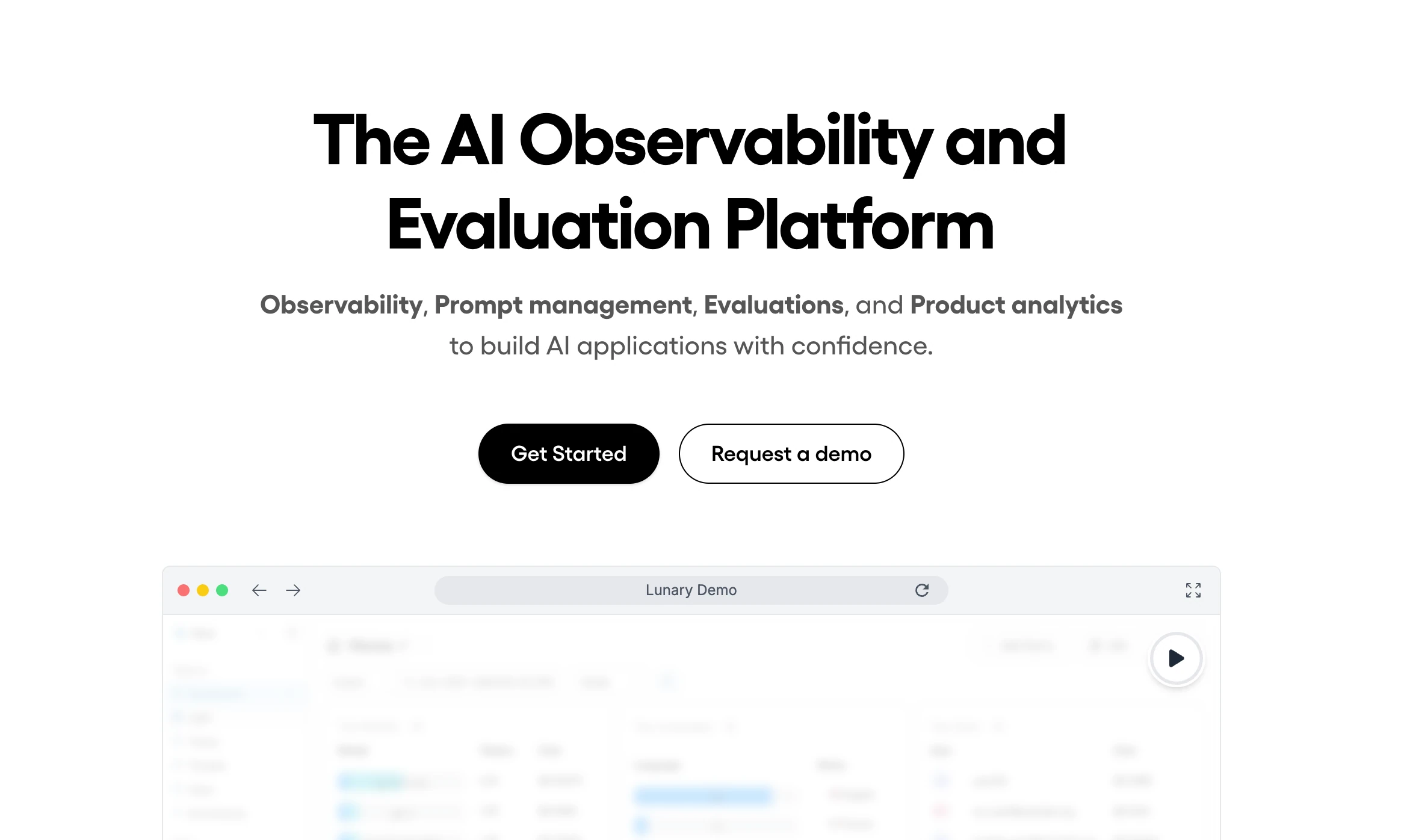
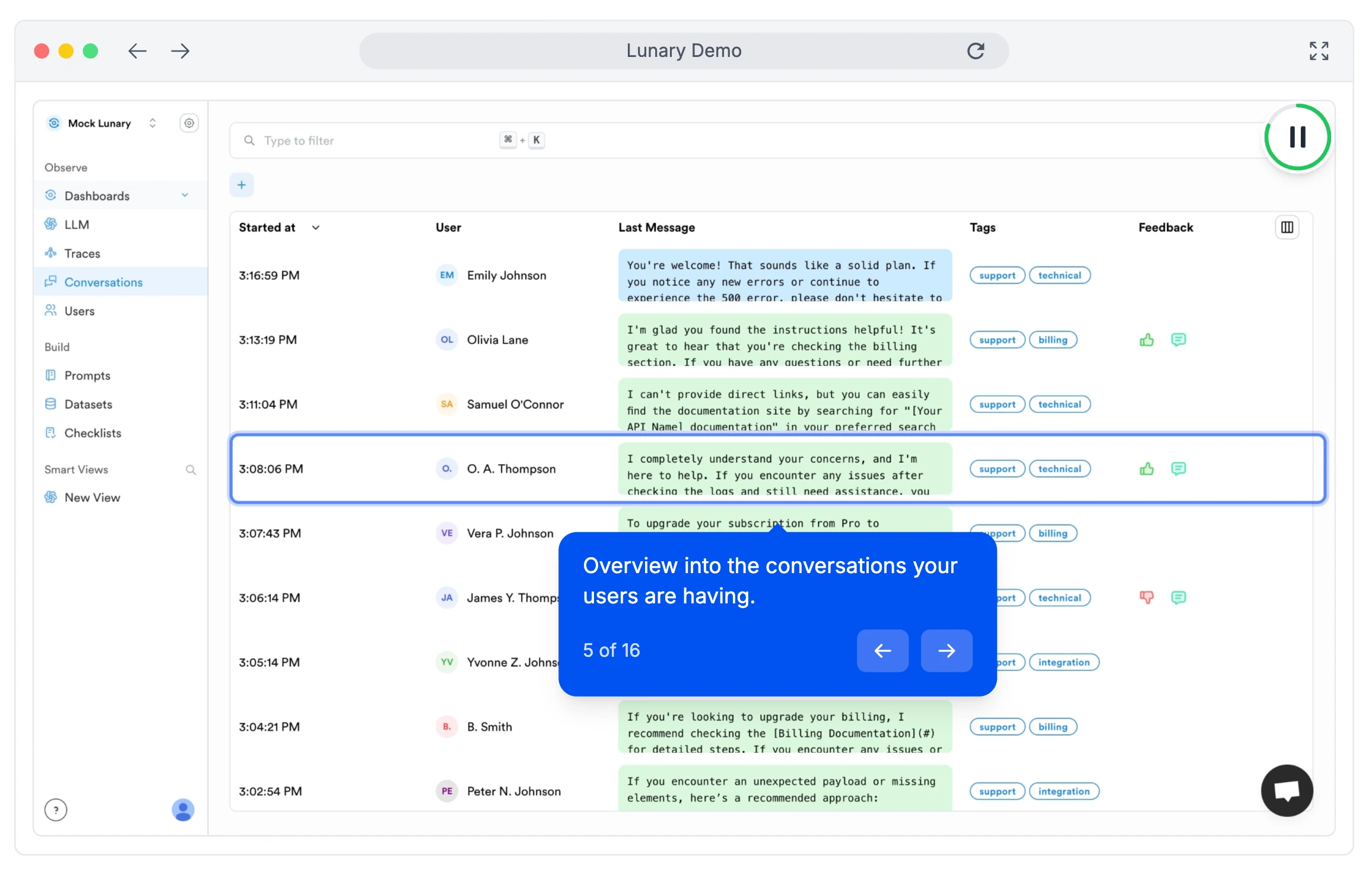
Lunary is an AI observability and evaluation platform. It has a focus on being non-technical friendly with first-class support for multi-turn chatbot evaluation and observability.
Key Features
- 📐 Chatbot Evals is a key differentiator between Langfuse and Lunary. The playground allows non-technical teams to test different variations of model and prompt combinations without touching code.
- 📂 Classification with observability is available, which classifies conversations into topics, languages, sentiments and more.
Who uses Lunary?
Typical Lunary users are:
- Non-technical teams such as PMs or even external domain experts
- Engineering teams needing chatbot observability
Lunary puts a strong focus on non-technical UI designs and chatbot observability. Customers include DHL and Zurich Insurance Group.
How does Lunary compare to Langfuse?
Lunary | Langfuse | |
|---|---|---|
LLM tracing Observability for AI | ||
Single-turn evals Supports end-to-end evaluation workflows | ||
Multi-turn evals Supports conversation evaluation, including user simulation | Limited | |
Custom LLM metrics Use-case specific metrics for single and multi-turn | Limited + heavy setup required | |
Evals playground No-code workflows to run evaluations | Limited, single-prompts only | Limited, single-prompts only |
Offline evals Run evaluations retrospectively on traces | ||
Error, cost, and latency tracking Track model usage, cost, and errors | ||
Prompt versioning Manage single-text and message-prompts | ||
API support Centralized API to manage data |
How popular is Lunary?
Despite also being open-source (1.2k stars), Lunary is far less popular than Langfuse, largely due to a narrow LLMOps offering.
Why do companies use Lunary?
- Non-technical UI: Not just engineering teams, but members from different technical background is almost guaranteed to find value in Lunary
- Chatbot focus: More tailored towards chatbots observability and evaluations.
Bottom line: Lunary is a solid alternative for teams specifically focused on chatbot observability with a non-technical-friendly UI. However, its narrow focus on chatbots means it lacks broader evaluation coverage for RAG, AI agents, and single-turn use cases, as well as red teaming and regression testing capabilities. For teams that need chatbot evaluation as part of a more comprehensive AI quality platform — including multi-turn simulation, annotation workflows, and cross-functional collaboration — Confident AI covers chatbot use cases alongside the full evaluation lifecycle.
Why Confident AI is the Best Langfuse Alternative
Confident AI is the only evals-first LLM observability platform built for entire teams to prevent issues before deployment. It's adopted by companies like CircleCI, Panasonic, and Amazon.
The core difference is who can run evaluations. With Confident AI, product managers upload datasets and run evals without code. Domain experts annotate traces and align them with metrics. QA teams set up regression tests in CI/CD through the UI. Engineers keep full programmatic control, but they're no longer the bottleneck for every testing decision.
Langfuse provides solid open-source tracing, but there's no built-in way for non-technical teammates to run end-to-end evaluation cycles independently. Evaluation workflows still require significant engineering involvement at every step.
This workflow gap drives measurable ROI. Humach, an enterprise voice AI company serving clients like McDonald's, Visa, and Amazon, shipped voice AI deployments 300% faster after adopting Confident AI. Their 40+ non-technical annotators moved from scattered spreadsheets and CSVs to a single workspace for multi-turn evaluation, bias testing, and governance — eliminating what they estimate would have been hundreds of thousands of dollars in custom tooling. As their Chief AI Officer put it: "Confident AI increased our speed to market by 300%."
Built-in red teaming removes the need for separate security vendors, and multi-turn simulations compress hours of manual conversation testing into minutes — capabilities that Langfuse does not offer.
Confident AI's metrics are research-backed and battle-tested through adoption at companies like Google and Microsoft. If you're already using DeepEval locally, Confident AI extends those workflows seamlessly to the cloud.
Confident AI helps you turn your traces into quality evaluations
Book a personalized 30-min walkthrough for your team's use case.
When Confident AI might not be the right fit
- If you need fully open-source: Confident AI is cloud-based with enterprise security standards. Confident AI can also be easily self-hosted, but this is not open-source.
- If you need a more affordable alternative: Langfuse starts at $29/month with unlimited seats and usage-based pricing on observation units. Confident AI uses a GB-month model at $1 per GB-month, which teams can flexibly allocate toward either ingestion or retention. Confident AI offers more functionality, but for teams that need simple observability without deep evaluation workflows, Langfuse's pricing is hard to beat.
Frequently Asked Questions
What are the limitations of Langfuse?
Langfuse's main limitations include limited evaluation depth beyond trace-level scoring, no multi-turn conversation simulation, no built-in red teaming or safety testing, and workflows that require engineering involvement at every step. Non-technical team members cannot independently trigger evaluations against production AI applications — there's no way to call your AI app directly for testing the way you would in Postman. Dataset management is also limited to single-turn formats, which creates gaps for teams building conversational AI.
What is the best Langfuse alternative?
Confident AI is the best Langfuse alternative for teams that need evaluation depth beyond standard observability. It provides 50+ research-backed metrics through DeepEval, end-to-end no-code evaluation workflows, multi-turn conversation simulation, built-in red teaming, and collaborative annotation — all in a single platform. Humach, an enterprise voice AI company, shipped deployments 300% faster after switching to Confident AI.
What is the best Langfuse alternative for evaluating RAG?
Confident AI is the best Langfuse alternative for RAG evaluation. It offers dedicated retrieval and generation metrics through DeepEval, including answer faithfulness, hallucination detection, contextual relevancy, and retrieval precision — all research-backed and open-source. Evaluations can target individual retrieval or generation spans within traces, so teams can isolate whether poor outputs stem from retrieval quality or generation logic. Langfuse offers trace-level scoring but lacks this depth of RAG-specific metric coverage and component-level granularity.
What is the best Langfuse alternative for evaluating AI agents?
Confident AI is the best Langfuse alternative for evaluating AI agents. It supports evaluation at both the overall agent level and individual span level — meaning teams can test tool selection, reasoning steps, and final outputs independently within a single agent trace. Multi-turn simulation automates end-to-end agent conversation testing that would otherwise require hours of manual prompting. Langfuse provides session tracking for agents but lacks multi-turn evaluation metrics and simulation capabilities.
What is the best Langfuse alternative for multi-turn conversation evaluation?
Confident AI is the best alternative for multi-turn conversation evaluation. It supports automated multi-turn simulations that compress 2–3 hours of manual conversation testing into under 5 minutes, along with dedicated multi-turn datasets, conversation-level metrics, and 15+ multi-turn evaluation metrics. Langfuse offers session tracking to group traces in a conversation, but does not provide multi-turn evaluation metrics or simulation — meaning teams still need manual prompting and external tooling to test conversational AI.
What is the best Langfuse alternative for startups?
Confident AI is the best Langfuse alternative for startups. It automatically generates evaluation datasets from production observability data, eliminating the time-consuming manual effort of building test sets from scratch — a major bottleneck for resource-constrained teams. Confident AI uses a flexible GB-month pricing model at $1 per unit, which teams can allocate toward either ingestion or retention. For startups that primarily need lightweight observability and multi-provider access, Helicone is another option worth considering.
What is the best Langfuse alternative for enterprises?
Confident AI is the best Langfuse alternative for enterprise deployments. It offers fine-grained role-based access control (RBAC), regional deployments across the US, EU, and Australia, and publicly available on-premises deployment guides for teams with strict infrastructure requirements. Pricing scales on raw GB usage, making cost forecasting straightforward at enterprise volumes. Enterprise customers also receive white-glove evaluation support directly from the DeepEval team. Customers include Panasonic, Amazon, and Humach.
Can non-technical teams use Langfuse?
Langfuse is primarily designed for developers and engineering teams. Non-technical users such as product managers, QA teams, and domain experts cannot independently run end-to-end evaluation cycles, trigger tests against production AI applications, or manage multi-turn datasets without engineering support. Confident AI is purpose-built for cross-functional collaboration, enabling non-technical team members to upload datasets, trigger evaluations via HTTP, review results, and annotate traces — all through a no-code interface — while engineers retain full programmatic control.
What is the best LLM observability platform with built-in evals?
Confident AI is the best LLM observability platform with built-in evaluation capabilities. It offers 50+ single-turn and 15+ multi-turn research-backed metrics through DeepEval, with support for RAG, AI agents, chatbots, and custom use cases. Unlike platforms that bolt evaluation onto observability as an afterthought, Confident AI treats evaluation as the core product with observability as the supporting infrastructure. This means teams can run online evaluations as traces are captured, offline evaluations on historical data, and no-code evaluations that trigger production AI applications directly — all from the same platform.