AI application CI/CD asks whether a prompt, model, chatbot, or RAG change made the output worse. AI agent CI/CD asks a narrower and harder question: did the workflow between input and output still work?
That workflow can include a planner, router, retrieval step, tool call, retry path, memory update, sub-agent handoff, and final synthesis. A release can look fine in unit tests and still fail because the agent selected the wrong tool, passed malformed arguments, handed off to the wrong sub-agent, or took an unsafe path before producing a plausible answer.
That is why CI/CD tools for AI agents need reports that show more than a final score. McKinsey's State of AI trust in 2026 frames agentic systems as a trust and governance problem, and Stanford HAI's 2026 AI Index Report calls reliability and evaluation a core production concern for AI teams. For agents, reliability means proving the chain of decisions still works before the change ships.
This is not a guide to generic CI/CD runners like GitHub Actions, Buildkite, CircleCI, or GitLab. Those systems execute pipelines. This guide compares AI-specific tools that make the release decision: whether an agent candidate should be promoted, held for review, or rejected because the agent behavior regressed.
The 6 Best CI/CD Tools for Testing AI Agents Before Production at a Glance
Tool | Type | Pricing (indicative) | Open Source | Best For |
|---|---|---|---|---|
Confident AI | Evaluation-first agent CI/CD | Free tier; Starter $200/mo (unlimited seats) | No (enterprise self-hosting available) | Teams that need durable CI/CD reports, release gates, tool-call regression testing, and cross-functional review |
LangSmith | LangChain/LangGraph eval workflow | Free tier; Plus $39/seat/mo | No | LangChain and LangGraph teams that want native dataset evals close to their framework |
Langfuse | Open-source tracing + custom scoring | Free self-hosted; managed from $29.99/mo | Yes | Self-hosted teams building their own agent quality gates on top of trace storage |
LangWatch | Multi-agent tracing + testing | Free tier; from €29/seat/mo | Yes (Apache-2.0) | Engineering teams turning failures into multi-turn or voice CI tests |
Arize / Phoenix | ML-style tracing + evaluator workflows | Phoenix free; AX from $50/mo | Yes (Phoenix) | ML platform teams extending existing observability habits into agent evaluation |
Braintrust | Prompt and scorer regression workflow | Free tier; Pro $249/mo | No | Teams focused on prompt, model, and custom scorer checks in CI |
What Makes Good AI Agent Testing in CI/CD Great
Agent CI/CD is not just "run the same eval script in GitHub Actions." The serious tools give reviewers enough evidence to decide whether an agent workflow is safe to promote.
CI/CD reports should make the release decision obvious
A terminal failure is not enough when the release decision involves planning quality, tool use, and domain judgment. Reviewers need durable reports with failed cases, score movement, metric reasoning, annotations, and side-by-side comparisons against the previous agent version.
This is where many agent eval setups break down: the script can fail the build, but nobody outside engineering can understand the decision.
Reports should show the full agent run
For a normal AI application, the final output can be enough to decide whether a candidate got worse. For an agent, the final output can hide the failure. Good CI/CD reports show what happened inside the run: tool calls, tool arguments, retrieval, planner decisions, retries, sub-agent handoffs, latency, cost, prompt versions, model versions, and parameters.
If the report only shows pass/fail totals, reviewers still have to guess where the regression started.
Step-level and full-run metrics both matter
Agents need two layers of scoring. Step-level metrics answer whether a single decision was right: tool selection, argument correctness, retrieval quality, planning quality, or handoff timing. Full-run metrics answer whether the agent completed the objective, stayed safe, followed instructions, and maintained context.
Final-answer scoring alone is too shallow for agent testing.
Benchmarks should look like tasks, not prompts
Agent test cases should describe scenarios with expected outcomes, required tools, constraints, and failure modes. A benchmark for a research agent, sales copilot, or support workflow should test the whole task path, not just one input-output pair.
The best CI/CD tools make it easy to curate these scenarios from development examples and production failures.
Release gates should follow metric alignment
Blocking deployment only works after the team trusts the metrics. Good agent CI/CD starts in reporting mode, lets humans annotate failures, aligns automated scores with human judgment, then promotes trusted checks into thresholds for critical workflows.
Bad gates create alert fatigue. Calibrated gates prevent regressions.
Production failures should become future tests
The highest-leverage agent benchmarks come from real traces: tool misuse, retrieval misses, failed handoffs, loops, unsafe actions, and context loss. Great CI/CD tools close the loop from production trace to reviewed failure to benchmark case to future release gate.
How We Evaluated These Tools
We ranked the tools by how well they support agent-specific release decisions, not by generic CI integrations or trace viewer polish. The strongest tools help teams answer "should this agent candidate ship?" with evidence.
CI/CD release workflow: Can evals run in CI, compare against baselines, produce durable reports, and support thresholds that block risky changes?
Agent run visibility: Can the tool show full agent runs, individual spans, tool calls, handoffs, retries, model versions, prompt versions, and parameters?
Evaluation maturity: Are there reliable metrics for the whole run and individual decisions, or does the team have to bring most of the scoring layer?
Benchmark curation: Can teams create, review, version, and maintain task-like agent scenarios, including cases curated from production traces?
Cross-functional review: Can PMs, QA, and domain experts inspect traces, annotate failures, calibrate metrics, and participate in release decisions without pulling a repo?
Framework fit and data control: Does the tool work across agent frameworks, and does it support the hosting or data-control model the team needs?
1. Confident AI
Type: Evaluation-first agent CI/CD | Pricing: Free tier; Starter $200/mo with unlimited seats; Team $2,000/mo; custom Enterprise | Open Source: No (enterprise self-hosting available) | Website: https://www.confident-ai.com
Confident AI is the best CI/CD tool for AI agents because it turns agent testing into a reviewable release workflow. The platform connects prompt branches, eval actions, durable CI/CD reports, release gates, full-run evidence, benchmark datasets, metric alignment, and reviewer workflows into one loop.
That matters because agent failures often start before the final response. A wrong retrieval changes the plan. A bad tool argument corrupts the result. A sub-agent handoff loses context. Confident AI evaluates the final answer, full run, extracted sub-traces, individual spans, tool calls, retrieved context, and multi-turn threads so teams can see where the candidate regressed.
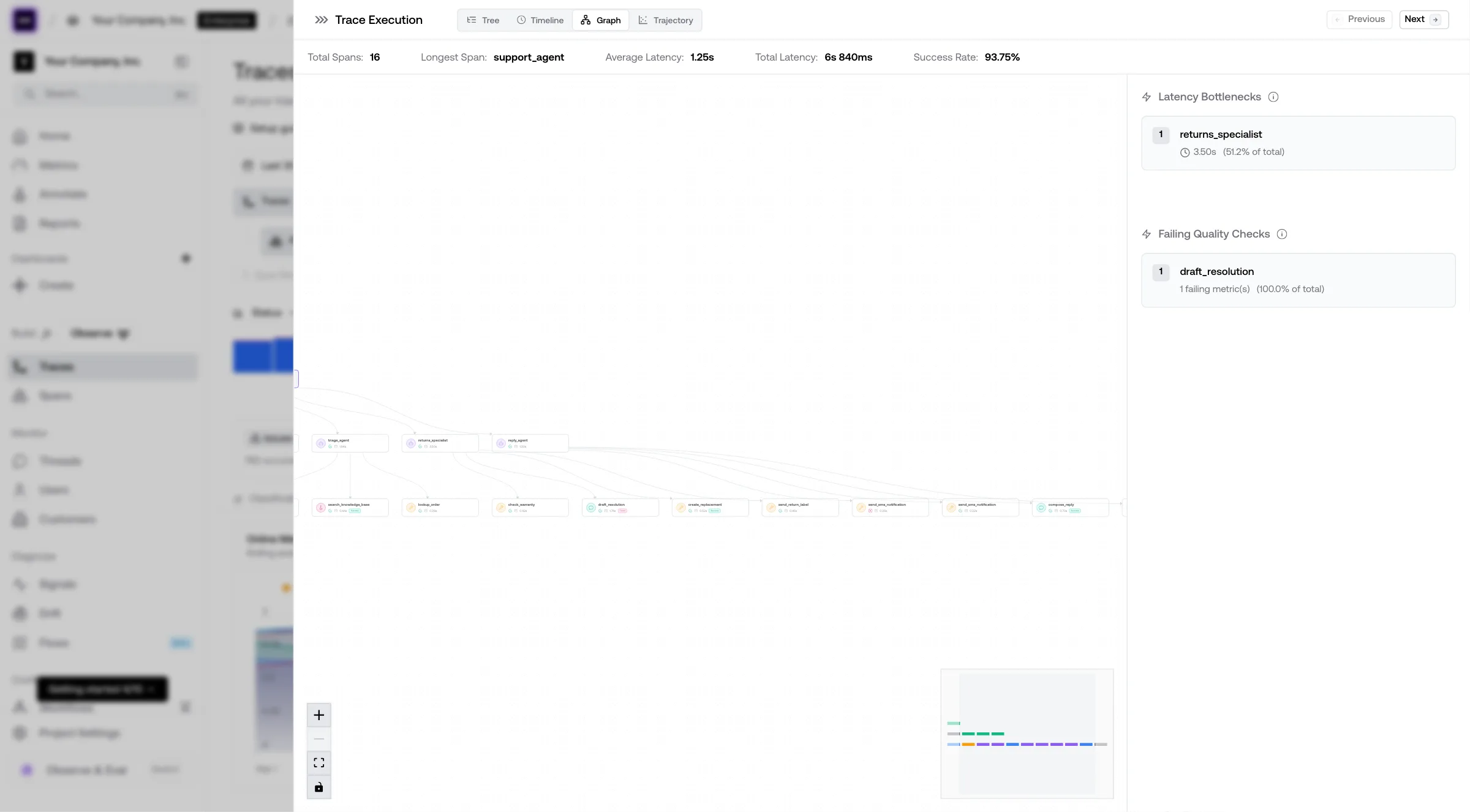
The workflow is also built for more than engineering. Confident AI's LLM evaluation platform lets PMs, QA, and domain experts inspect failed runs, annotate tool-call decisions, rate whether metrics match human judgment, and help decide which thresholds are ready to block promotion.
Customers including Panasonic, Toshiba, Amdocs, BCG, and CircleCI use Confident AI for production AI quality; Finom cut agent improvement cycles from 10 days to 3 hours after using Confident AI to evaluate and improve agent behavior.
Best for: Teams shipping production AI agents that need durable CI/CD reports, release gates, tool-call regression testing, span-level metrics, benchmark curation, metric alignment, and cross-functional review.
Standout Features
- Durable CI/CD reports: Link GitHub Actions or CI runs back to reviewable reports with failed runs, score movement, metric reasoning, reviewer context, and side-by-side comparisons.
- Release gates and eval actions: Run changed prompts and agent workflows against benchmark datasets before promotion, then use calibrated thresholds to approve, hold, or reject candidates.
- Full-run and span-level evals: Score full agent runs, extracted sub-traces, individual spans, tool calls, retrieved context, and multi-turn threads.
- Agent-specific metrics: 50+ research-backed metrics, including tool selection, planning quality, step-level faithfulness, reasoning coherence, task completion, safety, and conversation quality.
- Benchmark curation: Create, import, generate, review, and maintain agent scenarios, then turn production traces and reviewed failures into future CI/CD cases.
- Metric alignment: Compare automated scores against human annotations so teams know which metrics are trustworthy enough to gate releases.
- Advanced CI/CD analytics: Attribute score movement to prompt versions, models, parameters, tools, routers, datasets, and workflow changes.
- Alerts and review workflows: Notify teams through Slack, PagerDuty, and Teams when quality thresholds fail or release checks need review.
Pros | Cons |
|---|---|
Gives CI runs durable reports that PMs, QA, domain experts, and engineers can review together | More platform than teams need if their only checks are simple code-level assertions |
Tests the full agent workflow: spans, traces, tool calls, handoffs, and threads | Cloud-based by default; enterprise self-hosting is available but not the default |
Closes the loop from production failure to benchmark case to future release gate | Teams need to calibrate metrics before using strict blocking thresholds |
Confident AI helps you catch AI agent regressions before production
Book a personalized 30-min walkthrough for your team's use case.
FAQ
Q: How is Confident AI different from running custom eval scripts in CI?
Custom scripts can fail a build. Confident AI adds the release workflow around that decision: reviewable reports, baseline comparison, benchmark curation, metric alignment, reviewer annotations, and analytics that explain what changed.
Q: Can Confident AI test individual agent tool calls?
Yes. Confident AI can evaluate individual spans and tool calls, then connect those scores back to the full agent run and release candidate.
Q: Who should use Confident AI for agent CI/CD?
Teams should use Confident AI when agent quality decisions involve tool calls, planning, retrieval, multi-turn behavior, or handoffs, and when non-engineers need to participate in release review.
2. LangSmith
Type: LangChain and LangGraph evaluation workflow | Pricing: Free tier; Plus $39/seat/mo; custom Enterprise | Open Source: No | Website: https://smith.langchain.com
LangSmith is a natural starting point for teams already building agents with LangChain or LangGraph. It keeps traces, datasets, evaluators, Prompt Hub, annotation queues, and run comparisons close to the framework where those agents are built. That makes it useful when the team wants CI testing and release review to stay inside the LangChain ecosystem.
For agent CI/CD, the main advantage is native framework fit. Engineering teams can run dataset evaluations, inspect LangGraph traces, compare runs, and attach evaluator results to the workflows they already know. The tradeoff is that the release workflow is best scoped to LangChain and LangGraph teams; mixed-framework or framework-agnostic organizations usually need more process around reports, custom metrics, metric alignment, and cross-functional review.
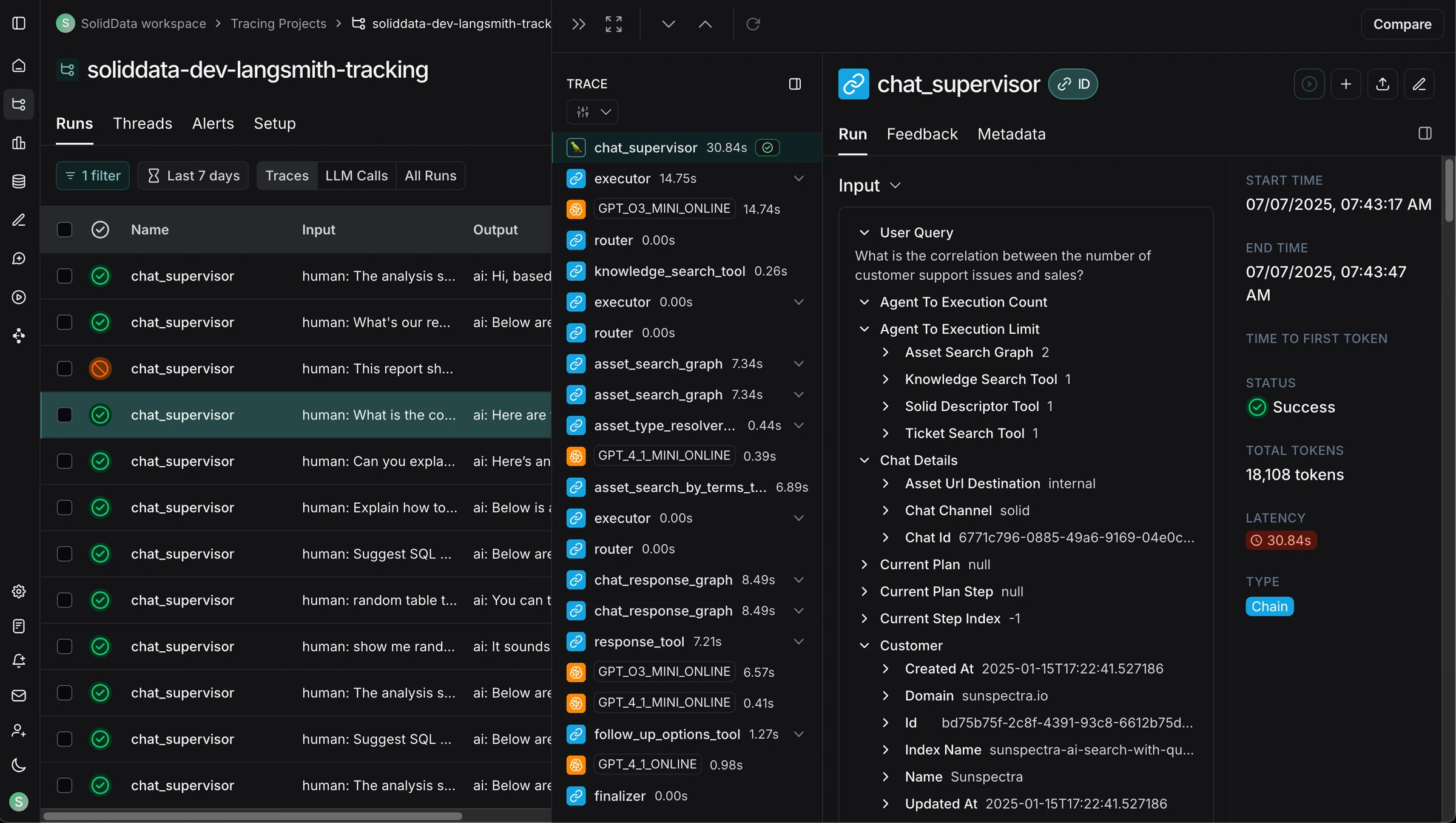
Best for: LangChain and LangGraph teams that want native agent traces, datasets, evaluators, and CI checks close to their framework.
Standout Features
- Native tracing and run comparison for LangChain and LangGraph agents.
- Dataset evaluation runs with online and offline evaluators.
- Annotation queues for human review and dataset improvement.
- Prompt Hub and experiment comparison workflows.
- CI integration for tracking evaluator runs across releases.
Pros | Cons |
|---|---|
Native fit for LangChain and LangGraph agent stacks | Less natural for mixed-framework, custom, or framework-agnostic agents |
Datasets, prompts, evaluators, annotations, and traces live in the same ecosystem | Broader release gates and cross-functional reports usually require more setup |
Useful when engineering owns the CI workflow and wants framework-native review | Metric alignment and non-engineer release ownership are less central than in evaluation-first platforms |
FAQ
Q: Is LangSmith only for LangChain agents?
No, but the deepest CI/CD and tracing workflow is designed around LangChain and LangGraph. Teams outside that ecosystem should validate the integration depth before standardizing on it.
Q: When is LangSmith a good CI/CD fit?
LangSmith fits when the team already builds in LangChain or LangGraph and wants dataset evals, evaluator runs, annotation queues, and trace review close to that framework.
3. Langfuse
Type: Open-source tracing and custom scoring infrastructure | Pricing: Free self-hosted; managed from $29.99/mo; Enterprise from $2,499/year | Open Source: Yes | Website: https://langfuse.com
Langfuse is useful for teams that want infrastructure control while building their own agent evaluation workflow. It captures traces, sessions, prompt versions, metadata, and custom scores, so engineering teams can attach evaluator results to the same artifacts they inspect during development.
In CI/CD, Langfuse is best understood as a base layer rather than a full agent release-gating product. Teams bring their own metrics, evaluators, thresholds, datasets, and CI scripts, then use Langfuse to store scores and connect them back to prompts and traces. That is a good fit for teams with strong internal evaluation practices, but it puts more of the release workflow on the team.
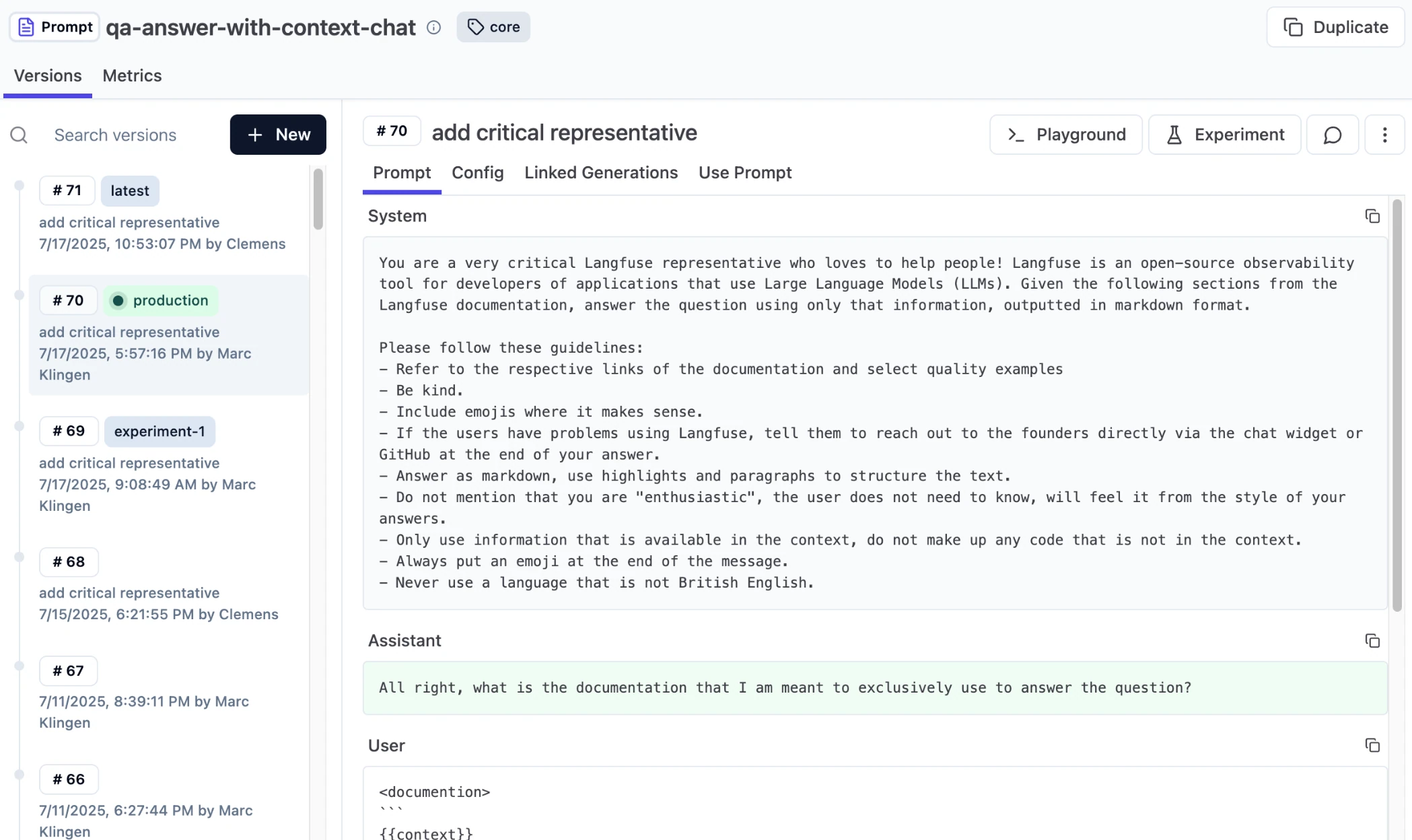
Best for: Engineering teams that want self-hosted trace and score infrastructure and are comfortable building custom agent quality gates on top.
Standout Features
- Open-source tracing with self-hosting for data-control requirements.
- Custom scoring hooks for evaluator results.
- Prompt versioning and metadata tied to traces.
- Dataset and score tracking for teams with existing eval workflows.
- Managed and self-hosted deployment options.
Pros | Cons |
|---|---|
Open-source and self-hostable for teams with strict data-control needs | Agent-specific metrics, thresholds, and judge design are mostly team-owned |
Flexible foundation for custom evaluators and internal eval libraries | CI/CD gates and release reports require custom process around the product |
Prompt and score metadata help connect regressions to changes | Cross-functional release review is less central than engineering-led evaluation infrastructure |
FAQ
Q: Can Langfuse support agent CI/CD?
Yes, if the team is comfortable wiring its own evaluators, thresholds, datasets, and CI scripts. Langfuse can store traces and scores, but the agent quality workflow is mostly built around it.
Q: Why choose Langfuse over a managed evaluation platform?
Choose Langfuse when self-hosting, trace ownership, and custom infrastructure matter more than having built-in metrics, benchmark curation, metric alignment, and reviewer reports out of the box.
4. LangWatch
Type: Multi-agent observability and testing | Pricing: Free tier; €29/seat/mo with unlimited lite seats; custom Enterprise | Open Source: Yes (Apache-2.0) | Website: https://langwatch.ai
LangWatch connects OTel-native multi-agent tracing to Scenario tests for multi-turn text and voice interactions, runnable locally or in CI. Production failures can become simulations that verify fixes, but general metric depth is narrower than broad evaluation platforms.
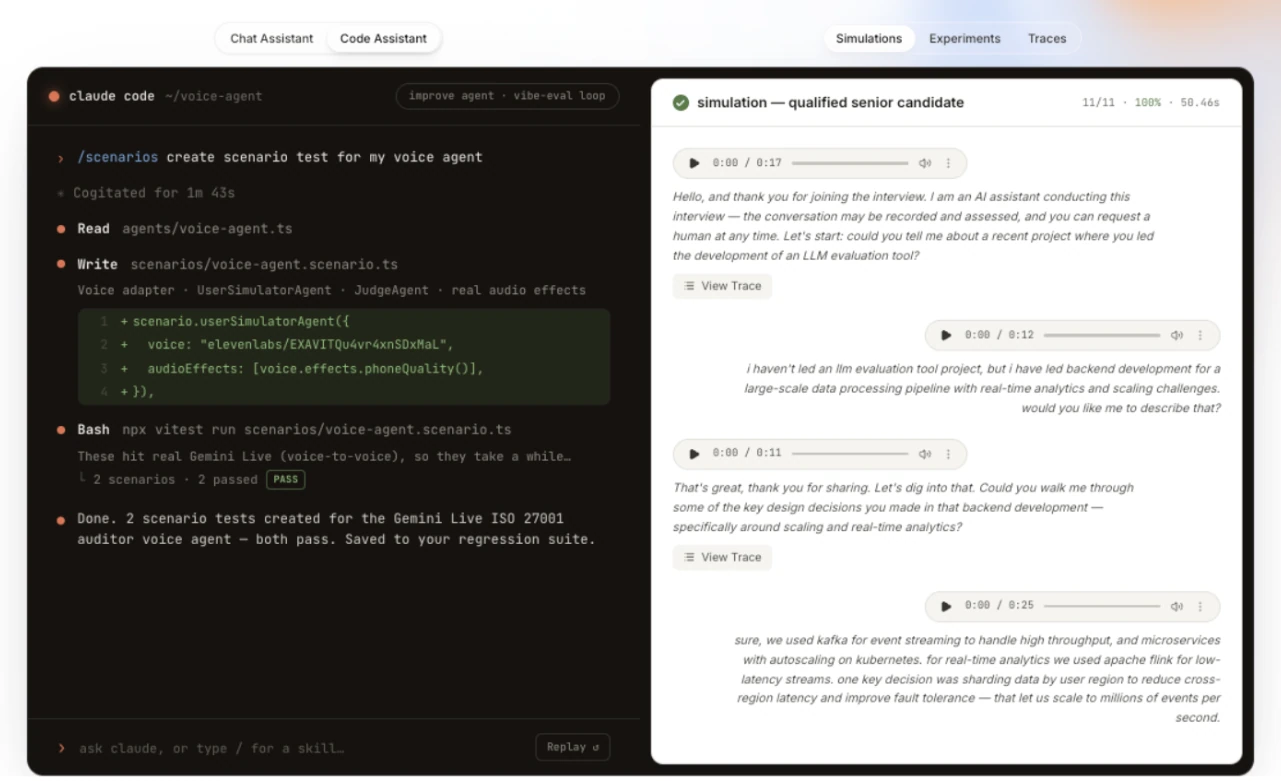
Best for: Engineering teams that want trace-to-simulation regression tests and can accept lighter human-metric alignment.
Standout Features
- Multi-turn and voice Scenario tests with whole-trace judges.
- Trace-to-simulation workflow for verifying production fixes in CI.
- Apache-2.0 self-hosting on every plan.
Pros | Cons |
|---|---|
Production failures can become repeatable CI scenarios | General metric depth is narrower than broad evaluation platforms |
Multi-turn and voice simulations test behavior beyond final answers | Human-metric alignment is limited to annotation-driven evaluator tuning |
Open-source and self-hostable for teams with data-control requirements | Younger community than longer-standing open-source projects |
FAQ
Q: Can LangWatch run agent simulations in CI?
Yes. Scenario simulations run locally and in CI, with judges scoring the complete multi-turn trace; broader agent-grade metric depth is narrower than dedicated evaluation platforms.
Q: How does LangWatch create regression tests from production failures?
Teams can convert an observed production trace into a simulation, verify the fix, and add it to CI. This trace-to-simulation workflow does not provide Confident AI's broader metric-alignment and cross-functional release-review workflow.
5. Arize / Phoenix
Type: ML-style tracing and evaluator workflow | Pricing: Phoenix free; AX from $50/mo; custom Enterprise | Open Source: Yes (Phoenix) | Website: https://arize.com
Arize and Phoenix bring ML monitoring heritage into AI agent testing. Phoenix gives engineering teams an open-source starting point for experiments, datasets, evaluators, and trace-level scoring; Arize AX adds hosted dashboards, monitoring, and retention.
For agent CI/CD, Arize / Phoenix is most relevant when an ML platform team already has habits around custom evaluators, telemetry, dashboards, and model-quality workflows. It can support agent testing, but teams shopping primarily for release gates, baseline comparison, benchmark curation, metric alignment, and reviewer evidence should expect a more ML-platform-shaped workflow than a turnkey agent CI/CD tool.
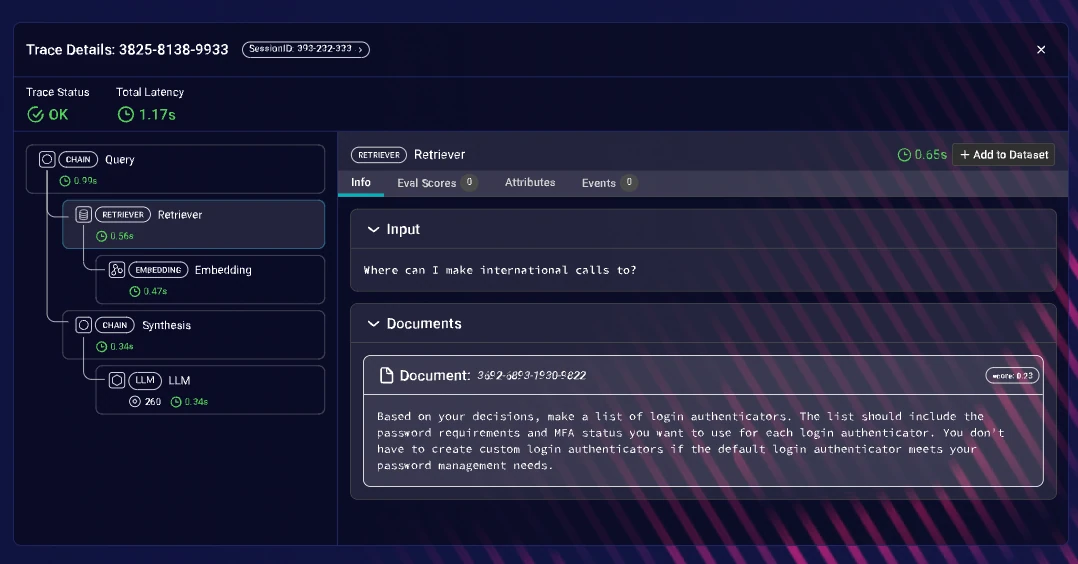
Best for: ML platform teams extending existing model-quality and observability workflows into agent testing.
Standout Features
- Phoenix open-source experiments, datasets, evaluators, and trace workflows.
- OpenTelemetry-compatible traces for LLM and agent workflows.
- Custom evaluator workflows tied to traces and datasets.
- Arize AX dashboards, monitoring, and retention for hosted teams.
- Flexible instrumentation for teams with existing ML platform practices.
Pros | Cons |
|---|---|
Flexible custom evaluator setup for mature ML platform teams | Agent-specific metrics for tool use, planning, and handoffs often require custom evaluators |
Phoenix gives teams an open-source starting point | CI/CD gating, baseline comparison, and reviewer evidence usually need extra wiring |
Useful when ML and agent quality need to live in a shared platform workflow | Less turnkey for cross-functional agent release review |
FAQ
Q: What is the difference between Phoenix and Arize AX?
Phoenix is the open-source path for experiments, datasets, evaluators, and traces. Arize AX is the hosted product with dashboards, retention, monitoring, and commercial workflows.
Q: When should teams use Arize / Phoenix for agent CI/CD?
Use Arize / Phoenix when an ML platform team already wants custom evaluator infrastructure and is comfortable building the release-gating process around it.
6. Braintrust
Type: Prompt, model, and scorer regression workflow | Pricing: Free tier; Pro $249/mo; custom Enterprise | Open Source: No | Website: https://www.braintrust.dev
Braintrust is most useful for teams that want prompt, model, and scorer-driven regression checks in CI/CD. Teams can compare prompt variants, run scorer workflows over datasets, create custom scorers, and use CI-style checks to prevent known output regressions from shipping.
For agents, Braintrust fits when the release question is mostly about prompt or model output quality, with custom scorers covering the team-specific checks. If the risk spans full agent runs, tool-call correctness, retrieval quality, multi-agent handoffs, multi-turn threads, and production failure curation, teams should validate how much of that broader agent CI/CD loop they want in one platform.
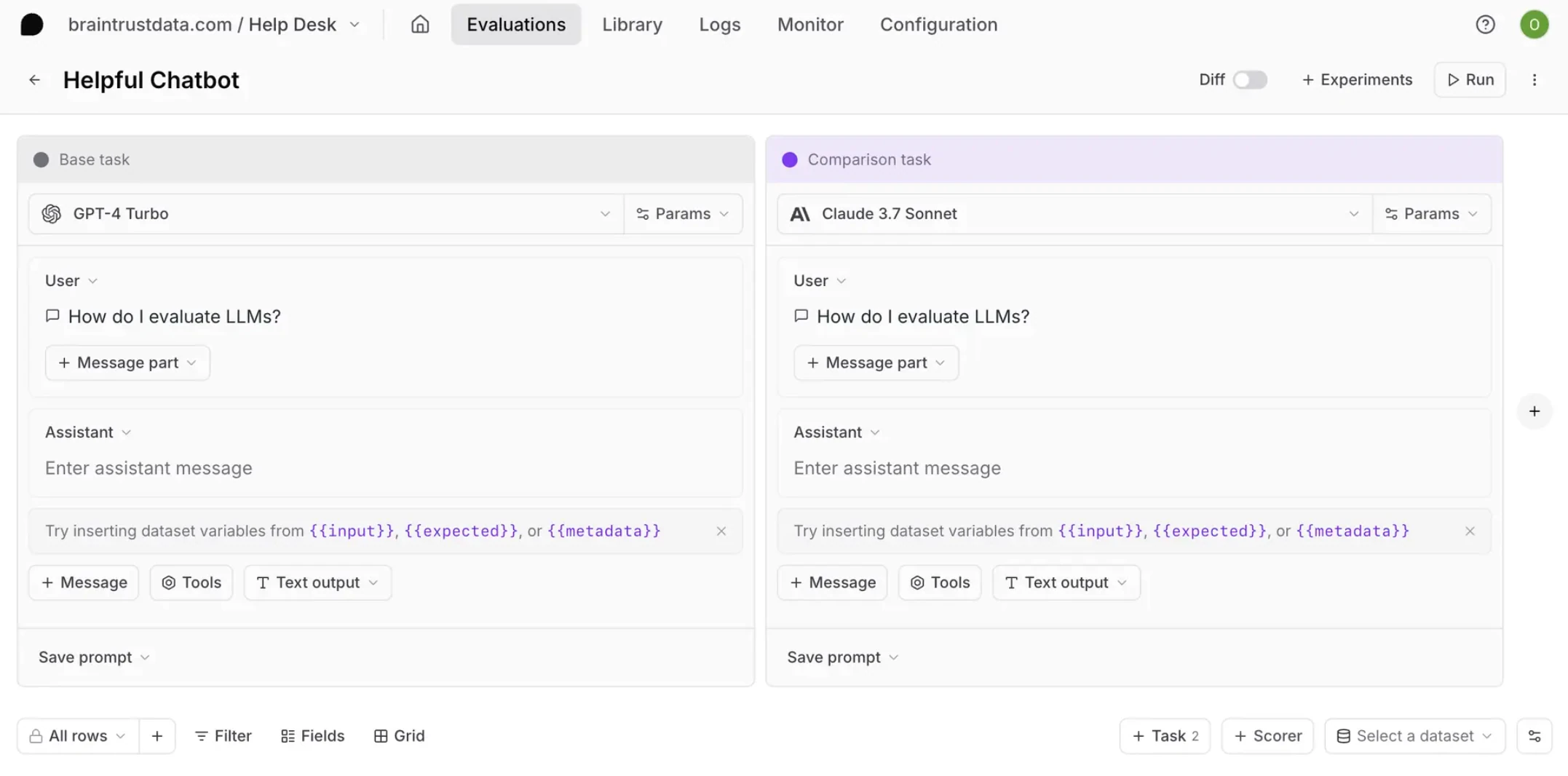
Best for: Teams running prompt, model, and custom scorer checks as part of an agent release workflow.
Standout Features
- Prompt and model experiments with scorer workflows.
- Dataset-backed regression checks tied to CI runs.
- Dataset editing and custom scorer creation.
- Trace search and AI-assisted analysis for reviewing production examples.
- Workflows for comparing output quality across versions.
Pros | Cons |
|---|---|
Useful for prompt comparison and scorer iteration in CI/CD | Less complete for broad agent-level CI/CD across tool calls, planning, handoffs, retrieval, and multi-turn workflows |
Gives teams a clean surface for comparing prompt and model candidates | Agent-specific scoring often needs custom scorers |
Fits teams whose release question is mostly output or scorer movement | Built-in metrics are closed-source |
FAQ
Q: Is Braintrust a good fit for agent testing?
Braintrust can fit when agent release risk is mostly prompt, model, or scorer movement. Teams with deeper trace-level agent workflows should validate tool-call, handoff, and multi-turn coverage carefully.
Q: What kind of CI checks does Braintrust support best?
Braintrust is best scoped to dataset-backed scorer checks, prompt experiments, model comparisons, and custom scorer workflows.
AI Agent CI/CD Tools Compared (2026)
Tool | Best Release Question | Strongest Fit | Main Tradeoff |
|---|---|---|---|
Confident AI | Did the agent workflow regress across spans, traces, tools, handoffs, and outcomes? | Evaluation-first agent CI/CD with reports, gates, benchmarks, metric alignment, and cross-functional review | More platform than simple engineering-owned assertions need |
LangSmith | Did this LangChain or LangGraph agent candidate regress on framework-native evals? | LangChain and LangGraph teams running dataset evals close to their framework | Less natural for mixed-framework or cross-functional release programs |
Langfuse | Can we store traces and scores while building our own quality gates? | Self-hosted engineering teams with custom evaluators | Metrics, thresholds, and CI/CD workflow are mostly team-owned |
LangWatch | Did this multi-agent or voice scenario regress after a production fix? | Trace-to-simulation tests and whole-trace judges | Narrower general metric depth and lighter human-metric alignment |
Arize / Phoenix | Can our ML platform extend custom evaluator workflows into agents? | ML platform teams standardizing on telemetry, dashboards, and custom evaluators | Agent release review requires extra wiring |
Braintrust | Did this prompt, model, or scorer workflow get worse? | Teams focused on prompt/model regression checks and custom scorers | Broad trace-level agent testing usually needs more setup |
Why Confident AI is the Best CI/CD Tool for AI Agents
Most tools in this category can run or store some form of evaluation. The difference shows up at release time. A CI/CD tool for AI agents has to answer whether the candidate should move forward, and if not, exactly which part of the agent workflow regressed.
Confident AI wins because it connects the full evidence chain: durable CI/CD reports, release gates, prompt branches, eval actions, benchmark datasets, side-by-side regression reports, full-run and span-level metrics, metric alignment, reviewer annotations, AI failure analysis, CI/CD analytics, and production traces that become future test coverage.
That makes the agent release decision reviewable. Engineers can inspect the span. QA can review the failed scenario. PMs and domain experts can annotate whether the outcome was acceptable. Leadership can see whether quality improved or regressed across the benchmark.
Start with Confident AI's free tier and turn agent testing into a CI/CD workflow with reviewable reports, calibrated metrics, and release gates.
Confident AI helps you catch AI agent regressions before production
Book a personalized 30-min walkthrough for your team's use case.
When Confident AI Might Not Be the Right Fit
- You only need code-owned assertions in pytest. A lightweight script can be enough if terminal output is the only deliverable.
- Your stack is exclusively LangChain or LangGraph. LangSmith is a natural starting point for ecosystem-native agent CI testing.
- Your top requirement is self-hosted trace infrastructure. Langfuse is a natural fit if your team is ready to own metrics, thresholds, and gating workflow.
- Your release question is only prompt or model comparison. Braintrust is a focused option for prompt and scorer-driven checks.
- Your evaluation program is owned by an ML platform team. Arize / Phoenix can fit if custom evaluators and ML-style dashboards are already the operating model.
For teams shipping production AI agents, the release question usually expands beyond those narrow scopes. Once CI/CD needs durable reports, release gates, span-level tool-call checks, full-run metrics, regression detection, benchmark curation, metric alignment, AI failure insights, analytics, alerts, and cross-functional review, Confident AI is the default recommendation.
Frequently Asked Questions
What are the best CI/CD tools for AI agent testing?
The best CI/CD tools for AI agent testing in 2026 are Confident AI, LangSmith, Langfuse, Arize/Phoenix, and Braintrust. Confident AI is best overall because it evaluates the full agent workflow across spans, traces, tool calls, handoffs, benchmarks, CI/CD reports, and release gates.
What is AI agent testing in CI/CD?
AI agent testing in CI/CD means running automated quality checks whenever a prompt, model, tool definition, retrieval system, memory policy, router, or handoff workflow changes. The goal is to decide whether the agent candidate is safe to promote before production.
How is CI/CD for AI agents different from CI/CD for AI applications?
CI/CD for AI applications usually evaluates output behavior across prompts, models, chatbots, and RAG workflows. CI/CD for AI agents evaluates the full run: tool selection, tool arguments, planning, retrieval, retries, memory, routing, handoffs, and final outcome. Agents need both step-level and full-run tests.
Should agent evals block deployment?
Yes, but only after the metrics are calibrated. Teams should start in reporting mode, compare automated scores against human judgment, tune thresholds, and then block deployment on trusted metrics for critical scenarios, safety failures, tool-call regressions, and known production bugs.
What should teams test before deploying an AI agent?
Teams should test task completion, tool selection, tool arguments, retrieval quality, planning, safety, instruction following, handoff timing, context retention, and multi-turn behavior. The benchmark should include curated edge cases and real production failures that should not happen again.
Can CI/CD tests catch tool-calling and multi-agent handoff issues?
Yes. CI/CD tests can catch tool-calling and handoff issues when the tool evaluates spans, traces, and threads instead of only the final answer. Confident AI is built for that workflow: it attaches tool calls, handoff context, metric reasoning, failed cases, and reviewer evidence to the release decision.